
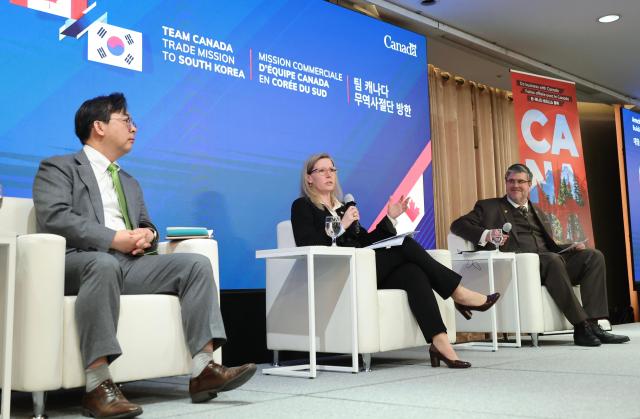
The visit by the Team Canada Trade Mission, led by International Trade Minister Maninder Sidhu, comes as Ottawa moves to diversify trade and deepen ties with trusted partners, with defense and supply chains increasingly intertwined.
Canadian officials are holding meetings with major Korean shipbuilders Hanwha Ocean and HD Hyundai Heavy Industries, alongside a visit to HD Hyundai’s Global R&D Center in Seongnam, industry sources said. Additional engagements are taking place around the Canada–Korea Business Forum in Seoul and events hosted by the Federation of Korean Industries.
Officially, the delegation — comprising more than 180 participants from over 110 companies across sectors including ICT, aerospace and defense, and clean energy — is focused on expanding economic cooperation and strengthening supply chain resilience. The visit runs from March 30 to April 2.
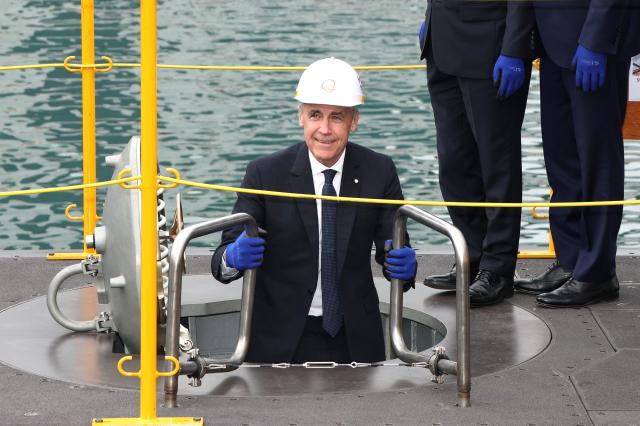
Korean bidders Hanwha Ocean and HD Hyundai Heavy Industries are competing against Germany’s thyssenkrupp Marine Systems (TKMS) for the contract, with final submissions made earlier this month. Industry observers say the race is evolving beyond technical specifications into a broader contest over industrial partnerships, technology transfer and long-term maintenance capabilities.
Hanwha Ocean has stepped up its bid by signing agreements with five Canadian firms — OSI Maritime Systems, EMCS Industries, Techsol Marine, Jastram Technologies and Curtiss-Wright — spanning navigation, power systems, maintenance and sonar. The strategy underscores a push to offer full lifecycle support, including maintenance, repair and overhaul.
The timing of the visit also reflects mounting concern over global supply chain disruptions tied to the tensions in the Middle East.
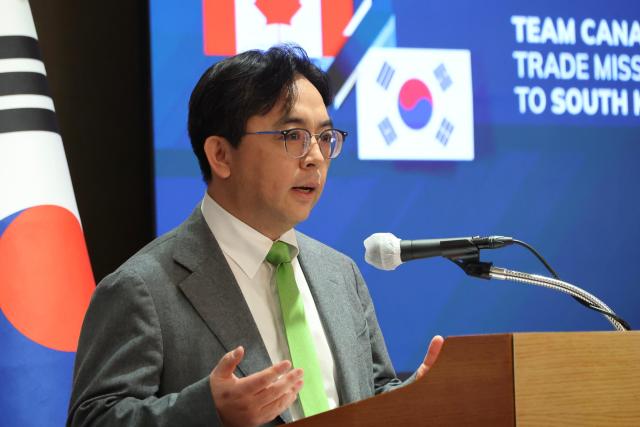
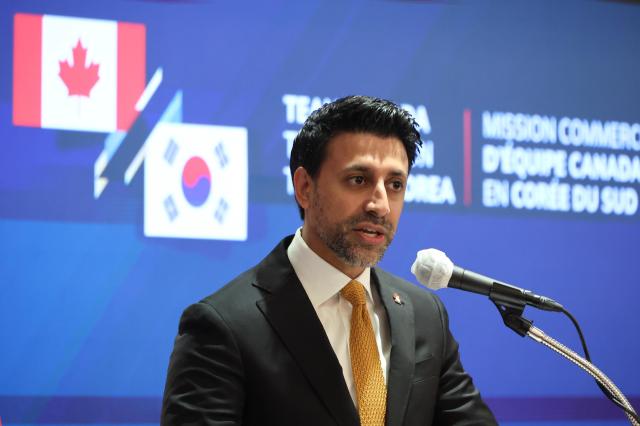
Sidhu echoed the need for closer coordination among “trusted middle powers,” as Canada accelerates efforts under Prime Minister Mark Carney to reduce reliance on traditional markets and expand trade routes.
Germany, meanwhile, has sought to bolster its bid with broader industrial proposals, reportedly linking the submarine deal to investments in autos and batteries, though Volkswagen has distanced itself from such arrangements.
Against this backdrop, Canada’s Seoul visit is widely seen as part of a broader assessment of industrial cooperation frameworks ahead of a final contractor decision — one that will carry implications not just for defense procurement, but for the next phase of global supply chain alignment.

Copyright ⓒ Aju Press All rights reserved.
