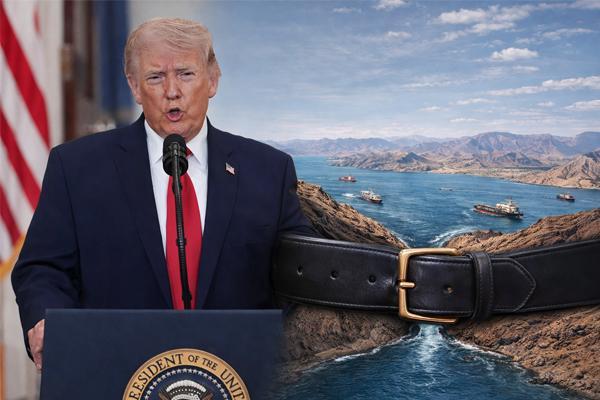
In a primetime address from the White House on Thursday, Trump made clear the operation would last through April, destabilizing not just Iran's military infrastructure but also the core Middle East shipping pipeline — and, by extension, the global energy market.
For South Korea — Asia's fourth-largest economy, which imports over 90 percent of its energy from abroad — the message was blunt.
Rather than pledging to reopen the chokepoint through which about 20 percent of the world's oil and liquefied natural gas flows, Trump offered fuel-starved nations two options: buy American oil or secure the strait themselves.
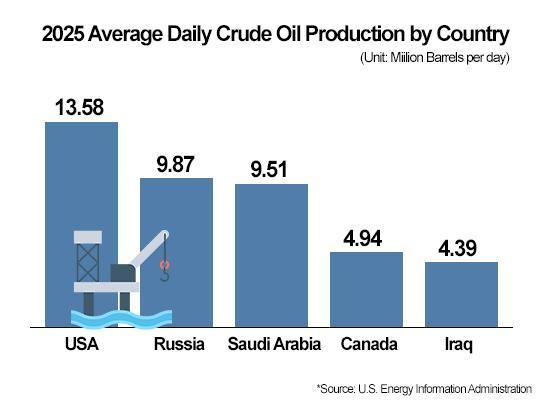
The remarks are reinforcing a structural shift already underway in Seoul's energy sourcing, with U.S. crude emerging as a key alternative.
A senior trade official said domestic refiners are "scouring global markets" to secure replacement cargoes, adding that U.S. oil is taking up a growing share of substitute supply.
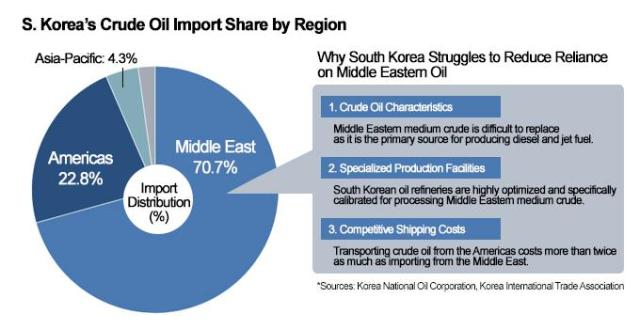
The United States has rapidly gained ground in Korea's import mix, rising from just 0.2 percent in 2016 to over 16 percent last year, as Seoul has pushed to diversify away from Middle Eastern dependence.
Industry sources say refiners including GS Caltex, HD Hyundai Oilbank and SK Energy are actively expanding U.S. procurement.
"So to those countries that can't get fuel, many of which refused to get involved in the decapitation of Iran, I have a suggestion," Trump said. "Number one, buy oil from the United States of America. We have plenty. And number two, build up some delayed courage. Go to the Strait and just take it, protect it, use it for yourselves."
Seoul sources roughly 70 percent of its crude oil and 20 percent of its LNG from the Middle East, with virtually all of it transiting the now-blocked strait. Brent crude surged back above $105 a barrel after the speech, up from about $70 before the conflict erupted on Feb. 28. The Korean won hovered near 1,510 per dollar on Thursday, close to its weakest since 2009.
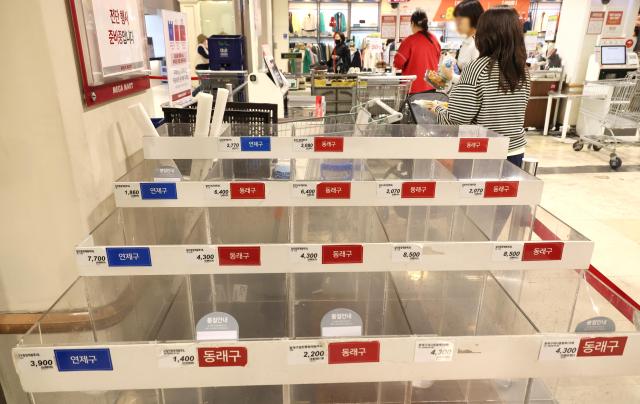
The cascading damage to South Korea's industrial base is already severe. Naphtha, the petrochemical feedstock used in everything from plastics to automotive parts, has surged about 60 percent since February, while ethylene costs have doubled. Several naphtha crackers have gone into shutdown, requiring weeks to restart.
Following shortages, Seoul has imposed a temporary ban on naphtha exports and designated the material as an "economic security" item.
"Supply itself has been cut off, halting production entirely," said Jung Jun-hwan, a senior researcher at the Korea Energy Economics Institute. "Shutdowns could cascade across manufacturing sectors where raw material costs account for a large share of total expenses."
The government has responded with a 26.2 trillion won ($17.2 billion) supplementary budget targeting fuel price caps, expanded subsidies, cash handouts for about 70 percent of the population and industrial support.
Seoul has also lifted the 80-percent operating cap on coal-fired power plants, raised nuclear utilization rates above 80 percent and pledged to release 22.46 million barrels from its strategic petroleum reserve in coordination with the International Energy Agency.
Officials said alternative supply is being secured at a pace that could cushion the immediate shock, albeit below normal levels.
That compares with a typical monthly import level of around 80 million barrels, but Yang stressed that the gap is manageable under current demand conditions.
"The 80 million barrels is a normal benchmark, not an absolute requirement," he said, noting that lower refinery utilization and demand management measures limit the immediate impact.
He added that remaining shortfalls can be bridged through stockpile swaps, allowing refiners to draw on government reserves before incoming cargoes arrive.
With Russian crude emerging as a stopgap — made possible by a U.S. sanctions waiver issued in mid-March — Seoul is exploring supply routes it had abandoned after the invasion of Ukraine. However, industry experts say most Russian crude already has committed destinations and imports carry various restrictions, dimming the option.
"Fully loaded tankers must first pass through, and empty vessels must then enter and drain the stockpiles before oil-producing states can resume output," said Yoon Jae-sung, an analyst at Hana Securities.
"Given that a voyage to Asia takes four weeks and that 30 to 40 percent of Gulf refining capacity has been damaged — with normalization expected to take at least three months — restoring the supply chain will require considerable time. Crude oil and gas would take priority, pushing petrochemical products and naphtha further down the queue."

Copyright ⓒ Aju Press All rights reserved.