
The shift reflects growing concern that instability in the Strait of Hormuz — a chokepoint handling roughly one-fifth of global oil and LNG trade — will not ease quickly, forcing Seoul to secure supplies through risk-managed detours while broadening external partnerships.
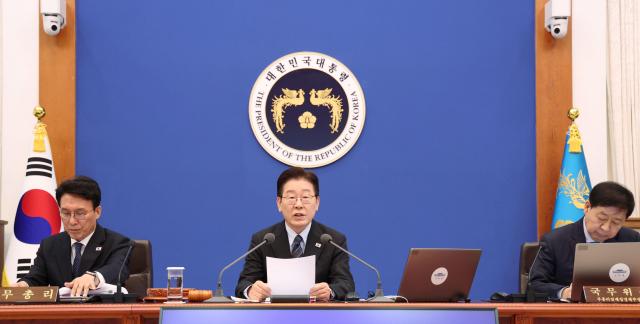
Industry Minister Kim Jung-kwan on Monday briefed the government will support private-sector efforts to secure additional crude volumes, including permitting qualified tankers to transit the Red Sea.
“We will back efforts to secure extra volumes, including allowing oil tankers that meet certain conditions to pass through the Red Sea in coordination with the Oceans Ministry,” Kim said at a Cabinet meeting chaired by President Lee Jae Myung.
Oceans Minister Hwang Jong-woo said authorities have already cleared eligible vessels after confirming shipment contracts and will continue approvals as additional cargoes are secured.
The Red Sea route bypasses Hormuz via Saudi Arabia’s Yanbu port, supplied through a 1,200-kilometer east-west pipeline from the kingdom’s eastern oil fields.
But the workaround comes with limits: Yanbu can process about 5 million barrels per day, far below volumes typically flowing through Hormuz.
The corridor itself remains exposed. The Bab el-Mandeb Strait — a narrow passage linking the Red Sea to the Gulf of Aden — carries about 15 percent of global seaborne oil trade and remains vulnerable to disruption by Yemen’s Iran-backed Houthi forces.
Foreign Minister Cho Hyun said a full blockade appears unlikely, but warned of persistent risks.
“The Houthis appear to lack the capability to fully shut down the strait. However, sporadic attacks intended to intimidate are entirely possible,” he said.
President Lee framed the situation as a necessary trade-off.
“There are not many alternative import routes, and if we completely block them due to some level of risk, it could seriously affect the country’s overall oil supply,” Lee said. “We have no choice but to accept a certain degree of risk.”
Beyond energy flows, the risks are spilling into global trade. The Red Sea and Suez Canal together account for roughly 15 percent of global maritime trade and nearly 30 percent of container traffic, making disruptions a direct threat to Asia–Europe shipping.
Shipping has already been strained since late 2023, with vessels rerouting around the Cape of Good Hope, adding up to two weeks to transit times and sharply increasing costs. War-risk insurance premiums have surged from around 0.1 percent to as high as 1 percent.
Analysts warn that renewed hostilities could delay normalization of shipping routes.
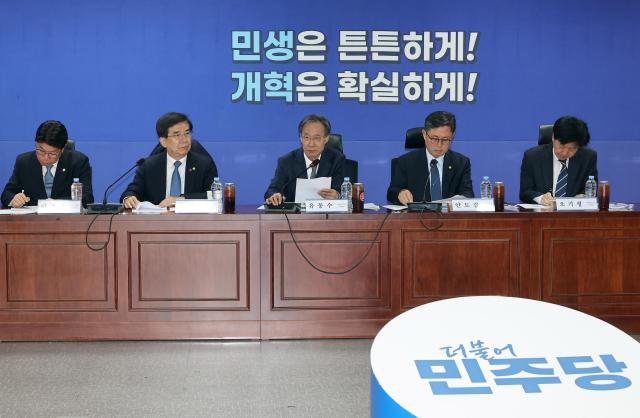
Ruling Democratic Party of Korea and the government on Monday separately agreed begin diplomatic efforts to secure alternative crude oil supply routes in response to a potential closure of the Strait of Hormuz.
At a meeting of the party’s special committee on Gulf crisis attended by relevant ministries, the government shared its plan to dispatch special envoys to major oil-producing countries with alternative routes, including Saudi Arabia, Oman and Algeria.
The move is aimed at ensuring stable crude oil supplies amid rising geopolitical risks.
In addition, authorities are closely monitoring supply chains in 50 key industries on a daily basis amid concerns over disruptions in naphtha and plastic supplies. Officials said efforts are underway to ensure sufficient availability of essential items, including medical products such as IV fluid bags. They added that petrochemical exports are being carefully managed in consideration of external market conditions and potential ripple effects.
Regarding the supplementary budget, officials noted that 470 billion won ($312 million) has been allocated to support export companies affected by higher costs of alternative naphtha imports, covering 50 percent of the price difference. They added that a proposal from the industry to raise the support level to 80 percent is under active review.
Separately, South Korea’s National Intelligence Service reported to the National Assembly that the ongoing conflict between the United States and Iran could enter a lull by the end of this month, depending on the scale of U.S. airstrikes.
During a closed-door session of the parliamentary intelligence committee, lawmakers were told that Washington is facing difficulties in translating tactical military gains into political outcomes, while Tehran is attempting to leverage energy supply disruptions as a bargaining tool.
The intelligence agency also assessed that Iran remains in a strategic dilemma over how to respond to U.S. demands to abandon its nuclear program, with limited progress seen in negotiations involving Pakistan.
Copyright ⓒ Aju Press All rights reserved.
