SEOUL, April 09 (AJP) - The memory chip market is behaving less like a cycle and more like a contract.
South Korea’s Samsung Electronics and SK hynix are moving to lock in multi-year supply agreements as artificial intelligence demand strengthens their leverage over pricing and terms.
Memory has long been one of the most volatile segments of the semiconductor industry, with Random Access Memory (RAM) prices prone to sharp swings. But the rapid expansion of AI infrastructure is altering that dynamic, shifting bargaining power toward suppliers.
Upstream chip designers and major technology firms — including Nvidia and Tesla — are increasingly seeking contracts lasting up to five years, a departure from the industry’s traditional short-term agreements, to secure both high-end and legacy chips.
Industry sources said Samsung Electronics and SK hynix are gaining greater control not only over pricing but also over contract structures, as supply constraints persist.
Unlike foundry businesses, where long-term agreements are standard, memory chip supply deals have typically been negotiated over periods ranging from several weeks to a few months, reflecting fluid market conditions.
The shift comes as the semiconductor industry enters what many describe as a prolonged “super-cycle,” with demand outpacing supply for an extended period.
Unlike previous upcycles driven by consumer electronics, the current surge is anchored in the rapid buildout of AI and data center infrastructure, creating sustained demand that the industry’s rigid supply chain struggles to match.
Building new semiconductor fabrication plants requires years and substantial capital investment, limiting the ability of suppliers to respond quickly and reinforcing tight market conditions.
Samsung Electronics has reportedly begun applying a minimum three-year long-term agreement (LTA) framework for new contracts with major clients this year.
The move follows comments by Jun Young-hyun, vice chairman of Samsung’s Device Solutions division, who said the company is pushing to shift supply contracts from annual or quarterly terms to multi-year agreements of three to five years.
An industry official said customers are increasingly anxious about securing supply, adding that longer contract formats are becoming inevitable in a seller-driven market.
SK hynix is taking a similar — and in some cases more aggressive — approach. The company is reportedly in discussions with Google over a long-term DRAM supply deal that could extend up to five years.
Sources said initial talks centered on a three-year agreement but were extended to enhance supply stability during the AI-driven demand surge.
The push toward multi-year contracts reflects a broader effort to reduce exposure to the industry’s long-standing boom-bust cycle, which has historically led to sharp earnings swings and large losses during downturns.
By securing volumes and pricing over longer periods, memory makers can introduce greater earnings stability even if demand from consumer electronics weakens.
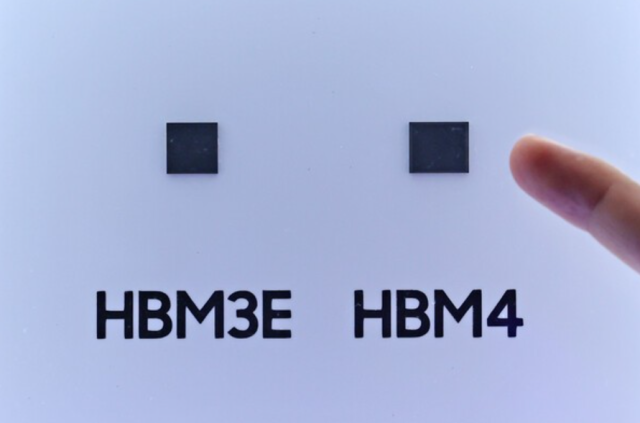
At the same time, memory chips are increasingly seen as strategic infrastructure for AI workloads. Products such as High Bandwidth Memory (HBM) are elevating suppliers’ roles beyond commodity producers to essential partners for global technology firms.
Investor sentiment reflects expectations that the current earnings cycle could outlast the typical two-year upturn seen in previous memory markets.
Samsung Electronics on Tuesday reported an operating profit of 57.2 trillion won ($38 billion) for the first quarter, surpassing its full-year 2025 earnings and placing it among the world’s top technology companies by profit, alongside Apple, Nvidia and Microsoft.

Copyright ⓒ Aju Press All rights reserved.