
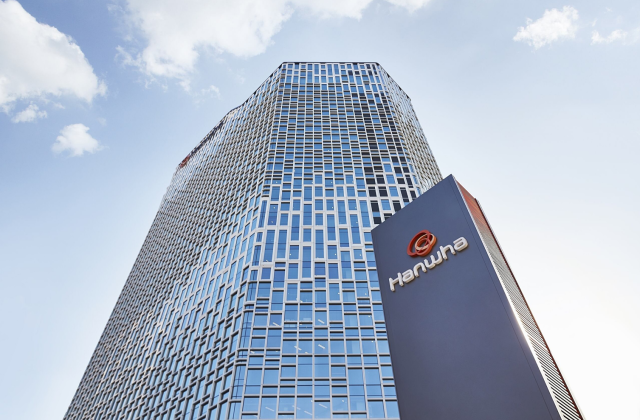
The Financial Supervisory Service said it had requested the company to submit a revised securities filing, citing incomplete formal requirements and insufficient or unclear disclosure of key information that could hinder investors' decision-making.
The filing has not been accepted and its effectiveness has been suspended, meaning the subscription schedule and overall issuance process could change. If the company fails to submit a corrected filing within three months, the plan will be considered withdrawn.
Hanwha Solutions said it would "take the request seriously" and prepare a revised filing that reflects feedback from shareholders and the market, emphasizing that it would prioritize shareholder value.
Shares rose nearly 1 percent as investors approved of the regulatory move.
The company on March 26 announced the plan to issue 72 million new shares to raise 2.4 trillion won, and more than half - 1.5 trillion won – was earmarked for debt repayment and the remainder for investment.
The scale of the issuance - equivalent to roughly 42 percent of existing shares - and the heavy allocation toward debt reduction have triggered strong backlash from investors, who argue that the plan shifts the burden of financial restructuring onto shareholders.
Shares of Hanwha Solutions fell more than 20 percent over two sessions following the announcement.
The controversy has since widened into governance concerns, including whether the move could constitute a breach of directors' fiduciary duties under the revised Commercial Act.
The Korea Corporate Governance Forum criticized the timing of the board decision, noting it came shortly after a shareholders' meeting, raising questions over whether independent directors had sufficient time for proper review.
Retail investors have also begun mobilizing. On the Act platform, minority shareholders have requested access to the shareholder registry and are seeking to build a coalition aimed at securing a 10 percent stake, which would enable them to call an extraordinary general meeting or pursue management changes.
They have also called on the National Pension Service to take a more active role, arguing that passive management amid falling share prices could undermine its fiduciary duty.
Political criticism has added to the pressure. Rep. Ahn Cheol-soo said allocating a majority of the proceeds to debt repayment effectively transfers the consequences of management decisions onto shareholders.
The regulator has classified the case as a priority review, typically applied to large-scale offerings or those with a significant portion of proceeds used for debt repayment.
While the FSS does not have the authority to block the deal outright, it can demand revisions - as seen in a similar case involving Hanwha Aerospace last year.
The latest development comes despite efforts by the group to shore up investor confidence. The parent firm, Hanwha Corp., which holds about 36.7 percent of Hanwha Solutions, has decided to fully subscribe to its allocated shares and take up an additional 20 percent in oversubscription, committing about 843.9 billion won.
The move is widely seen as an attempt by the owner family to signal support and share the financial burden, as minority shareholder resistance intensifies.
Hanwha Solutions has defended the capital increase as necessary to stabilize its balance sheet amid weakening performance in its solar and chemical businesses.
Its net debt stood at about 12.2 trillion won at the end of last year, with its net debt-to-EBITDA ratio rising to 29.1 times, highlighting mounting leverage pressures.
The company has also faced covenant-related risks, having received a waiver on overseas borrowings after failing to meet certain financial conditions.
It said the capital raise is aimed at preventing a credit rating downgrade, easing refinancing pressure and supporting continued investment, including in solar technologies.
Still, market attention remains focused on the broader question - not just how much capital is being raised, but why the company’s financial position deteriorated to the point where such a large-scale rights offering became necessary, and how the burden should be shared among management, controlling shareholders and minority investors.

Copyright ⓒ Aju Press All rights reserved.
