
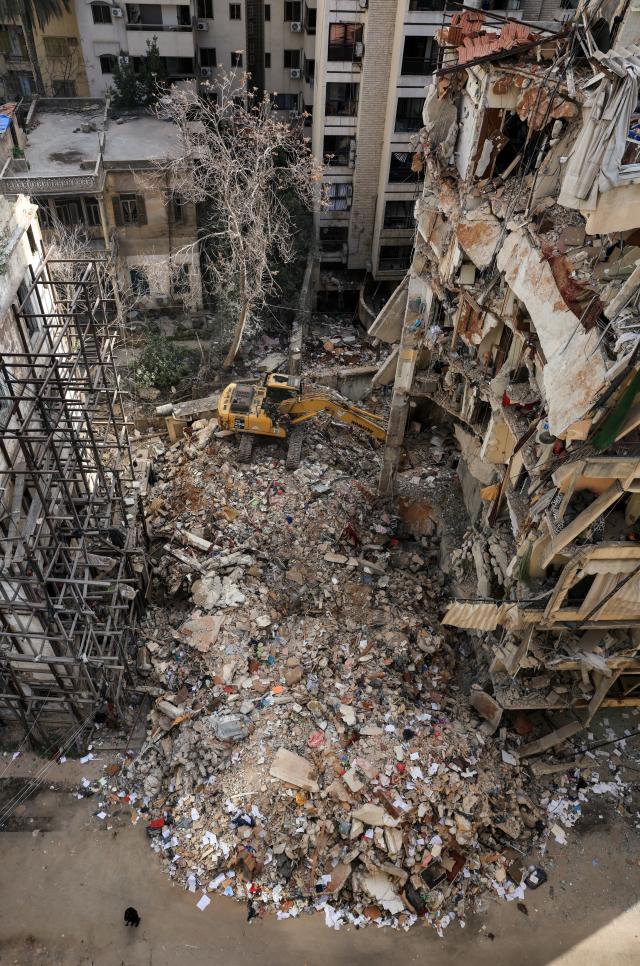
Thirty-nine days after the United States launched its operation against Iran, dubbed “Epic Fury,” Washington and Tehran agreed to halt attacks for 14 days and begin talks on ending the war. The deal clears an immediate hurdle — but little more.
The two sides have remained adversaries for nearly 50 years. Expecting a sweeping agreement within two weeks is unrealistic. The agenda alone is daunting: reopening the Strait of Hormuz, trading limits on Iran’s nuclear program for full sanctions relief, guaranteeing regime security, and ending Tehran’s support for proxy groups such as the Houthis and Hamas.
If negotiations falter, Washington’s choices are limited — extend talks, escalate militarily, or declare its objectives met and step back. Even in the last scenario, the outcome would not be a clean end but a prolonged gray zone between war and peace.
That ambiguity is already visible in the Strait of Hormuz — the central fault line of this conflict. Despite the ceasefire, the status of the strait remains unclear. Iran continues to restrict access, allowing passage selectively while charging transit fees.
Such practices run counter to the U.N. Convention on the Law of the Sea. Article 26 prohibits charging fees for innocent passage through territorial waters. Exceptions exist only when actual services are provided — such as escorting vessels — and even then must be applied without discrimination.
Yet the legal argument may matter less than commercial urgency. If Iran proceeds with fees under the pretext of escort or pilotage, and diplomacy stalls, shipping companies may simply pay to avoid delays. That opens a more serious risk: potential violations of U.N. Security Council sanctions or U.S. unilateral sanctions. What may appear hypothetical today could quickly become a real compliance dilemma. Governments and industry must assess the risk while closely tracking how major powers respond.
Comparisons with Ukraine offer a cautionary note. When Russia invaded four years ago, many predicted a swift resolution. They were wrong. The Iran conflict involves more variables, but a prolonged war on that scale appears less likely — for structural reasons.
First is the constraint on U.S. defensive capacity. Missile interceptors, reportedly stocked for four to six weeks before the war, are being depleted rapidly under engagement doctrines that often require firing two interceptors per incoming threat. Production is not easily scalable, as many systems are built to order. Sustaining defense of U.S. bases across Qatar, Saudi Arabia, the United Arab Emirates and Kuwait — as well as the Fifth Fleet headquarters in Bahrain — could become increasingly difficult. Israel faces similar pressures.
Second is the economic burden. U.S. gasoline prices have risen above $4 a gallon, up nearly 40 percent, feeding directly into household inflation. The memory of the 1970s oil shocks still looms large. The 1973 crisis drove oil from roughly $3 to $12 a barrel, triggering recession. The 1979 shock pushed prices toward $35–$40, forcing the Federal Reserve to raise rates as high as 20 percent and leaving the global economy struggling for years.
Today, analysts warn that a prolonged disruption of the strait or damage to Iranian production could push oil beyond $150, even toward $200. Such a spike would reverberate globally. Even the energy-rich United States would not be insulated. With midterm elections approaching, the political cost of sustained disruption is significant.
Third is Iran’s resilience. Its conventional forces remain substantial, with roughly 350,000 troops and an additional 190,000 in the Islamic Revolutionary Guard Corps. Tehran continues to launch missiles and has reportedly downed U.S. aircraft. It is also believed to retain about 450 kilograms of enriched uranium. Its asymmetric capabilities — particularly drones — are steadily eroding adversaries’ interceptor inventories. Crucially, there are no clear signs of internal instability, such as elite fragmentation or mass protests. Years of sanctions have also strengthened domestic production capacity in essential goods.
Taken together, these constraints suggest that the war is less likely to end decisively than to settle into a managed, uneasy standoff.
The geopolitical backdrop further complicates matters. Since Donald Trump’s return to office, U.S. relations with traditional allies have become more transactional. During his first term, experienced officials such as Rex Tillerson, Jim Mattis and H.R. McMaster — often dubbed the “Adults in the Room ” — helped anchor alliance management. That buffer is less visible today. Canadian Prime Minister Mark Carney has openly criticized Washington’s unilateral approach.
For South Korea, however, the calculus is different. Given the security realities of Northeast Asia, the importance of the U.S.-South Korea alliance remains fundamental. In this context, Seoul’s priority should be to ensure the smooth implementation of last year’s summit agreement in Gyeongju — particularly expanding South Korea’s authority in uranium enrichment and spent fuel reprocessing, as well as advancing nuclear-powered submarine capabilities. These are not abstract goals but steps toward greater strategic autonomy.
Two broader lessons also stand out.
First, energy security. With roughly 70 percent of South Korea’s crude imports sourced from the Middle East, diversification is no longer optional. Supply chains must be restructured to enhance resilience.
Second, the nature of warfare is shifting. As seen in Ukraine and now in Iran, drones have become central to modern combat operations, not peripheral tools. South Korea must accelerate efforts to strengthen its drone capabilities and integrate them into its broader defense strategy.
The ceasefire may hold for now. But it does not resolve the conflict. It merely pauses it — in a landscape where the rules are shifting, the risks are compounding, and the end remains uncertain.
![최종문 법무법인 화우 고문(전 외교부2차관) [사진=법무법인 화우]](https://image.ajunews.com/content/image/2026/04/09/20260409024826109825.jpg) Choi Jong-moon, Yoon & Yang LLC and former second vice foreign minister.
Choi Jong-moon, Yoon & Yang LLC and former second vice foreign minister.
Copyright ⓒ Aju Press All rights reserved.
