According to shipping industry sources on Sunday, the vessel — identified as the Navik 8 McAllister — transited the strait on the evening of April 18, when access was temporarily restored, allowing a number of ships in the Persian Gulf to move into the Gulf of Oman.
The reopening was short-lived as Iran’s Islamic Revolutionary Guard Corps reinstated the blockade later in the evening.
The tanker is carrying around 500,000 barrels of petroleum products, including naphtha, gasoline, jet fuel and diesel, and is currently moving through the Indian Ocean after clearing the Gulf of Oman. It is expected to arrive at Ulsan Port in southern coast around May 10.
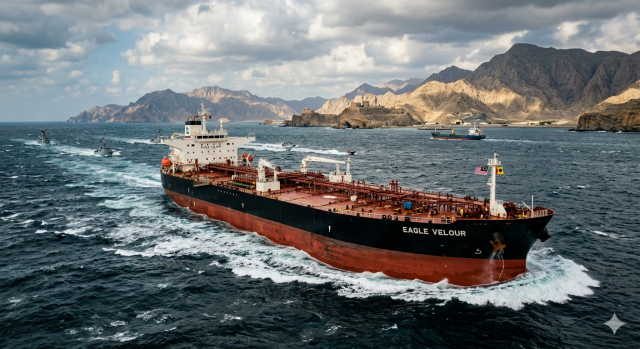
If the shipment reaches its destination as scheduled, it would mark the first case of a tanker passing through the strait and arriving in South Korea since late February, when the Eagle Valour exited just before the initial closure.
Most vessels that managed to pass during the brief reopening were bound for China and India, with only a limited number heading toward South Korea. The other successful vessels are yet to be identified.
Despite its significance, the cargo is unlikely to ease supply pressures. At roughly 500,000 barrels, it falls far short of meeting South Korea’s energy demand, suggesting that tight supply conditions and elevated oil prices could persist until stable access through the strait is restored.
The stop-and-go nature of traffic through the chokepoint continues to underscore the vulnerability of energy supply chains, with ripple effects expected across fuel prices and the broader economy.
Copyright ⓒ Aju Press All rights reserved.