The temptation is to read this as a triumph of strategy and execution. It is not — at least not entirely.
As one industry observer bluntly put it, the surge is “70 percent luck and 30 percent skill.” Over the past year, South Korea has not dramatically expanded capacity or unveiled game-changing technologies.
Instead, the rally has been propelled by forces largely beyond its control: Washington’s restrictions on China’s semiconductor sector, the memory-intensive architecture of Nvidia’s AI chips, China’s workaround using large volumes of lower-performance chips, and supply disruptions tied to the industry’s shift from DDR4 to DDR5. Prices for commodity memory have soared as much as 120 percent.
In other words, this is less a story of newfound dominance than of favorable winds. And windfalls, by nature, are fleeting. As the column’s metaphor suggests, a strong gust can lift even a pig — but when it dies down, gravity returns.
Talk of a prolonged semiconductor “supercycle” lasting through 2028 is gaining traction. History advises caution. Booms invite competition, and competition erodes margins.
Already, expansion plans are accelerating. Global players — from Micron to Chinese memory firms — are moving to build new fabs, compressing timelines as profits swell. At the same time, technological responses are emerging: Google’s “TurboQuant,” designed to reduce memory usage, could cut demand by as much as 30 to 40 percent. Policy risks also loom. A potential easing of U.S.-China tensions could unleash a wave of Chinese DDR4 supply into global markets.
New entrants and new architectures are also taking shape. From Intel and SoftBank-backed initiatives to Taiwan’s push into memory foundry services, the competitive landscape is broadening. Even Tesla has entered the fray with its Terafab concept.
The current shortage, then, is “fragile as glass.” Just a year ago, the narrative centered on crisis and decline. The swing from despair to boom took less than 12 months — a reminder that reversals can be just as swift.
The more important question is not how much South Korea earns in this cycle, but what it does with it.
The real prize lies not in 550 trillion won, but in building the foundations for ten times that value. That requires a shift from passive beneficiary to active architect — across technology, capacity, policy and business models.
First, capacity. Market control in semiconductors ultimately hinges on supply. Expanding DRAM market share from roughly 70 percent to 85 percent by 2030 would consolidate dominance. In a market defined by cyclical scarcity, having more to sell is itself a strategic advantage.
Second, technology. The next battleground is already visible: HBM5, HBM6 and CXL-based memory systems. The gap here will determine pricing power. Rivals face constraints — capital shortages in the U.S., technological gaps in China — but those advantages are perishable.
Third, policy. For companies generating tens of trillions of won per quarter, subsidies are no longer the binding constraint. Infrastructure is. Faster permitting, dedicated energy supply such as small modular reactors, and national-scale ultrapure water systems matter more than tax breaks. Semiconductors must be treated as strategic infrastructure, not merely a revenue source.
Fourth, market structure. The idea of an “OPEC for memory” — a consultative body among South Korea, Japan and Taiwan — may sound ambitious, but it reflects a deeper truth: price-setting power defines hegemony. Establishing a global memory futures exchange in Seoul would be a step toward that goal.
Finally, business models. Selling chips alone will not deliver exponential gains. The future lies in packaging memory as part of AI systems — potentially through subscription-based models. If memory firms evolve into platform companies, valuation multiples could expand dramatically, transforming not just profits but market capitalization.
South Korea stands at a rare inflection point — one that echoes how resource-rich nations built enduring wealth from temporary booms.
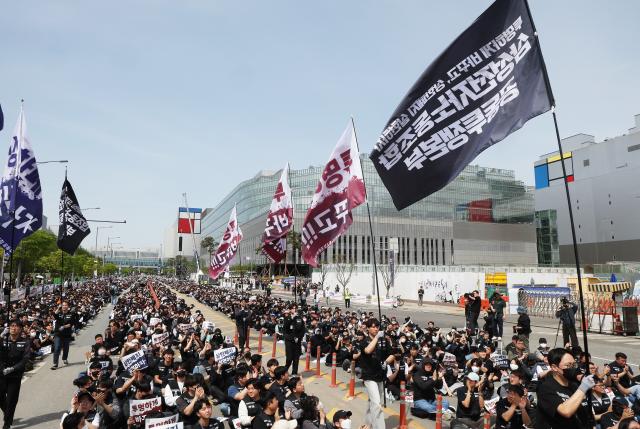
Yet the domestic debate risks missing the moment. Political instincts lean toward redistributing gains through taxation, while labor tensions threaten disruptions in an industry that runs continuously, where even a single day of stoppage can cost hundreds of billions of won.
The lesson of cycles is simple: good times do not last. The current boom offers a narrow window to design the next one.
There is no time to get drunk on 550 trillion won. The difference between a windfall and a legacy — between 550 trillion and 5,500 trillion — will be determined by decisions made now.
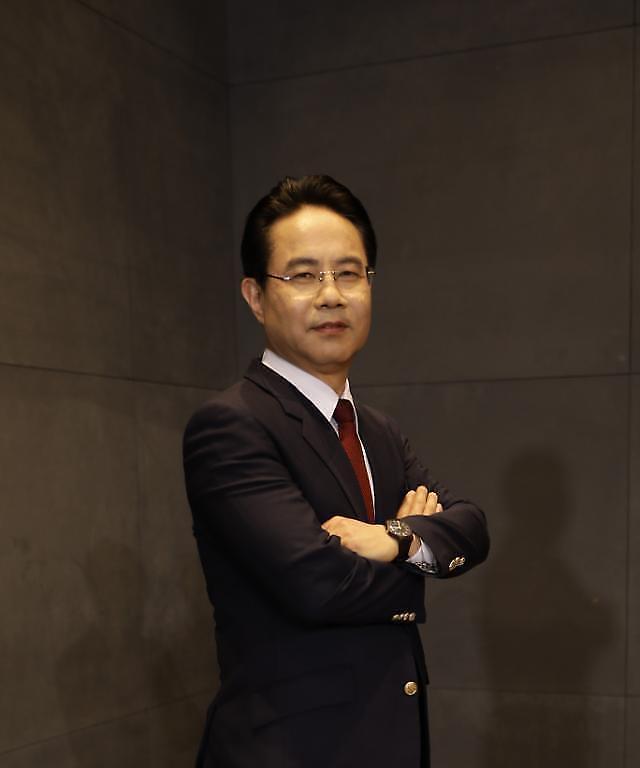
*The author is the head of the China Economy and Finance Research Institute
About the author
▷Master’s degree from Tsinghua University; doctorate from Fudan University ▷Senior research fellow at Daewoo Economic Research Institute ▷Semiconductor and IT analyst ▷Adjunct professor at Sungkyunkwan University Graduate School of China ▷Head of the China Economy and Finance Research Institute
Copyright ⓒ Aju Press All rights reserved.