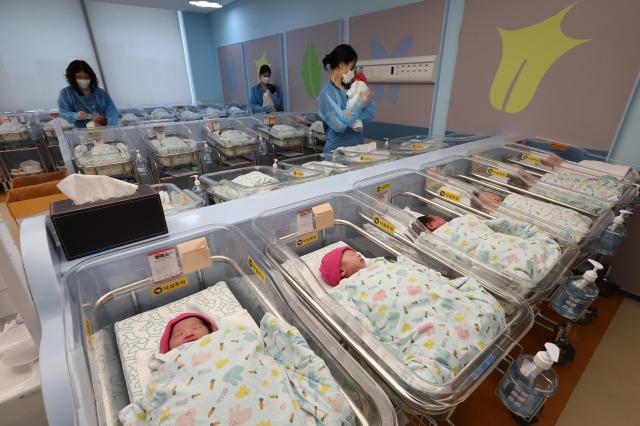
Krafton said Thursday that 46 children were born to its employees between January and April this year, about twice the 23 births recorded in the same period last year and 21 in 2024. The Seoul-based firm rolled out the expanded scheme in February 2025.
The program offers up to 100 million won ($66,992) per child over a worker's career, alongside parental leave of up to two years, automated hiring of replacement staff and counseling for returning parents. The company is co-running a study with Seoul National University's Population Policy Research Center on its effectiveness.
The findings suggest cash and non-cash benefits work differently. Direct subsidies signal corporate sincerity, with 83.4 percent of the staff surveyed saying they felt the company's family-friendly message was genuine. Non-cash measures such as flexible hours and childcare support more strongly shaped attitudes toward having children.
"Through this research, we confirmed that real change is possible when companies actively join in solving social problems," said Choi Jae-keun, head of Krafton's General Operations Department.
Krafton joins a growing roster of Korean firms tackling the demographic slump.
Booyoung Group ignited the trend in 2024 with a 100 million won bonus per newborn, which lobbied the government into exempting such corporate gifts from tax.
Kumho Petrochemical and HD Hyundai have since followed with cash incentives, while Samsung Electronics, LG and Hyundai Motor have expanded onsite daycare, fertility coverage and extended parental leave.
The corporate push appears to align with a tentative national turnaround. South Korea's total fertility rate climbed to 0.8 in 2025, a four-year high, with 254,500 newborns marking the steepest annual increase since 2007, government data showed in February.

Copyright ⓒ Aju Press All rights reserved.