
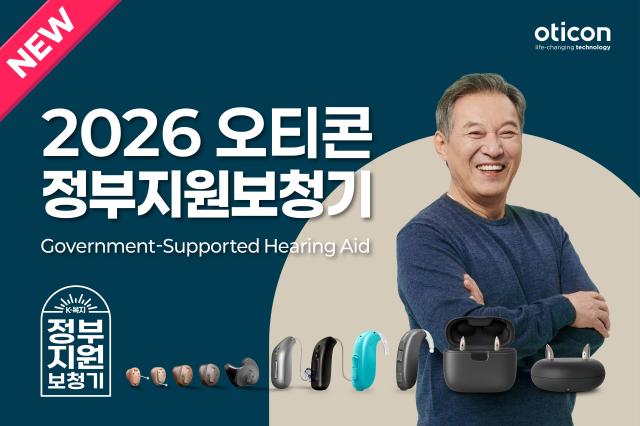
The lineup includes open-fit, in-the-ear and behind-the-ear styles and expands the range of rechargeable models, the company said, giving users more choices.
South Korea’s hearing aid support program provides a set subsidy to people registered with hearing disabilities, reflecting both price and performance standards. Industry officials view the program as a key factor in improving access, as the number of people with hearing loss continues to rise amid rapid population aging.
Oticon said the lineup is built around its premium B500 model and includes the E, F and PG series. The products are segmented so users can choose based on the degree of hearing loss and daily listening environments.
The B500 combines real-time motion sensors with artificial intelligence-based sound processing, Oticon said. The system analyzes a user’s movement and surrounding sound conditions to emphasize speech while reducing noise as needed. The company said the market is shifting from simple amplification to environment-aware sound processing.
The B500 also supports Bluetooth LE Audio to improve connection stability with smartphones and TVs, and it includes Auracast for audio sharing in multi-device settings. Its rechargeable design is intended to reduce the burden of battery replacement.
The E series focuses on noise control for everyday settings, including places such as cafes and streets. The F series emphasizes core functions to lower costs, targeting first-time users and demand for entry-level models.
For users with severe and profound hearing loss, the PG series is a high-power line designed for stronger output and durability, Oticon said. The lineup also includes recommended models for infants and children, reflecting hearing development during growth.
The company noted that personalized fitting and after-sales care are also critical in the hearing aid market, because hearing tests, adjustments and environment-based settings can determine real-world satisfaction.
Demant Group, which operates Oticon, said it has more than 100 years of research in hearing technology and continues to do business globally. In South Korea, its subsidiary Demant Korea handles product supply and services, and it has built a cooperation system with Diatec Korea in hearing diagnostic equipment.
“Beyond simple feature comparisons, it is important to improve the listening experience people actually feel in daily life,” Demant Korea CEO Park Jin-gyun said. “We will support choices that fit users’ hearing conditions and living environments.”
Industry officials expect hearing aid technology to advance around AI-based personalization and expanded wireless connectivity, with demand likely to keep rising as the older population grows.
* This article has been translated by AI.
Copyright ⓒ Aju Press All rights reserved.