
SEOUL, April 27 (AJP) -The bronze figure of Yi Sun-sin stands immovable over Gwanghwamun, but his presence is anything but static. Centuries after his death, the admiral remains one of South Korea’s most revered figures — often mentioned alongside Sejong the Great — his legacy woven into daily life, civic pride and national memory. That legacy came alive over the weekend as Seoul citizens turned out in force for the 2026 Yi Sun-sin Festival.
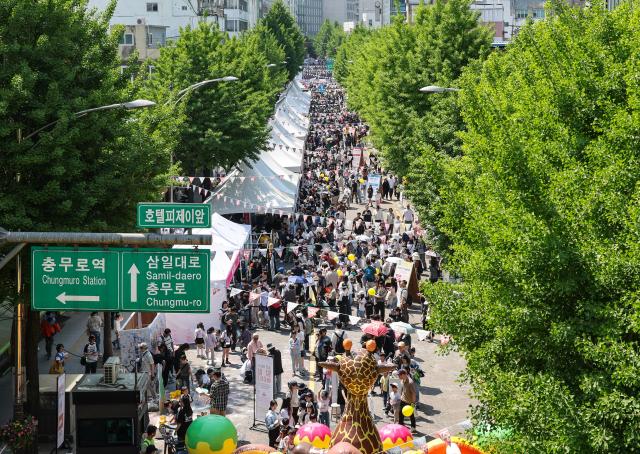
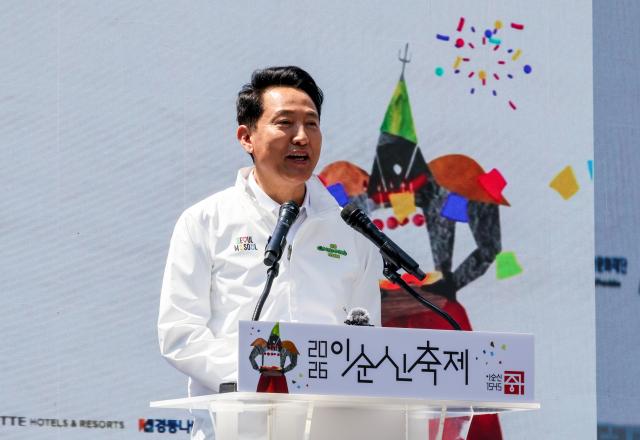
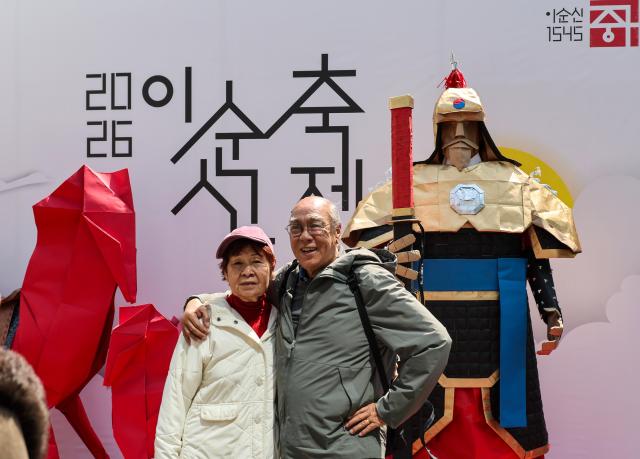
Seoul’s Jung-gu District said Monday that about 40,000 people visited the festival held on April 25 to mark the 481st anniversary of the admiral’s birth — roughly double the turnout from last year’s inaugural event. The district, believed to be the birthplace of Yi Sun-sin in 1545, staged the event not just as a commemoration but as a reclaiming of historical identity — a reminder that beneath the dense urban grid lies the origin story of one of Korea’s defining figures.
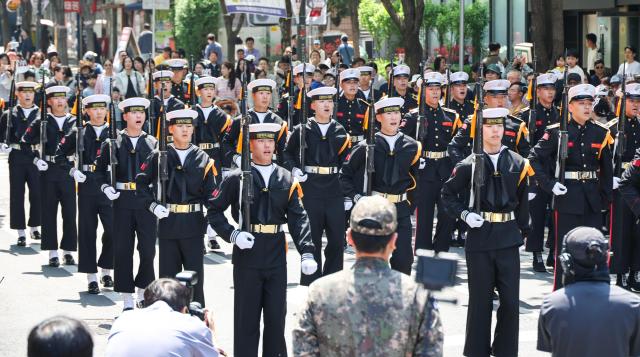
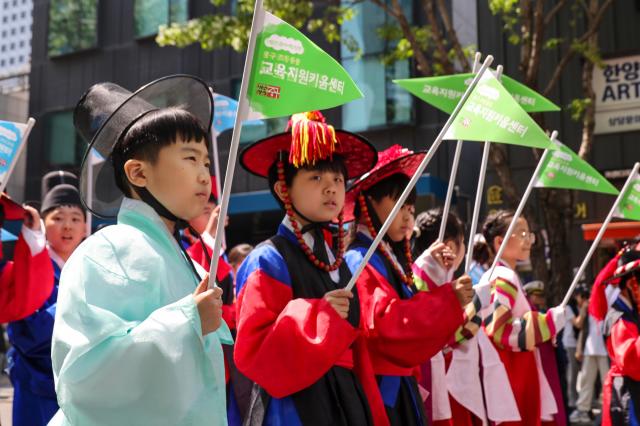
The festival opened with a parade along a 160-meter honorary road dedicated to the admiral, stretching from Jingoogae in Chungmuro to the Myeongbo intersection. More than 90 participants joined the procession, including four children who share Yi’s April 28 birthday — a symbolic passing of legacy across generations. The march blended pageantry with intimacy: uniforms, flags and footsteps echoing through streets that now hum with traffic, but once marked the beginnings of a national hero. Naval honor guards staged ceremonial performances, bringing martial discipline into a civic setting, while cultural programs unfolded across the venue.
A fitness contest titled “Iron Yi Sun-sin” crowned the district’s strongest participant — a modern reinterpretation of the admiral’s famed resilience and leadership under pressure. Across the country, similar commemorations are unfolding, notably in Asan, home to the Hyeonchungsa Shrine, where Yi’s spirit is formally enshrined. Families and visitors filled the grounds, moving between hands-on programs — from traditional games to book art, VR horseback riding and robotics exhibits — where history met technology in playful dialogue.
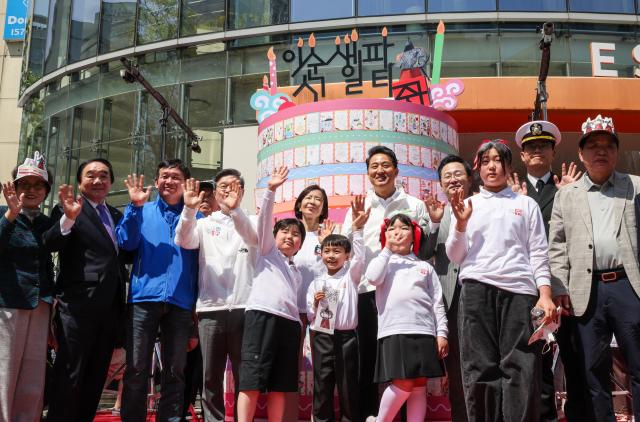
A food zone featuring 20 local restaurants anchored the festival in the everyday rhythms of the district, while a three-meter-tall birthday cake installation, built from 481 congratulatory cards submitted by residents, offered a quiet, collective tribute.
Kim Gil-sung, mayor of Jung-gu, said the district would continue to promote its identity as the birthplace of Yi Sun-sin — not as a relic of the past, but as a living narrative embedded in the city.
And as long as the admiral stands watch over Gwanghwamun, that narrative is unlikely to fade.

Copyright ⓒ Aju Press All rights reserved.
