
Global automakers seeking to regain ground in China are leaning harder into localization, rolling out strategy models that pair electrification with autonomous-driving and AI-driven digital features developed with Chinese partners.
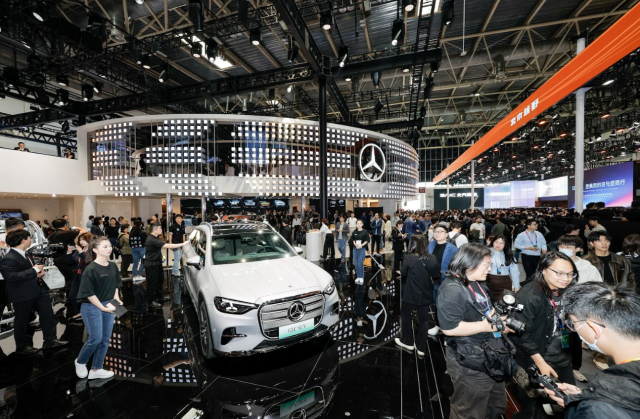
According to the industry on April 28, Mercedes-Benz moved to a head-to-head push by unveiling the China-only “electric GLC L” for the first time worldwide. The centerpiece is its in-house operating system, MB.OS. The company said a local AI assistant tailored to Chinese customers supports dialects including Cantonese and Sichuanese, while dedicated navigation links to China’s highway electronic toll collection system, underscoring its pitch of “intelligent luxury.”
Ola Kallenius, chairman of Mercedes-Benz’s board, said the Auto China show would demonstrate the company’s product strength and strategic commitment to the Chinese market. He said Mercedes-Benz would deepen China-specific models, production and research and development, and use China as a source of innovation for the brand worldwide.
BMW put its next-generation Neue Klasse platform front and center and unveiled, for the first time worldwide, long-wheelbase versions of its iX3 and i3, along with a new BMW 7 Series. The automaker said it is upgrading AI-based software through cooperation with local companies including Alibaba, DeepSeek and Huawei, and plans to introduce a new driver-assistance system developed for China’s traffic environment starting with the iX3. It also plans to apply “BMW Panoramic iDrive,” which uses the front windshield as a display, reflecting Chinese consumers’ focus on interior usability.
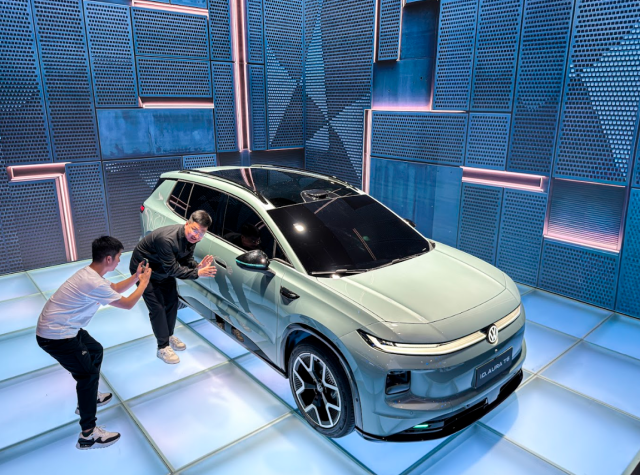
Volkswagen Group said it has reset its product portfolio — from design and digital cockpits to advanced driver-assistance systems — around Chinese customer needs under its “In China, For China” strategy. It plans to launch more than 20 electrified models in China within the year, including the ID·UNYX 09 co-developed with Xpeng, as it seeks to reclaim market leadership by linking with local innovation ecosystems. A Volkswagen China official said the company will introduce a total of 13 new-energy vehicle models across EVs and plug-in hybrids in China this year and expand the lineup to 30 by 2029.
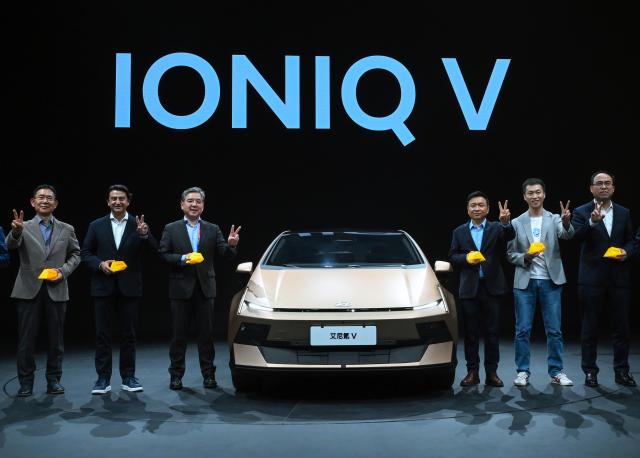
Hyundai Motor is also stepping up. The company unveiled for the first time its China EV strategy model, the Ioniq V, designed from the planning stage to reflect Chinese consumer preferences. The model uses a platform co-developed with its joint-venture partner Beijing Automotive Group and a battery developed in cooperation with China’s CATL, with a driving range of more than 600 kilometers on a single charge under the CLTC standard. Hyundai also applied more advanced ADAS functions through cooperation with Chinese autonomous-driving specialist Momenta.
* This article has been translated by AI.
Copyright ⓒ Aju Press All rights reserved.