
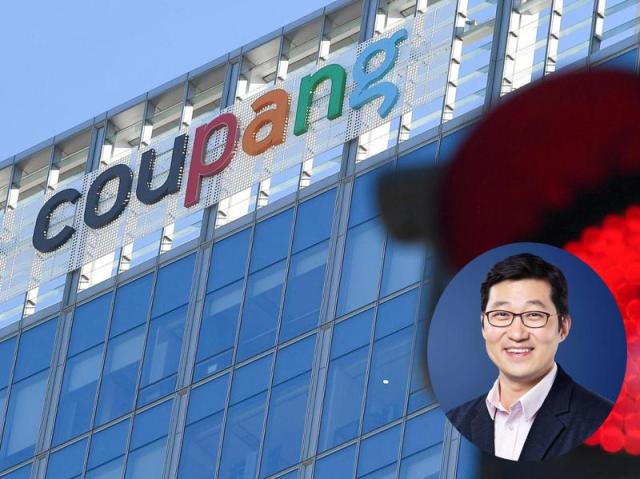
SEOUL, April 29 (AJP) -South Korea’s antitrust watchdog on Wednesday designated Bom Kim as the legal head of Coupang, placing the U.S.-listed e-commerce giant under the country’s full conglomerate regulatory regime after a data breach scandal and despite U.S. pressure.
The decision by the Korea Fair Trade Commission (FTC) reclassifies the group’s “same person” — a legal term denoting ultimate control — from the corporate entity Coupang Inc. to Kim himself. The shift expands disclosure obligations, broadens the scope of affiliates and tightens oversight of intra-group transactions under Korea’s antitrust framework.
It marks the first time in nearly four decades that a head of a U.S.-incorporated company is treated as a controlling individual behind a business entity in operation in Korea.
“Under current law, a corporate entity can be designated as the ‘same person’ only when there is no risk of private interest, including where relatives of the controlling individual do not participate in the management of domestic affiliates. The government determined that this condition has been breached," observed Kim Hong-yu, a business professor of Kyung Hee University.
"Kim’s brother, Kim Yoo-seok, served at a vice president level and exercised influence over key business decisions through involvement in logistics and delivery policy. This was judged to constitute managerial participation rather than passive employment, invalidating the basis for corporate designation,” he added.
The company thus far had operated as a regulatory outlier since being classified as a large business group in 2021 after surpassing the 5 trillion won ($3.4 billion) asset threshold, maintaining that its governance — a single ownership chain with no family stakes in domestic affiliates — did not fit the traditional chaebol model.
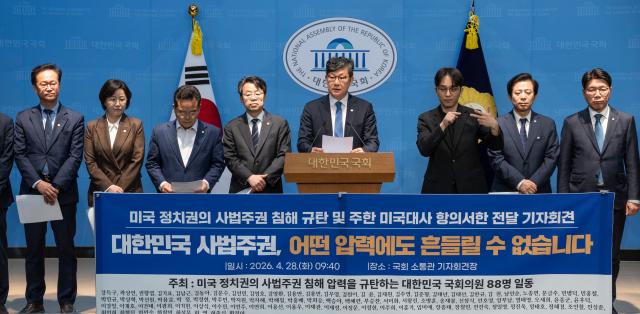
The FTC’s decision effectively rejects that distinction, applying a framework designed for family-controlled conglomerates to a platform company with dispersed global ownership.
The FTC said Coupang no longer met the conditions for corporate designation, citing findings that Kim’s younger brother, a senior executive, exercised substantive influence over key operations, including logistics and delivery policy — effectively participating in management.
Under Korean law, once a natural person is designated as the same person, regulatory oversight extends beyond formal ownership to include relatives and related entities.
Kim must now submit annual filings detailing family shareholdings and governance structures, while transactions involving related parties will face closer scrutiny under rules aimed at preventing private benefit and unfair intra-group support.
For Coupang, the compliance could have structural ramifications, which explains why it is legally challenging the Seoul move.
Lee Seong-yeob, a professor at Korea University’s Graduate School of Management of Technology, said the change could be a turning point.
“Coupang’s move from a large business group without a designated controlling person to a regular conglomerate group led by Bom Kim means it will now face chaebol-style regulations, including disclosure obligations and restrictions on self-dealing,” he pointed out.
“It is significant because it enhances management transparency at a platform company and imposes direct legal responsibilities and obligations on the controlling individual.”
Coupang said it will file an administrative suit, arguing the designation amounts to duplicative oversight for a firm already subject to strict disclosure rules as a U.S.-listed company.
“As a U.S.-listed company, we are under stringent oversight obligations,” the company said, adding that neither Kim nor his relatives hold equity in Korean affiliates and that its structure leaves “no concern about improper private interest.”

The legal dispute is expected to hinge on whether operational influence — absent ownership — constitutes control under Korean law.
The latest FTC ruling comes against a backdrop of intensifying scrutiny of Coupang’s business practices and political reach.
A major personal data breach last year triggered regulatory investigations and public backlash in South Korea, sharpening concerns over platform accountability as the company has become embedded in daily life for millions of users.
Coupang, incorporated in Delaware and listed on the New York Stock Exchange, occupies a hybrid position: legally American, financially global, but operationally Korean, with more than 90 percent of its revenue generated in South Korea.
Coupang reported revenue of about 45.5 trillion won last year, with operating profit rising to 2.28 trillion won and net profit to 1.58 trillion won. It also transferred roughly 1.46 trillion won to its U.S. parent, a move the company described as capital allocation rather than profit extraction, but which drew criticism in South Korea as most earnings are generated domestically.
The Coupang issue has loomed largely over Korea-U.S. relations, partly as the result of aggressive lobbying.
Coupang significantly expanded its lobbying efforts in Washington. Disclosures show the company nearly doubled its U.S. lobbying spending in early 2026 to about $1.8 million, widening engagement beyond trade agencies to include senior government offices such as the White House and National Security Council as regulatory pressure mounted in Korea.
U.S. policymakers have already raised concerns over Seoul’s treatment of the company, viewing investigations — including those tied to the data breach — as potentially unfavorable to American firms. In recent weeks, U.S. lawmakers have urged the Korean government to avoid what they described as discriminatory regulatory actions.
Copyright ⓒ Aju Press All rights reserved.
