
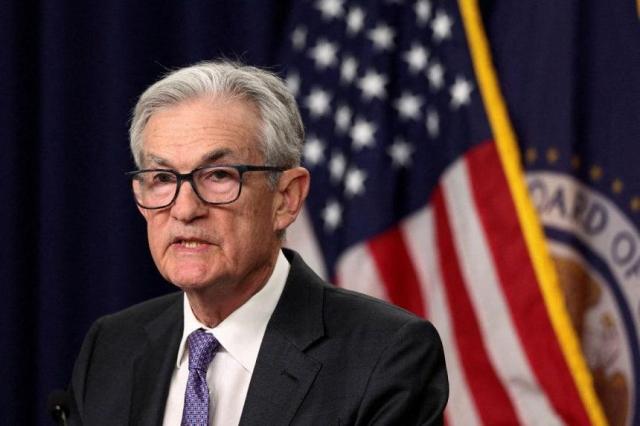
The Fed said on April 29 (local time) that the Federal Open Market Committee kept its target range at 3.5% to 3.75%. The statement said economic activity is expanding at a solid pace, but noted that inflation remains high and that recent global energy price increases have been partly reflected. It also cited the Middle East situation as a factor adding to elevated uncertainty in the economic outlook, signaling greater caution than in March.
The bigger story was the split among policymakers. Governor Steven Miran dissented in favor of a 0.25 percentage-point cut. Beth Hammack, Neel Kashkari and Lorie Logan supported holding rates but opposed the statement’s wording, saying it still left the impression that cuts remained possible. The 8-4 vote marked the widest disagreement since October 1992, underscoring that the Fed is less inclined to treat rate cuts as the next automatic step.
Chair Jerome Powell said the U.S. economy remains resilient despite the energy price shock. He said consumer spending and business investment are holding up, while housing is weak. On the labor market, Powell said the unemployment rate has held around 4.3% with little change and that job growth has slowed from earlier levels.
Powell was more cautious on inflation. He put March’s personal consumption expenditures inflation at 3.5% and core PCE inflation, excluding food and energy, at about 3.2%. With higher oil prices stirring inflation expectations, energy costs — more than tariffs — emerged as a key factor making rate cuts harder, he said.
Markets reacted quickly. U.S. Treasury yields rose and expectations for rate cuts this year weakened. In New York trading, the Dow Jones Industrial Average fell 0.57% and the S&P 500 slipped 0.04%. The Nasdaq edged up 0.04%. The two-year Treasury yield rose 10.7 basis points to 3.951%, and the 10-year yield climbed 7.6 basis points to 4.43%.
Overall, the statement, the voting pattern and Powell’s remarks were seen as a signal the Fed will keep watching inflation trends for now.
The meeting also drew attention as a transition point for the Fed. It was the last FOMC news conference under Powell’s chairmanship. On the same day, the Senate Banking Committee approved Kevin Warsh’s nomination as Fed chair and sent it to the full Senate. Powell said he would remain on the Fed’s board for some time after his term as chair ends.
* This article has been translated by AI.
Copyright ⓒ Aju Press All rights reserved.