
On May 1, Seoul’s Seongsu-dong effectively ground to a halt. Streets filled with people, mobile service nearly failed, and routine movement became all but impossible. Some posted warnings not to head toward Seongsu; others complained they could not get online. It was not an accident or a disaster. The cause was simple: a Pokemon event.
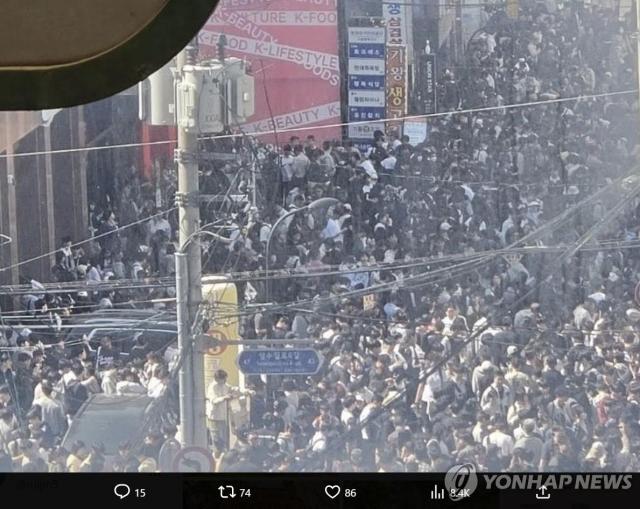
Many people’s first explanation is nostalgia: a childhood character and storyline returned, drawing crowds. That is part of it, but not the whole story. Pokemon is not just a legacy brand. It remains a growing industry, expanding through new games, animation and merchandise. Children and teenagers still consume it, while adults return with their memories. When two generations move at once, the pull goes beyond a passing trend.
The crowd in Seongsu-dong cannot be reduced to a single motive. Some came for childhood memories, some for games they play now, and others because it was “the hottest place” at the moment. With those drivers operating at the same time, the turnout swelled faster and larger than expected. A key point emerges: modern content is increasingly built to mobilize all ages at once.
Event design amplified that effect. This was not a simple exhibition. It used a participatory route: visit specific spots, collect stamps and receive rewards. The model has already been proven worldwide through Pokemon GO. Games no longer stay on a screen; they pull people into the streets and make them move through real space. In that process, the city becomes a play space, not just a backdrop.
Viewing the surge as a spontaneous wave misses what happened. The outcome was planned: where people would gather, how they would move and where spending would occur. Routes, rewards and even time on site were designed. The Seongsu-dong crowd was not accidental but a “planned crowd,” reflecting how the content industry has moved beyond storytelling to shaping behavior.
The scene also showed a modern feature of mass gatherings. Thousands shared the same space, yet interaction was limited. Most stared at smartphone screens, completing individual missions. It looked like a festival, but it was a collection of individual actions. Where older festivals connected people to one another, many current events connect people to content. People are together, but also alone.
The pattern is not unique to South Korea. In 2016, in New York’s Central Park, thousands rushed in after word spread that a rare character appeared soon after Pokemon GO’s release. News reports showed cars stopping and people running out. Tokyo has seen similar scenes: long lines at Pokemon events and congestion serious enough to require police control. Content-driven movement has become a global phenomenon.
Comparable cases appear in other industries. U.S. streetwear brand Supreme draws long lines on release days. Scarcity and the value of the experience lead consumers to line up not only to buy, but to participate. Apple also draws lines for new product launches. The common thread is demand for an experience, and that experience is often designed by companies.
Problems arise when the structure scales too far. Crowds can signal economic vitality: local businesses benefit and a city’s brand value can rise. But beyond a certain point, the picture changes. Traffic locks up, communications fail and safety risks grow. At that moment, it stops being a festival and becomes a hazard.
That raises the question of responsibility. When such situations occur, criticism often focuses on city management. Public authorities matter; police and local governments must control crowds and secure safety. But the starting point should be clear. The city did not create the demand; companies did, by planning events and rewards. The social costs that follow should also be shared by companies to some degree.
In the current structure, companies take the gains while cities and residents bear congestion and risk. As content grows more influential, the imbalance could worsen. Companies, the argument goes, should not stop at attracting crowds; they should design responsibly, including capacity limits, dispersing routes and safety management.
Such episodes are likely to become more frequent and larger. Content is getting stronger, social media spreads faster and people move more easily. A single event changing a city’s flow is no longer an exception. It reflects a shift in industrial structure, not just culture.
What happened in Seongsu-dong leaves a question: Is it merely popularity, or a new structure that must be managed? Content is already moving the real world, and its influence is growing.
In the end, what was on display was not just Pokemon. It was a system: content gathers people, people reshape space, and the result can shake a city’s functioning. If that system is not understood, the same scenes will repeat.
Seongsu-dong stopped for a simple reason: too many people arrived. More precisely, they arrived because the event was designed to bring them there.
* This article has been translated by AI.
Copyright ⓒ Aju Press All rights reserved.