
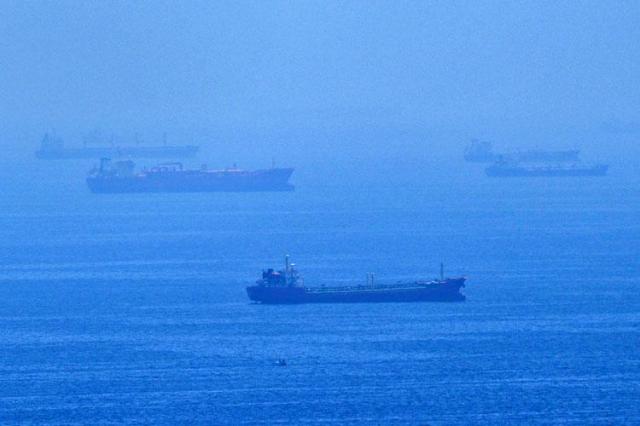
Military authorities have been taking part in talks on supporting the reopening of the key waterway after the war, starting with a virtual meeting of chiefs of staff hosted by France in March and followed by senior-level military discussions. Seoul has maintained that it is reviewing possible contributions.
The discussions, involving around 40 countries, have produced broad agreement on the need for international cooperation to ensure freedom of navigation.
The more difficult question is whether South Korea will deploy military assets.
The Strait of Hormuz remains exposed to regional tensions and irregular threats. Operations to clear mines or protect civilian vessels could leave participating forces vulnerable to drone attacks and other asymmetric threats. The possible deployment of the Cheonghae Unit’s destroyer Dae Jo-yeong, or its replacement vessel Wang Geon, has been discussed, but caution remains strong within the military given the need to ensure troop safety.
Domestic procedures also remain a key factor. If the Cheonghae Unit, currently deployed in the Gulf of Aden, is redirected to the Strait of Hormuz or given an expanded mission, parliamentary approval would be required. That means the issue would require not only a military decision but also political consensus.
The government’s emphasis on a phased response plan appears to reflect these constraints.
As an initial contribution, Seoul is expected to consider sending personnel and sharing intelligence. Options include dispatching liaison officers to a multinational command or strengthening information-sharing channels. Such steps would allow South Korea to respond to international calls for cooperation while minimizing the military burden.
The U.S. proposal for a “maritime freedom” coalition has emerged as a new variable. If a separate U.S.-centered coalition takes shape alongside the existing UK-France-led initiative, Seoul may have to reassess how and where to participate.
The government has refrained from making a formal announcement while continuing close consultations with Washington.
Experts say the issue should be seen not simply as a question of troop deployment but as a broader diplomatic strategy. Seoul must balance cooperation with the U.S., given the importance of the alliance, with participation in a European-led multilateral security effort.
Leaning too heavily toward one coalition could also create diplomatic risks, they say.
The government is likely to first assess the details of the U.S. proposal and the level of international participation before deciding on the scale of its phased contribution. The deployment of military assets is expected to be considered only as a limited option at a later stage.
However, pressure for more active military involvement could grow if the security situation in the Middle East deteriorates further or if disruptions in the Strait of Hormuz are prolonged.

Copyright ⓒ Aju Press All rights reserved.
