
As South Korea moves deeper into a super-aged society, senior housing is shifting away from care-focused facilities toward residential models that combine housing, support services and leisure. With the emergence of public-type senior housing priced at about 2 million won a month, an underserved “middle market” is beginning to take shape.
Industry officials said May 3 that the senior housing market is showing signs of moving beyond a split structure dominated by high-end “silver towns” and public rental housing, as providers develop a wider range of prices and service models aimed at middle-income older adults.
Demand is also changing. Many older residents want more than a place to live, seeking arrangements that help maintain quality of life — including meals, cleaning, health management and leisure programs — while allowing independent living in a hotel-like managed setting.
According to the Seoul Metropolitan Government, the city has 1.93 million residents age 65 and older, and 77% of them live in homes that are more than 20 years old.
But the existing market has been built largely around expensive senior communities, leaving about 490,000 middle-income older adults with few realistic options and a housing gap, the industry said.
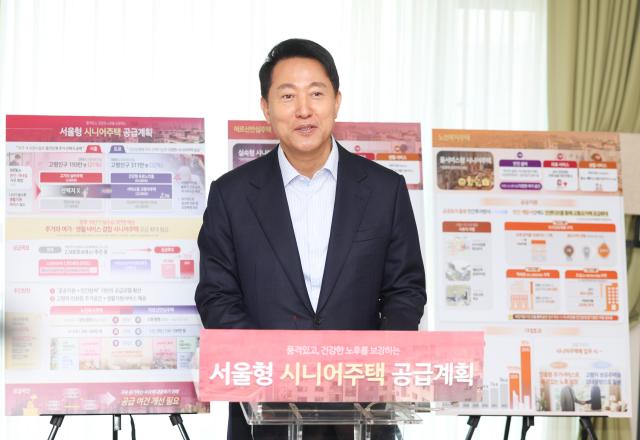
Seoul’s newly announced public-type senior housing model would provide services such as meals, cleaning and health management for around 2 million won per month. If supply expands as planned, it is expected to absorb demand among middle-income seniors.
Until now, the market has been led by luxury developments. “The Classic 500” in Jayang-dong, Gwangjin-gu, Seoul, has remained popular despite a 1 billion won deposit and monthly costs of about 5 million won, with waiting lists stretching for years. “VL Le West” in Magok, Gangseo-gu, has also drawn attention as a high-end model with deposits ranging from 1.2 billion won to 2.3 billion won.
Seoul has announced a plan to supply 12,000 units of “Seoul-type senior housing” by 2035 and is seeking to attract private participation through construction financing support, floor-area-ratio incentives and eased public-contribution requirements. Support measures include up to 60 million won in interest-free deposit assistance, zoning upgrades near transit hubs and floor-area-ratio incentives of up to 10%.
A report published April 29 in Construction Policy Journal No. 61 by the Korea Research Institute for Construction Policy said senior housing could move beyond a welfare facility model and become a new pillar of demand for the construction and housing markets.
Challenges remain even as the market grows. In the report, Lee Ji-a, a deputy research fellow at the institute’s Industrial Policy Research Office, said senior housing policy needs structural change, not just more supply. She called for redefining senior housing as an independent housing type rather than a welfare facility, and for building a dual supply system that combines new construction with age-friendly remodeling of existing homes. She also said incentives such as floor-area-ratio benefits and financial support are needed to ensure project viability.
In February, the National Assembly passed a special law on the creation and operation of retirement communities, providing an institutional foundation for developing the senior housing market. The market is expected to further segment into “active senior” housing for healthy people in their 60s and 70s, care-focused models with stronger support functions, and medical-linked “medical residences.”
* This article has been translated by AI.
Copyright ⓒ Aju Press All rights reserved.