
With the People Power Party selecting Supreme Council member Yang Hyang-ja as its candidate for Gyeonggi governor, the race has come into sharper focus. Yang will face Democratic Party candidate Choo Mi-ae in a matchup that, on its surface, draws attention as a contest between two women. The symbolism is heightened because Gyeonggi Province is widely seen as the country’s biggest political battleground.
But reducing the race to a simple narrative of “women’s political gains” risks missing the larger shift. The significance is not that women are running, but that gender is increasingly no longer treated as something requiring special explanation — a sign that what once stood out as an event is becoming an assumption.

Gyeonggi is not just another local government. With a population of about 14 million, it is a massive living and economic area and a key measure of public sentiment in the Seoul metropolitan region. It is also a stage for policy experiments, and winning there can elevate a politician’s national standing. For years, the governorship has been viewed as a major gateway to a presidential run. The article notes that President Lee Jae-myung rose to the presidency after holding the post.
That both major parties are fielding women is a notable change, but it is not simply a natural outcome. Nominations for Gyeonggi governor are the product of strategy, shaped by calculations about appealing to centrist voters, refreshing party images and countering opponents. Yang can seek broader support by emphasizing her background as an industrial worker and an image tied to technology competitiveness. Choo, with an established political presence and a reputation for strong leadership, can aim to consolidate her base. The matchup reflects social change and political strategy at the same time.

Yang and Choo also present a clear contrast. Yang is described as Samsung Electronics’ first female executive without a college degree, a figure associated with “on-the-ground” leadership shaped in industry. Choo, a former judge who has served as party leader and a minister, is portrayed as a conventional establishment politician with strong drive and a clear message, already well known nationwide. One speaks the language of industry and technology; the other, the language of politics and power.
In that sense, the choice before voters is not gender but the type of leadership they want — which experience and judgment are better suited to running a vast administrative unit like Gyeonggi. The article argues the race is best understood as a competition between leadership models.
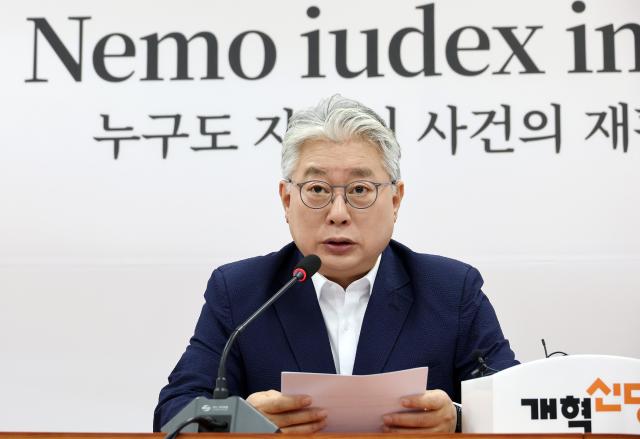
The contest, however, is unlikely to remain that straightforward. The entry of New Reform Party candidate Cho Eung-cheon, described as a former lawmaker, adds another variable, because the outcome could shift depending on whether candidates unify. The article says that dynamic underscores how elections are shaped not only by leadership and policy, but also by alliances and splits among political forces.
Overall, the Gyeonggi governor’s race is presented as a layered contest: a symbolic faceoff between women candidates, but also a test of strategy, leadership and political realignment. The article says voters’ focus is also changing. Where gender, origin and background once drew the most attention, expectations about policy, execution and results are playing a larger role — even if the shift is not complete.
From that perspective, labeling the race a “victory for women in politics” captures only part of the story. The more consequential point, the article argues, is that being a woman is increasingly no longer treated as an exceptional explanation — a sign that politics may be moving toward judging leaders more by outcomes than by narratives.
The article concludes that the election is more than a local contest: It is a test of leadership in a province that can shape national politics, and a window into the country’s political direction. The central question, it says, is simple: What kind of leader do voters want — beyond gender and background — when what ultimately remains is judgment and results?
* This article has been translated by AI.
Copyright ⓒ Aju Press All rights reserved.