
Prosecutors and power-equipment makers clashed in court over whether a Korea Electric Power Corp. gas-insulated switchgear (GIS) case amounts to a long-running, structural cartel, as a trial over alleged bid rigging worth about 677.6 billion won moved forward.
The Seoul Central District Court’s Criminal Division 32, led by Presiding Judge Ryu Kyung-jin, held the first hearing Tuesday for eight companies — including Hyosung Heavy Industries, HD Hyundai Electric, LS Electric and Iljin Electric — and current and former employees charged with violating the Fair Trade Act. The court discussed the trial schedule and evidence procedures and also held bail hearings for some defendants indicted in custody.
Prosecutors allege the defendants coordinated expected winners and bid prices in advance in 145 KEPCO tenders from 2015 to 2022, forming a cartel involving about 677.6 billion won in contracts. Prosecutors estimate illegal gains at at least 160 billion won.
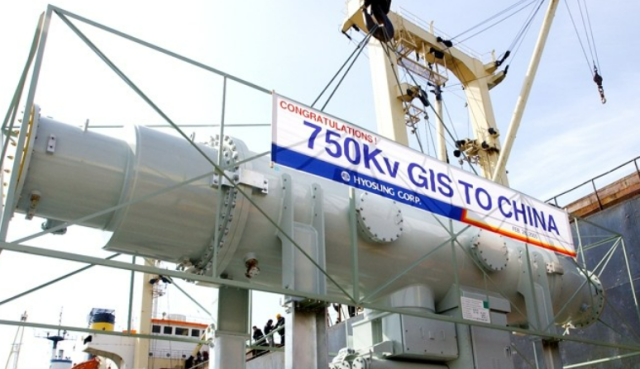
GIS is a key device used at power plants and substations to cut excessive current and protect electrical facilities. Prosecutors say major suppliers, including the four companies, controlled about 90% of the market and divided up orders over an extended period.
The companies deny collusion and argue the indictment does not specify the alleged agreements in sufficient detail.
A lawyer for Hyosung Heavy Industries said prosecutors claim there was an overarching agreement but have not identified when or how it was reached. In a bid-rigging case, the lawyer said, prosecutors must specify who communicated in each tender and how winners were decided.
The lawyer also said the indictment includes tenders Hyosung did not participate in, arguing it is hard to accept treating nonparticipation — due to production issues or sanctions — as part of collusion.
Other companies likewise said they submitted bids normally based on their own standards and judgment and did not preselect winners or prices.
Prosecutors countered that the case was brought to cover an overall collusive structure under the Fair Trade Act and involves dominant firms restricting competition for years. Prosecutors also said they found indications of defendants reversing statements after acknowledging collusion and argued there remains a risk of evidence destruction.
At the bail hearings, defense lawyers for detained defendants said the case is expected to take a long time, the defendants have fixed residences, and most objective evidence has already been secured, asking that they be tried without detention.
Prosecutors opposed bail, citing the scale and seriousness of the alleged conduct and arguing the risk of evidence destruction remains, including because defendants are responding jointly through the same lawyers.
Some defendants also raised questions about the legality of the investigation. Iljin Electric said materials covered by attorney-client privilege were included in searches and seizures and said it would challenge their admissibility.
The Fair Trade Commission last year ordered corrective measures and imposed a total of 39.1 billion won in fines on 10 companies, including Hyosung Heavy Industries, HD Hyundai Electric, LS Electric and Iljin Electric. Six of the companies were referred to prosecutors.
An administrative lawsuit over the FTC’s measures is also pending at the Seoul High Court. How the criminal court defines the scope of collusion and each defendant’s involvement is expected to affect related civil and administrative cases.
* This article has been translated by AI.
Copyright ⓒ Aju Press All rights reserved.