
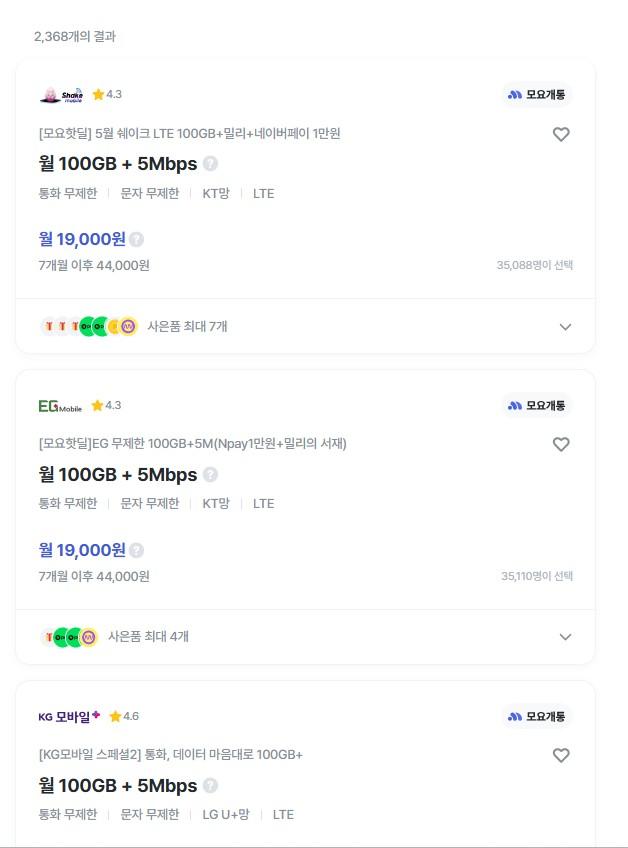
As the Ministry of Science and ICT prepares to introduce a unified pricing plan for Long-Term Evolution (LTE) and 5G next month, concerns are mounting within the mobile virtual network operator (MVNO) sector. There are fears that if the new pricing structure, which includes 5G data and a Data Assurance Option (QoS) at LTE price levels, is implemented, it could weaken the competitive edge of the LTE-focused MVNO market.
According to industry sources, the three major telecom companies—SK Telecom, KT, and LG Uplus—are in the final stages of discussions to launch the LTE and 5G unified pricing plan.
Currently, the telecom market is experiencing a decline in LTE subscribers while 5G subscribers are on the rise. The Ministry of Science and ICT reported in April that as of the end of February 2026, there were 18.35 million LTE subscribers and 38.75 million 5G subscribers. Compared to six months ago, the number of LTE subscribers has decreased by approximately 970,000, while 5G subscribers have increased by about 1 million. On a monthly average, this translates to a reduction of around 160,000 LTE subscribers and an increase of approximately 165,000 5G subscribers.
However, the MVNO market remains predominantly LTE-focused. As of February this year, there were 9.7 million LTE subscribers among MVNOs, while the number of 5G subscribers was only 551,593, accounting for about 5% of the total MVNO subscriber base.
MVNOs are concerned that the implementation of the unified pricing plan could further disrupt this market structure. While the existing low-cost LTE plans have provided a competitive advantage for MVNOs, the introduction of pricing plans that include 5G data and QoS at LTE price points could diminish this price differentiation.
The growth of the MVNO market is also showing signs of slowing down. According to the Korea Telecommunications Operators Association (KTOA), the number of MVNO subscribers decreased by 7,353 last month.
The number of subscribers switching from the three major telecom companies to MVNOs has also declined. The number of subscribers moving from SK Telecom to MVNOs fell by 21.5% compared to the previous month, while KT and LG Uplus saw decreases of 20.6% and 18.8%, respectively. Analysts suggest that the expansion of mid-range 5G pricing plans from the major telecom companies is weakening the competitive position of LTE-focused MVNOs.
In particular, the Data Assurance Option (QoS), which is a key feature of the unified pricing plan, could further reduce the price and service differentiation between MVNOs and major telecom companies. If all data is exhausted under any plan, users will still have access to additional data at a speed of 400 kbps, which could undermine the competitiveness of existing low-cost MVNO plans.
An industry insider stated, "The mid-range pricing market has traditionally been an area where MVNOs have shown their competitiveness, but the government's push for pricing reforms centered around major telecom companies is rapidly eroding market boundaries. In the long term, there is a possibility that the MVNO ecosystem itself could be weakened."
* This article has been translated by AI.
Copyright ⓒ Aju Press All rights reserved.