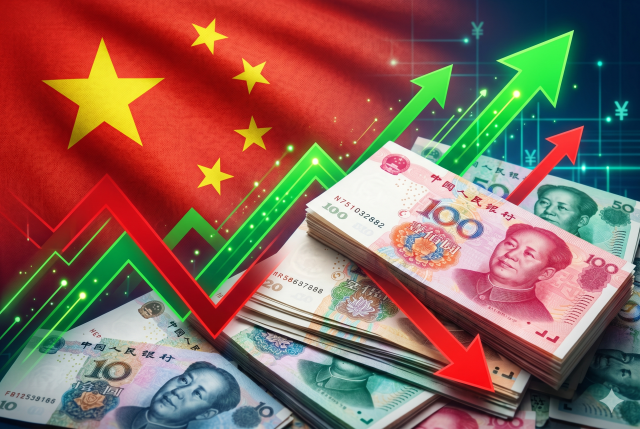
For much of the past two years, the dominant concern surrounding the Chinese economy was not inflation but stagnation.
Economists spoke openly of deflationary pressure, collapsing real-estate confidence, weakened domestic consumption and a manufacturing slowdown severe enough to shake the foundations of the world’s second-largest economy. Beijing’s policymakers responded with cautious monetary easing, infrastructure stimulus and selective industrial support, while global investors questioned whether China’s long era of rapid expansion had reached structural exhaustion.
Yet history rarely moves in straight lines. Economies that appear frozen can suddenly reawaken under the pressure of geopolitics, energy shocks and strategic competition. China’s latest inflation figures suggest precisely such a turning point.
April’s rise in the Consumer Price Index and the sharper acceleration in Producer Price Inflation may appear modest by Western standards, but in the Chinese context they are deeply significant. They indicate that China is moving away from the deflationary anxiety of the post-pandemic era and entering a far more complicated phase: a return of industrial inflation driven not by consumer exuberance, but by global strategic instability.
At the center of this transformation lies a triangle of forces now shaping the international economy.
The first is America’s prolonged high-interest-rate regime.
The second is the geopolitical instability spreading across the Middle East and the Strait of Hormuz.
The third is the rebound of Chinese manufacturing power.
Together, these three forces are redefining the economic architecture of Asia and perhaps the wider world.
China’s recent inflationary movement cannot be understood merely as a domestic monetary phenomenon. It is inseparable from rising oil prices, disrupted shipping expectations, tightening global supply chains and the renewed militarization of trade routes. The world economy is once again learning an old historical lesson: when the arteries of energy and commerce become unstable, inflation returns with extraordinary speed.
China remains the workshop of the modern world. Even after years of supply-chain diversification, Western companies continue to rely heavily on Chinese industrial ecosystems for intermediate goods, rare earth processing, electronics components, chemicals, steel products and consumer manufacturing. When production costs rise inside China, the effects ripple outward across continents.
The rise in Chinese producer prices therefore carries implications far beyond Beijing or Shanghai. It affects semiconductor fabrication in South Korea, automobile assembly in Germany, electronics distribution in Southeast Asia and consumer pricing in the United States. Inflation inside China increasingly becomes inflation exported to the world.
This matters because the global economy has entered an era fundamentally different from the one that dominated the decades after the Cold War. From the 1990s through the late 2010s, globalization functioned largely as a deflationary system. Cheap labor, stable shipping lanes and expanding international trade continuously pushed prices downward. China served as the anchor of that system.
Today the opposite dynamic is emerging. Strategic rivalry, military tensions, technological decoupling and energy insecurity are creating a new inflationary order. Production is becoming more expensive not because of excessive consumer demand, but because the geopolitical cost of maintaining the global economy is rising.
No place illustrates this transformation more clearly than the Middle East.
The Strait of Hormuz is not merely a narrow body of water. It is one of the central pressure points of civilization. Roughly a fifth of the world’s oil supply passes through this corridor. Liquefied natural gas shipments from Qatar also move through these waters toward Asia and Europe. Any instability there immediately affects shipping insurance rates, freight costs, energy futures and ultimately consumer prices.
The escalating confrontation involving Iran, American military deployments and regional proxy conflicts has therefore become more than a political crisis. It is now an economic accelerator.
China, as the world’s largest importer of energy and raw materials, is especially vulnerable to such disruptions. Rising oil prices feed directly into factory costs, transportation expenses and industrial production. Chinese manufacturers already operating under thin margins must either absorb the higher costs or pass them onward through global supply chains.
That process now appears to be underway.
Yet China’s situation is paradoxical. Inflationary pressure is arriving at the same moment as industrial recovery. Export orders have improved in several sectors. Manufacturing activity has stabilized. Government-led investments in electric vehicles, artificial intelligence infrastructure, green technology and semiconductor development have helped revive industrial momentum. In another era, such recovery might have been celebrated unambiguously.
But today’s recovery is occurring under conditions of strategic fragmentation.
Chinese policymakers face a delicate balancing act. If they stimulate aggressively, inflationary pressures may intensify and capital outflows could accelerate. If they tighten too early, the fragile recovery could weaken before domestic demand fully stabilizes. Meanwhile, demographic decline, youth unemployment and property-market instability continue to weigh heavily on long-term confidence.
The result is an economy suspended between revival and vulnerability.
Western analysts sometimes underestimate the psychological and historical dimension of China’s current posture. China’s leadership does not view economic management solely through quarterly growth statistics. It increasingly frames economic resilience as part of national security and civilizational continuity. The memory of foreign intervention, maritime vulnerability and industrial dependence remains deeply embedded in the strategic thinking of Beijing.
This is why China continues investing heavily in manufacturing capacity despite global concerns about overproduction.
Beijing sees industrial strength not simply as an economic asset but as geopolitical insurance.
In this context, the rebound of Chinese manufacturing becomes more than a business cycle. It becomes part of a broader contest over the future structure of global power.
The United States, meanwhile, faces its own contradictions.
The Federal Reserve’s high-interest-rate policy was initially designed to combat domestic inflation. Yet prolonged monetary tightening has created secondary consequences across the world economy. Higher American rates strengthen the dollar, pressure emerging-market currencies and increase debt-servicing burdens globally. Countries dependent on imported energy or dollar-denominated financing face especially acute vulnerability.
Asia sits at the intersection of these pressures.
A stronger dollar raises import costs. Higher oil prices worsen trade balances. Slowing Western demand threatens exports.
Yet regional governments simultaneously face pressure to invest more heavily in industrial transformation, technological competitiveness and energy security.
South Korea illustrates these tensions with particular clarity.
The Korean economy is deeply integrated into both American and Chinese systems. It relies on exports to China while maintaining strategic alignment with the United States. It depends heavily on imported energy while competing globally in high-value manufacturing. This dual exposure makes Korea exceptionally sensitive to shifts in global inflation and geopolitical instability.
When Chinese producer prices rise, Korean firms immediately feel the impact through intermediate goods and supply-chain costs. Semiconductor producers, petrochemical companies, battery manufacturers and automobile suppliers all face rising input expenses. At the same time, elevated American interest rates place downward pressure on the Korean won and complicate domestic monetary policy.
Korea therefore confronts a strategic dilemma that is economic, geopolitical and civilizational all at once.
The nation can no longer rely solely on the export-driven assumptions that powered its rise during the late twentieth century. The old model was built on stable globalization, relatively cheap energy and predictable trade routes. That world is fading.
The emerging world is one of fragmentation, technological blocs, strategic supply chains and recurring geopolitical shocks.
This requires a profound shift in Korean thinking.
First, Korea must strengthen its energy resilience. The events surrounding the Strait of Hormuz demonstrate how vulnerable import-dependent economies remain to external disruptions. Korea should accelerate diversification of energy sources, strategic reserves and next-generation energy technologies. Nuclear energy, hydrogen infrastructure and advanced battery systems must be viewed not only as industrial opportunities but as national security priorities.
Second, Korea must deepen technological sovereignty.
The global semiconductor industry increasingly resembles a geopolitical battlefield rather than a conventional market.
Artificial intelligence, advanced chips, quantum computing and strategic materials now function as instruments of state power. Korea cannot remain merely an efficient manufacturing base. It must become a strategic innovator capable of controlling core technologies and critical supply networks.
Third, Korea must rethink the meaning of economic security itself.
For decades, efficiency was the dominant principle of globalization. Companies minimized costs, optimized logistics and relied on just-in-time supply chains. Today resilience matters as much as efficiency. Governments and corporations alike are rediscovering the value of redundancy, strategic reserves and domestic industrial capacity.
This shift may appear expensive in the short term, but the cost of fragility is proving far greater.
The broader global economy now stands at an inflection point comparable in some respects to the oil crises of the 1970s.
Then, as now, geopolitical conflict in the Middle East triggered inflationary pressure, financial instability and structural economic transformation. Yet the present situation may be even more complex because it coincides with technological revolution, demographic transition and intensifying great-power rivalry.
Artificial intelligence, automation and digital infrastructure are reshaping labor markets and production systems at extraordinary speed. Meanwhile aging populations across developed economies are reducing labor supply and increasing fiscal burdens. The old growth engines of globalization are weakening just as new strategic conflicts emerge.
China’s inflation data must therefore be interpreted within this larger historical framework.
It is not merely a statistical development. It is part of a broader transition from the age of hyper-globalization to an era of strategic economics.
The consequences of that transition will not be evenly distributed.
Countries with strong industrial capacity, technological adaptability and social cohesion may emerge stronger. Nations overly dependent on imported energy, fragile supply chains or excessive financial leverage may struggle severely.
Korea possesses many of the strengths required for this new era: advanced manufacturing, world-class technology companies, educational achievement and cultural influence. Yet it also faces structural vulnerabilities including demographic decline, political polarization and heavy external dependence.
The challenge ahead is therefore not simply economic management. It is strategic adaptation.
Historically, Korea has often thrived under pressure. From postwar devastation to industrial transformation, the nation repeatedly converted crisis into opportunity through discipline, education and institutional resilience. The question now is whether Korea can once again reinvent itself for a more fragmented and uncertain century.
China’s current inflationary movement offers a warning, but also a lesson.
The warning is that geopolitical instability can rapidly reshape economic reality. Energy shocks, supply disruptions and strategic rivalry are no longer temporary anomalies; they are becoming structural features of the international system.
The lesson is that industrial capability still matters profoundly.
Despite all the talk of digital economies and virtual finance, real power continues to depend upon factories, energy systems, logistics networks and technological infrastructure. Nations that lose control over these foundations risk losing strategic autonomy itself.
For Korea, this means embracing a dual vision: remaining globally connected while becoming strategically resilient.
The country must continue engaging international markets while simultaneously protecting critical industries and strengthening domestic capabilities. It must deepen alliances without becoming economically overdependent on any single bloc. It must pursue innovation while preserving social stability.
Above all, Korea must avoid complacency.
The world entering the second half of the 2020s will likely be more volatile than the world that emerged after the Cold War. Inflation may remain structurally higher. Geopolitical tensions may become more persistent. Economic fragmentation may accelerate further.
In such an environment, wisdom becomes as important as growth.
Economic policy can no longer focus solely on quarterly indicators or short-term political cycles. Strategic patience, institutional credibility and long-range national planning will matter increasingly.
Ancient civilizations understood this principle well. The old Persian empires recognized that whoever controlled the trade corridors controlled the flow of wealth and influence. The Silk Road was not merely commerce; it was power organized through geography.
Today the Strait of Hormuz serves a similar function in modern form.
What happens there affects factories in Shenzhen, stock markets in Seoul, inflation expectations in Washington and energy prices in Europe. The world remains interconnected, but the nature of that interconnectedness has changed. It is now more fragile, more contested and more strategic.
China’s inflation numbers are therefore not isolated economic data points. They are signals from the fault lines of a changing world order.
For Korea, the appropriate response is neither panic nor passivity. It is preparation.
Preparation through technological leadership.
Preparation through energy security.
Preparation through industrial resilience.
Preparation through strategic clarity.
The coming decade may test the foundations of the global economy more severely than any period since the end of the Cold War. Nations capable of balancing openness with resilience will likely endure. Those trapped between dependency and indecision may struggle.
Korea still possesses the capacity to choose its future. But the window for strategic preparation is narrowing.
Copyright ⓒ Aju Press All rights reserved.