
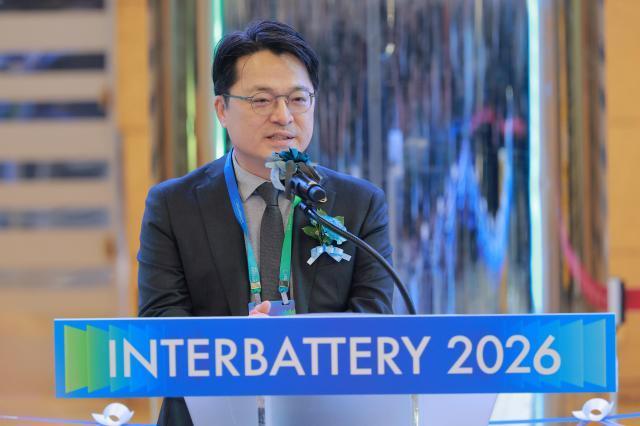
On May 14, Deputy Minister Moon Shin-hak of the Ministry of Trade, Industry and Energy stated, "To maintain the competitiveness of our automotive industry in the era of future vehicles, establishing a robust parts ecosystem is essential." He added that a comprehensive support plan for the transition to future vehicle ecosystems will be prepared within the first half of the year to actively support the parts industry.
During a joint public-private meeting on future vehicle transition hosted by the Ministry of Industry and the Financial Services Commission, the launch ceremony for the Future Vehicle Parts Industry Council was held. This meeting aimed to establish a comprehensive support system to facilitate the transition of the domestic automotive industry to future vehicle ecosystems amid accelerating changes.
According to the Korea Automotive Research Institute's 2025 survey on the automotive parts industry, there are approximately 21,000 businesses in the domestic automotive parts sector, employing 456,000 people, with sales reaching 207.6 trillion won and investments totaling 7.1 trillion won. Among these, 4,142 companies focus on internal combustion engine parts, while only 578 specialize in future vehicle parts.
Only 6.1% of companies are currently pursuing or planning to diversify their operations. However, among those without diversification plans, 23.2% recognize the need for business transition and diversification. Parts manufacturers cited challenges such as funding, lack of technological competitiveness, and workforce acquisition as barriers to transitioning and diversifying their businesses.
In response, the government plans to identify the challenges faced by the parts industry across all sectors, including business restructuring, finance, research and development (R&D), exports, and workforce issues, through the joint public-private Future Vehicle Parts Industry Council. Additionally, the government will focus on supporting the transition to future vehicle ecosystems.
Furthermore, the Financial Services Commission announced plans to concentrate a total of 15 trillion won in funding for the mobility sector over the next five years through the National Growth Fund. This year, 9.7 trillion won will be allocated for improving the automotive parts industry, and 8.3 trillion won will be directed toward fostering the future vehicle and autonomous vehicle industries.
Deputy Minister Moon noted, "Despite the recent surge in the domestic and global electric vehicle markets due to high oil prices, the proportion of companies specializing in future vehicle parts remains at just 2.7%. While the automotive industry is undergoing restructuring, unlike the steel and petrochemical sectors, proactive and specific structural transitions are necessary."
He also urged local governments, regional institutions, and related support agencies to actively identify on-site challenges faced by the parts industry and propose effective policy measures, expressing hope for vibrant discussions on various ideas and policy initiatives for the transition to future vehicles.
Financial Services Commission Vice Chairman Kwon Dae-young remarked, "The automotive industry is evolving into a complex advanced industry that integrates artificial intelligence (AI), semiconductors, software, and data into parts, representing a national effort. The Financial Services Commission will provide comprehensive support to ensure that R&D, infrastructure investment, and financial assistance are interconnected in collaboration with relevant ministries."
* This article has been translated by AI.
Copyright ⓒ Aju Press All rights reserved.