As conflict turns the Middle East into a maritime graveyard, the Pearl River Delta is quietly monopolizing the world's most valuable supply chain.
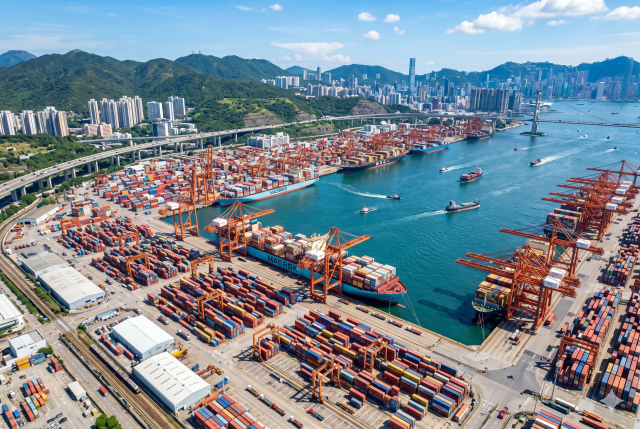
At the Kwai Tsing Container Terminals, the air carries the scent of ozone and hydraulic fluid. There are no bulk carriers of iron ore or massive tankers of crude lining the piers today. Instead, the focus is on a single, climate-controlled container being winched onto a freighter bound for the Port of Long Beach. Inside are high-density server racks and neural processing units manufactured less than thirty miles away in Shenzhen. This is the new architecture of Hong Kong’s economy—a pivot from the generalist trade of the past to the high-stakes hardware of the future.
The geopolitical landscape of 2026 is defined by a brutal contraction. As the conflict involving Iran escalates, the Strait of Hormuz has essentially closed to commercial traffic, causing global energy prices to breach 120 dollars per barrel. While this has paralyzed industrial hubs in Europe and threatened the energy security of Northeast Asia, it has paradoxically accelerated a shift in Hong Kong’s economic utility. The city is no longer merely a financial outpost; it has become the primary physical gateway for the artificial intelligence supercycle, leveraging its proximity to Shenzhen to monopolize the global supply chain for advanced computing components.
The numbers reveal a stark divergence from the global trend. According to the latest quarterly report from the Census and Statistics Department of Hong Kong, the territory’s gross domestic product expanded by 5.9 percent in the first quarter of 2026. This represents the fastest growth rate in five years. The engine of this expansion is a 24 percent real-term increase in the export of goods, a figure recently verified by the World Trade Organization’s regional monitor. This surge relies entirely on the relentless global demand for the semiconductors, precision components, and specialized circuitry produced in Shenzhen, the undisputed Silicon Valley of China.
The structural importance of this regional axis becomes clear when compared to neighboring maritime giants. The Port of Shanghai remains the world’s largest by volume, handling roughly 47 million twenty-foot equivalent units annually, but its operations are heavily weighted toward bulk manufacturing and heavy industrial output. Similarly, the Port of Busan in South Korea has seen its growth stagnate at less than two percent this year, grappling with severe won-dollar currency pressure and a sharp decline in traditional automotive exports. Hong Kong has opted to cede the battle for sheer tonnage to focus on value density. Electronic components now account for 70 percent of Hong Kong’s total export value, according to data from the Hong Kong Trade Development Council.
This specialization provides a unique insulation against the current Middle Eastern crisis. While the closure of Hormuz has forced global shipping to reroute and caused maritime insurance premiums to spike, the astronomical margins of AI hardware absorb these logistical costs far more effectively than the low-margin commodities handled by other Asian ports. A single container of high-end graphics processing units carries a market value thousands of times greater than a container of steel or textiles. By acting as the premier outlet for Shenzhen’s technology sector, Hong Kong effectively decouples its growth from the traditional vulnerabilities currently hobbling global trade.
The persistent narrative of Hong Kong’s irrelevance fundamentally misunderstands the mechanics of modern commerce. The city offers the legal, operational, and financial infrastructure required to move sensitive, high-value technology across borders during a period of intense global scrutiny, acting as a sophisticated translation layer that turns Chinese engineering into liquid capital. As long as the global arms race for computing power continues, the path to the future will lead directly through the Kwai Tsing terminals. The world order may be fracturing, but the desperate demand for the next intelligence age ensures that Victoria Harbour remains the most valuable stretch of water in Asia.

Copyright ⓒ Aju Press All rights reserved.