
Joo Hyung-hwan, a prominent figure in South Korea's economic policy, has played a crucial role in shaping the nation's approach to economic planning, industrial policy, trade, energy, and responses to low birth rates and an aging population. Known for his meticulous policy design and strong execution, he has earned nicknames such as 'Master of Reports' and 'Idea Bank.'
South Korea currently faces a 'complex transition period' characterized by three major trends: AI transition, demographic changes, and the restructuring of global supply chains. At this juncture, Joo emphasizes that national strategy must focus on 'selection and concentration, and speed,' advocating for a shift from the past model of expansive growth to a technology-centered compression strategy. His insights call for a fundamental redesign of South Korea's economic structure.
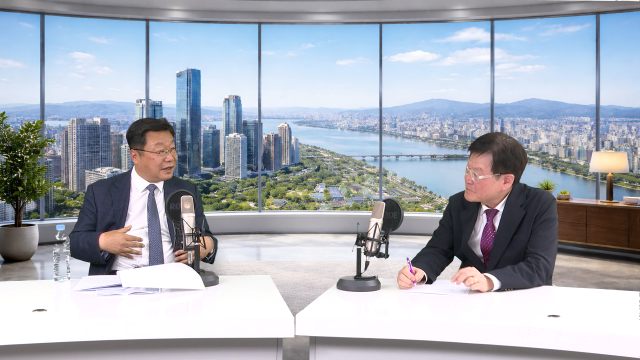
What principles guided your public service?
= I have always kept two principles in mind during my public service. The first is, 'Let’s make the world a better place for our children.' I believe policies should be designed to ensure the next generation enjoys a better quality of life and opportunities. The second is to approach every position with the mindset that 'this is a flower seat.' It is crucial to strive for the best results in any role, especially for someone like me who started from an ordinary background. Ultimately, public service is evaluated by results, so thorough preparation and ensuring outcomes are essential.
What is the biggest change in South Korea's economic policy?
= The most significant change is the shift in the government's role from 'leader' to 'enabler.' In the past, the government presented visions and led the economy through policies and systems, but now the roles of the private sector and politics have grown considerably. The government now acts as a partner that collaborates and supports direction. While this is a natural evolution, it has also led to a weakening of policy consistency and long-term predictability. Since economic policy prioritizes long-term stability over short-term popularity, maintaining this balance is a critical challenge.
What is the most important capability for policy designers?
= In a word, it is 'capability.' The ability to quickly grasp the essence of issues and coordinate interests to create practical solutions is vital. This requires expertise, creativity, balance, and drive. Policies must not only be ideas but should lead to execution. The government is in a position to persuade various stakeholders, so it is important to create creative yet practical alternatives and push them through to completion.
What was the key strategy that boosted exports during your tenure?
= The most important factor was quickly addressing on-the-ground issues. I listened to the challenges faced by exporting companies and responded immediately. At the same time, I promoted structural changes. We diversified export items beyond the traditional top ten to include electric vehicles, batteries, biotechnology, defense, and consumer goods, while also expanding markets to the Middle East, Southeast Asia, and South America. Additionally, we innovated export methods through cross-border e-commerce. Above all, changing the mindset of companies was crucial. Creating an atmosphere of 'let's try again' was the essence of our policy.
How should policy connect with the field?
= I always believe that 'the answer lies in the field.' Reports from a desk provide limited information. However, visiting the field allows one to directly identify the essence of problems and accurately understand the gap between policy and reality. I ensured that feedback was given on opinions raised during field meetings. This builds trust in policies and enhances their execution. Policies only become effective when they operate in the field.
Where should industrial competitiveness come from?
= The key is 'selection and concentration.' The era of sprawling expansion is no longer viable. We must secure technologies that can make us number one in specific fields. To achieve this, we need to decisively streamline non-core businesses and concentrate resources. Just like the big deals between Samsung and Hanwha, we need to restructure our industrial framework. In the future, the industrial structure should be centered around globally specialized large enterprises.
How do you foresee changes in industrial structure in the AI era?
= AI will reshape all industries. Not only will the AI industry itself be transformed, but existing industries will also undergo comprehensive innovation based on AI. AI will become a core element in fields such as semiconductors, energy, mobility, and biotechnology. Given South Korea's platform industry foundation, rapid integration of AI can secure competitiveness. The government must address issues related to regulation, workforce, energy, and social resistance to support the AI transition.
What is South Korea's strategy amid global technological competition?
= Selection and concentration, speed, and public-private collaboration are essential. We cannot compete in all areas; we must focus on fields where we have strengths. At the same time, quick execution is crucial. South Korea excels in application and execution, so we must maximize these strengths. Ultimately, we need to create unique companies like TSMC or ASML.
What is the essence and solution to the low birthrate issue?
= Low birthrates are not just a demographic issue but a systemic problem for the nation. If the current trend continues, the country could face crises such as declining growth rates, social security collapse, and regional extinction. To address this, we need to strengthen work-family balance policies, expand flexible work arrangements, provide housing support, and implement immigration policies. Targeting and efficiency in policies are particularly important; simply increasing budgets will not solve the problem.
What will be South Korea's biggest challenge in the next 20 years?
= The simultaneous progression of AI transition, demographic changes, and climate change presents the greatest challenge. Among these, AI is the core issue. AI represents both a crisis and an opportunity. While it can dramatically enhance productivity, it may also lead to large-scale unemployment and social shocks. Therefore, we must design new social systems, educational frameworks, and welfare structures. Ultimately, the future depends not on technology itself but on the systems we choose to implement.
■ Joo Hyung-hwan
Joo Hyung-hwan is a leading economic strategist and policy designer in South Korea. After graduating from Deoksu High School, he attended Seoul National University, where he studied business administration and entered public service through the civil service exam. He began his policy career at the Economic Planning Board and held key positions, including Vice Minister of Strategy and Finance and Minister of Trade, Industry and Energy, shaping South Korea's economic policy.
He is recognized for his dual strengths in policy design and execution, earning him the titles 'Master of Reports' and 'Idea Bank.' During his tenure as Minister, he successfully reversed a long-term decline in exports and contributed to transforming the export structure through the promotion of new industries and market diversification. He also expanded strategic cooperation with Middle Eastern countries, laying the groundwork for the global expansion of South Korean industries.
Later, he served as Vice Chair of the Low Birthrate and Aging Society Committee, actively addressing demographic issues. He is regarded as a strategist emphasizing long-term structural reform and system design beyond mere policy implementation. He has consistently highlighted three principles: 'selection and concentration,' 'field-centered policy,' and 'public-private cooperation.'
Currently, he continues to voice the direction South Korea's economy should take amid the complex crises of AI transition and demographic changes, stressing the need for technology-centered industrial restructuring and social system innovation.
* This article has been translated by AI.
Copyright ⓒ Aju Press All rights reserved.