
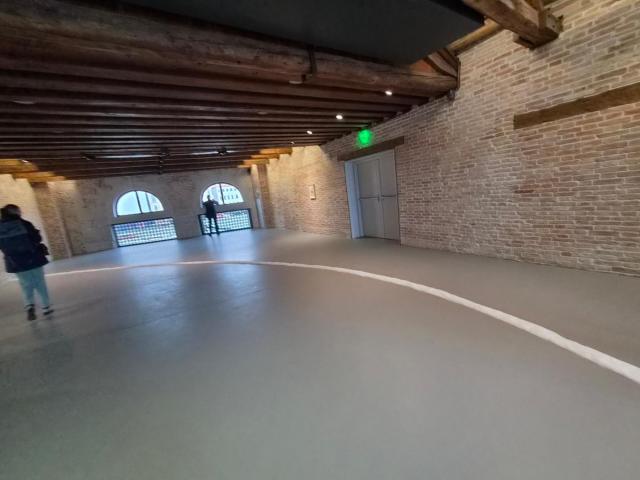
Paulo Nazareth's 'Algebra' exhibition at Punta della Dogana in Venice on May 5 [Photo by Yoon Ju-hye]
On May 5, at the Punta della Dogana in Venice, a 344-year-old building that once served as a customs house, Brazilian artist Paulo Nazareth's solo exhibition 'Algebra' was underway. The exhibition created a unique harmony as the venue, space, and artworks interacted with each other in a tense yet compelling manner.
Transformed into a museum as part of the Pino Collection by architect Tadao Ando, the floor of the venue featured large circular outlines drawn in white salt by Nazareth, representing the contours of the slave ship 'tumbeiro.' As visitors walked over the salt, it scattered, bringing to light the painful history and scars hidden beneath Venice's glamorous landscape.
Salt carries dual meanings. It was a trade commodity that supported colonial economies, preserving food for slave ships while adding bitterness to wounds. Yet, it also symbolizes healing and purification, warding off decay and misfortune. For some, the salt that fueled the greed of merchants represents the bitter pain or tears of mourning.
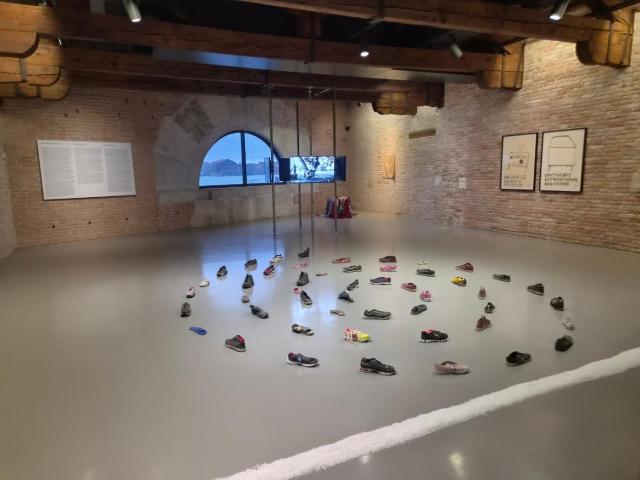
Paulo Nazareth's 'Algebra' exhibition at Punta della Dogana in Venice on May 5 [Photo by Yoon Ju-hye]
Venice was once a hub for the salt trade. Visitors to Nazareth's salt slave ship on this artificially constructed island awaken from forgetfulness to witness a history of violence and exploitation.
At the Korean Pavilion in the Giardini during the Venice Biennale, salt also serves as a medium of mourning. Nobel laureate Han Kang's sculpture 'The Funeral' features a blackened, dried branch stuck into a mound of salt. The piece evokes the Jeju 4·3 incident, which nearly faded away with the tide. It stands out in an otherwise subdued Korean Pavilion, prompting reflections on a past that cannot be forgotten or should not be forgotten.
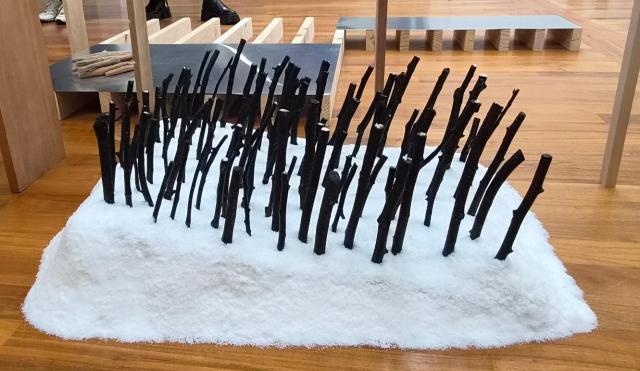
Han Kang's sculpture 'The Funeral' at the Korean Pavilion in Venice on May 6 [Photo by Yoon Ju-hye]
Standing on Floating Tombs
In the past, salt was stored at Punta della Dogana. The Venetian Republic dominated Mediterranean trade based on its salt monopoly. Salt was a valuable commodity, representing wealth and power. Nazareth drew the outline of the 'tumbeiro,' a slave ship, with salt in this very location.
The tumbeiro was a collective grave for Africans forcibly transported to Brazil. Sailors filled the ship with salted food for long voyages, but countless kidnapped Africans perished on the slave ship due to disease, starvation, and violence. Visitors unknowingly step over the lines of salt on the floor, boarding a ship of death excluded from history, calling forth forgotten deaths and mourning the era of domination and violence.
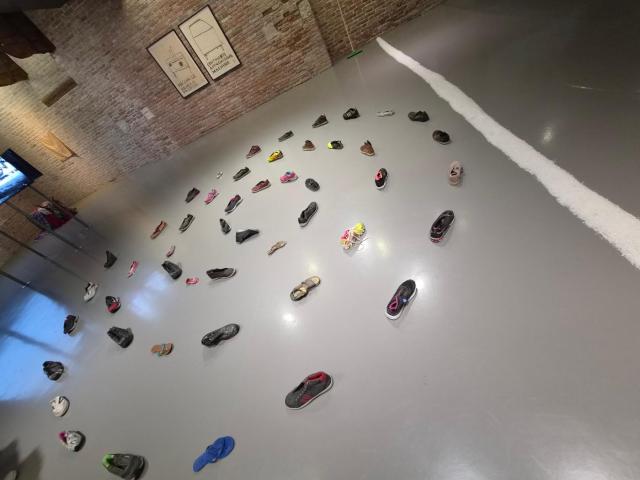
Paulo Nazareth's 'Algebra' exhibition at Punta della Dogana in Venice on May 5 [Photo by Yoon Ju-hye]
Efforts to restore identities destroyed by colonial rule and genocide are also prominent. Shoes collected by the artist from border areas are arranged facing outward, symbolizing the restoration of identities shattered by colonialism. In the past, Africans had to erase their identities while circling the 'Tree of Oblivion' before being taken as slaves. The left shoes in the exhibition seem to serve as a mourning ritual, recalling the names and memories that were erased from those who were lumped together as 'slaves.'
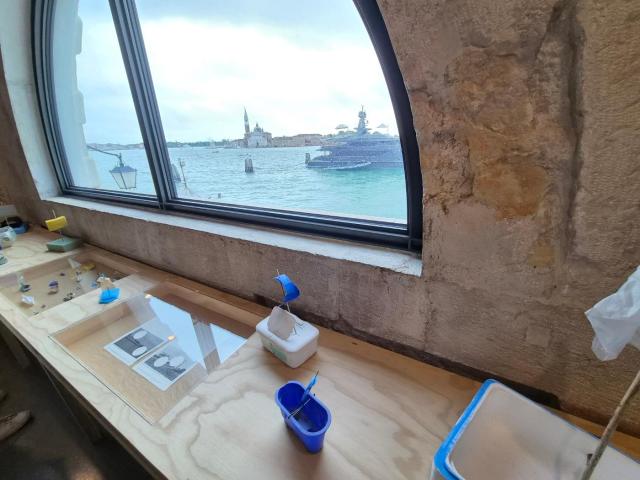
Paulo Nazareth's 'Algebra' exhibition at Punta della Dogana in Venice on May 5 [Photo by Yoon Ju-hye]
Set against the backdrop of Venice's canals, a childlike drawing of a refugee boat reminds us that struggles for survival continue somewhere at sea. Fragile boats made from dirty sandals contrast sharply with the water taxis gliding past the exhibition windows. This juxtaposes leisure tourism with desperate escapes, highlighting two very different forms of movement.
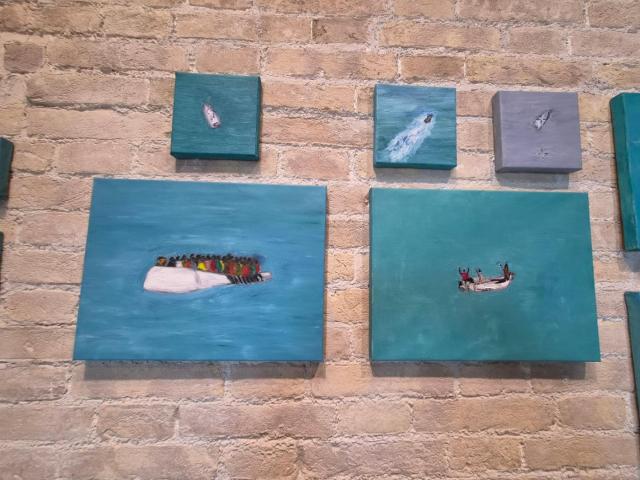
Paulo Nazareth's 'Algebra' exhibition at Punta della Dogana in Venice on May 5 [Photo by Yoon Ju-hye]
Raising the Tombs
I wondered. Are these trees all tombstones? I walked among the blackened trees, with snowflake-like salt crystals resting on their cut surfaces, and the mounds behind them. (Han Kang, We Do Not Say Goodbye (Munhakdongne), p. 9)
Han Kang's sculpture 'The Funeral' features a stark tree set on a mound of salt. It represents countless men, women, and thin children huddled against the cold, facing the snow. The piece serves as a mourning for those who have faded away.
The blackened trees resemble the countless wooden piles supporting the foundations of Venice, built on mud and sea. The violence and scars buried beneath the beautiful landscapes of the artificial island of Venice and the natural island of Jeju overlap.
Both exhibitions will run until November 22.

Paulo Nazareth's 'Algebra' exhibition at Punta della Dogana in Venice on May 5 [Photo by Yoon Ju-hye]
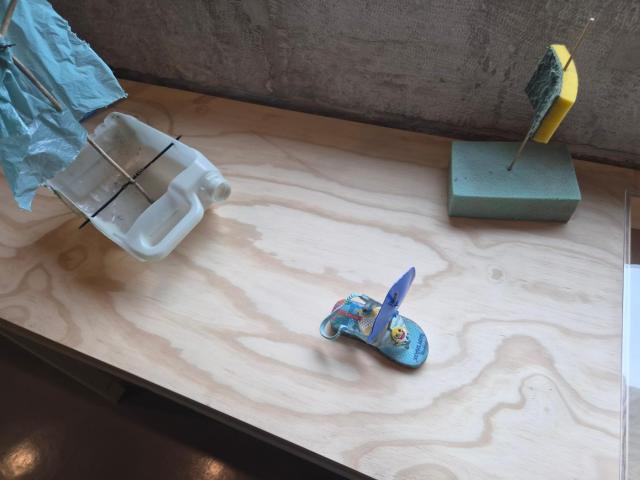
Paulo Nazareth's 'Algebra' exhibition at Punta della Dogana in Venice on May 5 [Photo by Yoon Ju-hye]
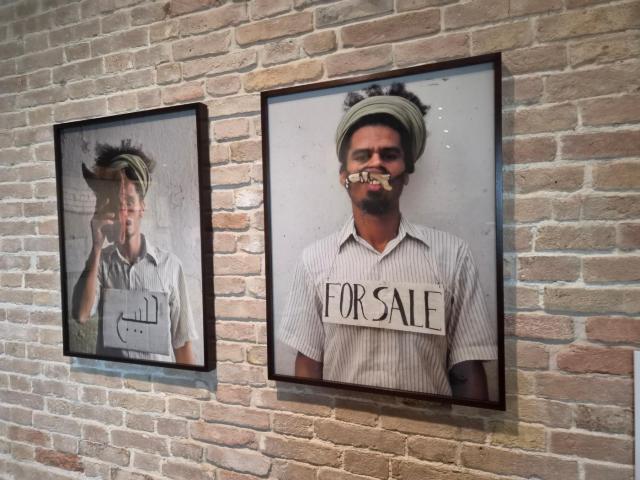
Paulo Nazareth's 'Algebra' exhibition at Punta della Dogana in Venice on May 5 [Photo by Yoon Ju-hye]
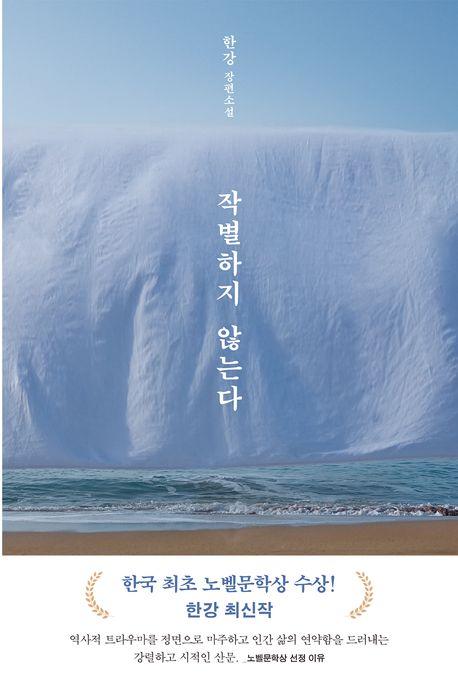
We Do Not Say Goodbye
* This article has been translated by AI.
Copyright ⓒ Aju Press All rights reserved.