
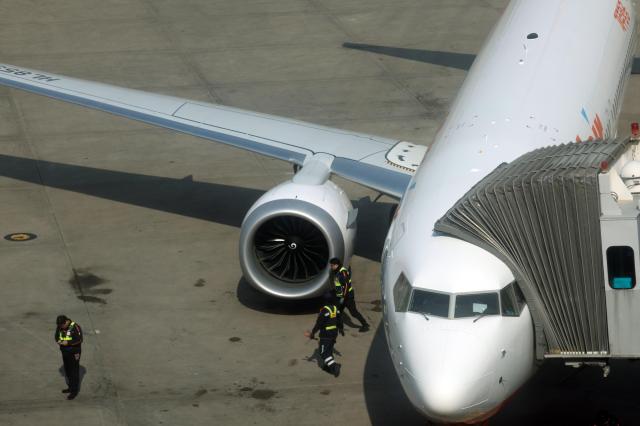
Since the outbreak of the Middle East war, domestic low-cost carriers (LCCs) and mid-tier carriers have reduced more than 1,100 round-trip international flights, with Southeast Asian routes accounting for a large portion of the cuts, according to industry officials.
The benchmark Singapore jet fuel price used to calculate June fuel surcharges stood at 410.02 cents per gallon, down about 20 percent from 511.21 cents per gallon for May. Accordingly, international fuel surcharges fell to level 27 from the highest level of 33.
Still, industry officials say fuel costs remain high compared with prewar levels. Even in July and August 2022, when global fuel prices surged following Russia’s invasion of Ukraine, international fuel surcharges stood at level 22.
Airlines usually decide which flights to reduce based on various factors, including profitability, passenger demand and alternative flight options. This time, routes with weaker demand and lower margins have been targeted first.
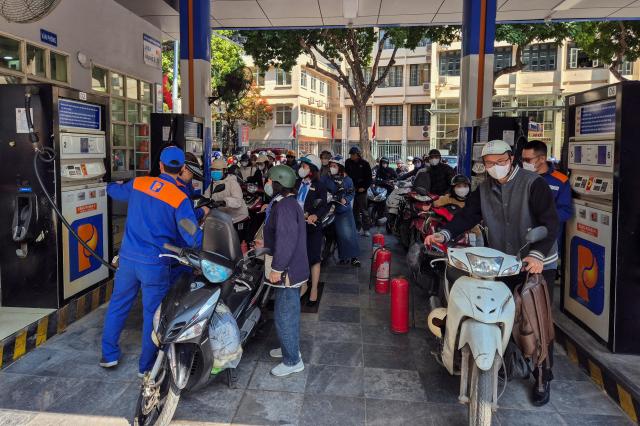
“Southeast Asian routes have seen softer demand compared with Japan routes,” an official from South Korean LCC Jin Air said. “Japan remains relatively resilient, supported by favorable exchange-rate conditions, while travel to Southeast Asia tends to be more affected by higher overall trip costs.”
The official added that travelers to some Southeast Asian countries often face higher costs because they exchange money through the U.S. dollar first before converting it again locally.
“Those extra costs appear to have affected demand,” the official said. “That is why many of the reductions have been concentrated on Southeast Asian routes.”
Southeast Asian routes are often regarded as “mid-haul” routes that sit between short-haul and long-haul services. They require more fuel than flights to Japan or China, but airlines cannot charge fares as high as those on long-haul routes.
Jin Air has cut 176 round-trip flights through this month due to the burden of higher fuel costs. The carrier canceled 45 round-trip flights on eight routes, including Guam, last month and 131 round-trip flights on 14 routes, including Phu Quoc, this month. The number could rise further once its June schedule is finalized.
Jeju Air reduced flights from Incheon to Phu Quoc, Da Nang, Bangkok and Singapore from seven times a week to three or four times a week from May 8 to June 30. It also cut its Incheon-Hanoi service from seven times a week to four times a week from May 12 and suspended its Vientiane route for two months from April 29.
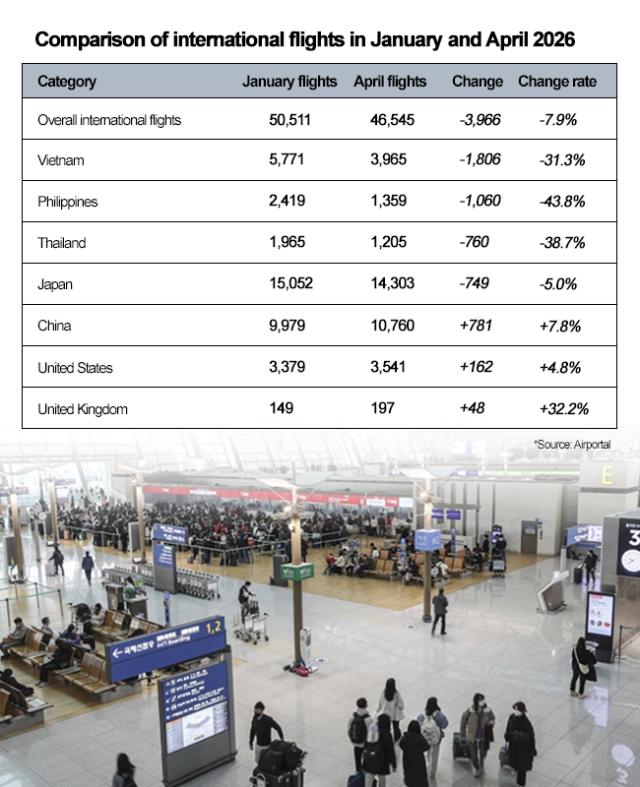
For passengers, however, the main issue is not just the number of flights being cut. Even if overall reductions remain limited, passengers whose flights are affected can face major disruptions to travel plans.
“I’m planning to travel in July, but I think I’ll take my time and book only refundable accommodation because flight schedules seem uncertain,” one user wrote on an online travel community.
The transport ministry said the cuts remain below the level that could lead to penalties. Airlines could lose route rights or airport slots if they cancel 20 percent or more of their approved flights, but no carrier has reached that threshold so far.

Copyright ⓒ Aju Press All rights reserved.
