
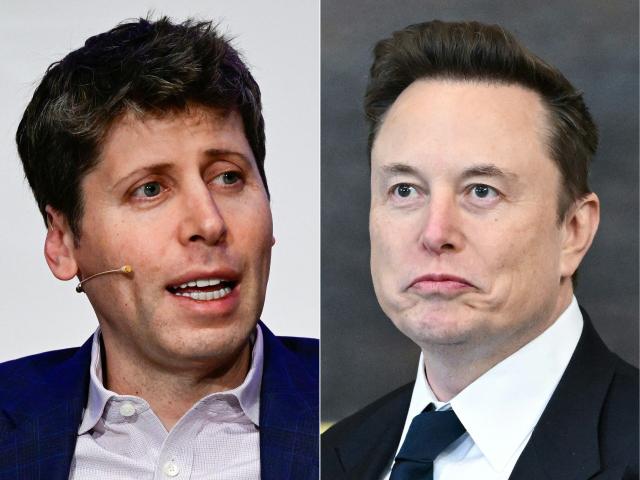
Elon Musk, CEO of Tesla, has lost a lawsuit he filed against OpenAI. A jury determined that Musk had filed his lawsuit after the legal deadline, and the court accepted this finding, dismissing all of Musk's claims. This outcome is seen as a relief for OpenAI, which is planning to go public (IPO) later this year.
On May 18, local time, a jury in the U.S. District Court in Oakland, California, unanimously ruled in favor of OpenAI. The jury concluded that Musk did not file his lawsuit within the legally mandated timeframe.
Civil lawsuits have specific statutes of limitations for filing claims. In this case, Musk's allegations of 'breach of fiduciary duty' and 'unjust enrichment' had deadlines of three years and two years, respectively, starting from when the plaintiff became aware of the infringement.
The jury found that Musk had already been aware of the issues before August 2021. Therefore, the court determined that Musk's formal filing in August 2024 was beyond the statute of limitations.
Musk claimed that Sam Altman, CEO of OpenAI, had reassured him, causing him to delay filing the lawsuit. However, the jury did not accept this argument. After less than two hours of deliberation, the jury reached its verdict.
While the jury's verdict is advisory, U.S. District Judge Yvonne Gonzalez Rogers accepted it immediately after the verdict was announced, dismissing all of Musk's claims.
Judge Rogers stated, "There was substantial evidence supporting the jury's conclusion, and I was prepared to dismiss the case on the spot."
Musk has alleged that OpenAI, along with Altman and Greg Brockman, deceived him into donating $38 million, subsequently attaching a for-profit entity to what was originally a nonprofit organization and raising billions from investors like Microsoft.
In contrast, OpenAI argued that Musk's lawsuit was a "post hoc fabrication" unrelated to reality and a hypocritical attempt to undermine a competitor.
With this verdict, OpenAI has alleviated a significant legal burden related to its IPO. Reuters reported that the ruling simplifies OpenAI's path to pursuing an IPO, which could be valued at $1 trillion (approximately 1,500 trillion won).
* This article has been translated by AI.
Copyright ⓒ Aju Press All rights reserved.