
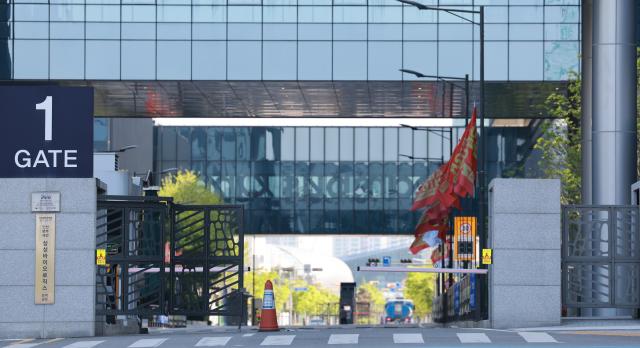
As the labor dispute at Samsung Biologics remains unresolved, attention turns to whether the company can find common ground similar to the recent resolution at Samsung Electronics. Analysts suggest that Samsung Biologics, part of the Samsung Group's major labor union, may look to the electronics giant's negotiations for guidance.
According to industry sources, Samsung Biologics management met with union representatives on May 19 under the auspices of the Ministry of Employment and Labor to discuss a new proposal, but no agreement was reached. A planned private meeting on May 20 was subsequently canceled, and no future meetings have been scheduled. The cancellation is seen as a reflection of the ongoing divide between the two sides and a strategy to observe the outcome of Samsung Electronics' negotiations.
Reports indicate that the union at Samsung Biologics is demanding agreements that extend beyond profit-sharing to include personnel policies, institutional changes, and management rights, leading to significant differences in positions.
Market observers note that within the union, there is growing concern about the burdens of a prolonged strike, risks of production disruptions, waning solidarity, and member fatigue. This has led to cautious optimism that a 'coordinated compromise' may emerge soon. Political voices have also called for a reevaluation of labor issues from the perspective of global supply chains and investment trust, adding pressure on the industry.
Professor Hwang Yong-sik from Sejong University stated, "The management's stance has shifted from confrontation to a more accommodating approach, which has facilitated a compromise. As the dynamics of labor relations change, the atmosphere within subsidiaries like Samsung Biologics may also shift."
Another industry insider remarked, "Even if negotiations extend over time, collective actions like a second strike will be difficult. The key to an agreement will be how much both sides are willing to compromise, particularly regarding management rights and operational matters."
Samsung Biologics has grown primarily through its contract development and manufacturing organization (CDMO) business in the biotech and pharmaceutical sectors. While it still holds the top position globally in terms of production capacity, it faces stiff competition from companies like Switzerland's Lonza, China's CL Biologics, and Japan's Fujifilm. If the labor dispute continues for an extended period, global pharmaceutical companies may consider diversifying their production to other countries and CDMOs, making labor stability a crucial factor in maintaining global trust.
Another industry representative emphasized, "The most urgent need is to achieve a compromise that restores both labor stability and investor confidence. Both sides must seek a long-term resolution."
Meanwhile, the Samsung Biologics union is demanding a 14.3% wage increase, a bonus of 30 million won per employee, and the allocation of company shares over three years. They are also calling for the establishment of an excess profit incentive fund (OPI) based on 20% of operating profit and the removal of payment caps, along with prior consent on management issues such as new hires, performance evaluations, and mergers and acquisitions.
Management has proposed a 6.2% wage increase and has set the OPI limits in line with the group's guidelines, which cap operating profit at 10% or economic value added (EVA) at 20%.
According to industry sources, Samsung Biologics management met with union representatives on May 19 under the auspices of the Ministry of Employment and Labor to discuss a new proposal, but no agreement was reached. A planned private meeting on May 20 was subsequently canceled, and no future meetings have been scheduled. The cancellation is seen as a reflection of the ongoing divide between the two sides and a strategy to observe the outcome of Samsung Electronics' negotiations.
Reports indicate that the union at Samsung Biologics is demanding agreements that extend beyond profit-sharing to include personnel policies, institutional changes, and management rights, leading to significant differences in positions.
Market observers note that within the union, there is growing concern about the burdens of a prolonged strike, risks of production disruptions, waning solidarity, and member fatigue. This has led to cautious optimism that a 'coordinated compromise' may emerge soon. Political voices have also called for a reevaluation of labor issues from the perspective of global supply chains and investment trust, adding pressure on the industry.
Professor Hwang Yong-sik from Sejong University stated, "The management's stance has shifted from confrontation to a more accommodating approach, which has facilitated a compromise. As the dynamics of labor relations change, the atmosphere within subsidiaries like Samsung Biologics may also shift."
Another industry insider remarked, "Even if negotiations extend over time, collective actions like a second strike will be difficult. The key to an agreement will be how much both sides are willing to compromise, particularly regarding management rights and operational matters."
Samsung Biologics has grown primarily through its contract development and manufacturing organization (CDMO) business in the biotech and pharmaceutical sectors. While it still holds the top position globally in terms of production capacity, it faces stiff competition from companies like Switzerland's Lonza, China's CL Biologics, and Japan's Fujifilm. If the labor dispute continues for an extended period, global pharmaceutical companies may consider diversifying their production to other countries and CDMOs, making labor stability a crucial factor in maintaining global trust.
Another industry representative emphasized, "The most urgent need is to achieve a compromise that restores both labor stability and investor confidence. Both sides must seek a long-term resolution."
Meanwhile, the Samsung Biologics union is demanding a 14.3% wage increase, a bonus of 30 million won per employee, and the allocation of company shares over three years. They are also calling for the establishment of an excess profit incentive fund (OPI) based on 20% of operating profit and the removal of payment caps, along with prior consent on management issues such as new hires, performance evaluations, and mergers and acquisitions.
Management has proposed a 6.2% wage increase and has set the OPI limits in line with the group's guidelines, which cap operating profit at 10% or economic value added (EVA) at 20%.
* This article has been translated by AI.
Copyright ⓒ Aju Press All rights reserved.