HOT STOCK: Undervalued Hyundai Motor plays catch-up amid tariff hopes
by Kim Yeon-jaePosted : October 22, 2025, 15:54Updated : October 22, 2025, 15:54
SEOUL, October 22 (AJP) - South Korean automaker Hyundai Motor is emerging as a comeback play in Asian markets, as optimism grows over a possible U.S. tariff relief deal that could level the playing field long tilted in favor of Japanese rivals.
Currently, South Korean car exports to the U.S. face a 25 percent import tariff—10 percentage points higher than the 15 percent levied on Japanese and European brands. Despite the disparity, Hyundai Motor’s shares have surged nearly 20 percent so far this month, closing Wednesday at 261,000 won ($182.56). The stock’s rally outpaced gains of 6 percent in Toyota and 1.8 percent loss in Volkswagen, even as those competitors benefit from lower U.S. duties.
Hyundai Motor Group, which also owns the premium Genesis and Kia marques, ranked 33rd in Time magazine’s 2025 “World’s Best Companies” list—up 159 notches from last year—beating out Toyota at 48th. The ranking cited improvements in employee satisfaction, revenue growth, and ESG performance. Last year, Hyundai’s revenue jumped 23 percent to 175 trillion won ($127 billion), with operating profit up 45 percent to 14.2 trillion won.
This year, however, profits took a hit from the tariff spike.
Graphics by AJP Song Ji-yoon
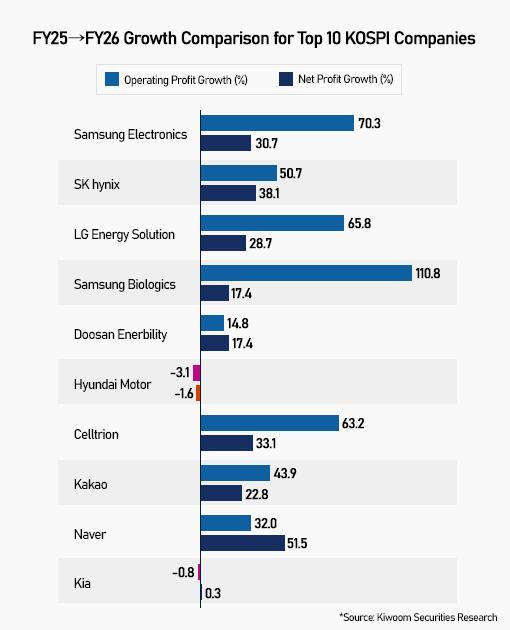
“Among the top ten KOSPI companies by market capitalization, Hyundai and Kia are the only ones expected to post year-on-year profit declines,” said Kiwoon Securities analyst Shin Yoon-chul.
Hyundai’s third-quarter operating profit is estimated to have fallen around 30 percent to 2 trillion won, reflecting the U.S. tariff burden. If the rate drops to 15 percent after an intergovernmental deal, quarterly operating profit could rebound to 2.4 trillion won, according to Daishin Securities analyst Kim Gwi-yeon.
Another potential headwind emerged after China restricted exports of automotive semiconductors by Nexperia—one of Hyundai’s key suppliers and a global leader in power semiconductor production.
Even so, local brokerages remain optimistic, pointing to Hyundai’s steady shipment performance. The automaker’s global sales rose 3.2 percent year-on-year in the third quarter to 1.04 million units. U.S. sales alone climbed 2.3 percent to a record 257,000 units. Electric vehicle sales, though modest at about 10,000 units, grew 35.2 percent from a year earlier.
To sustain momentum, Hyundai plans to introduce a hybrid (HEV) version of its Palisade SUV in North America later this year, followed by a software-defined vehicle (SDV) built on its next-generation Pleos OS platform in 2026.
“Profit margin recovery may remain limited through the first half of 2026 amid tariff uncertainties,” said Sangsangin Investment & Securities analyst Yu Min-ki. “But Hyundai’s growing diversity of profit-contributing models will strengthen its resilience going forward.”