
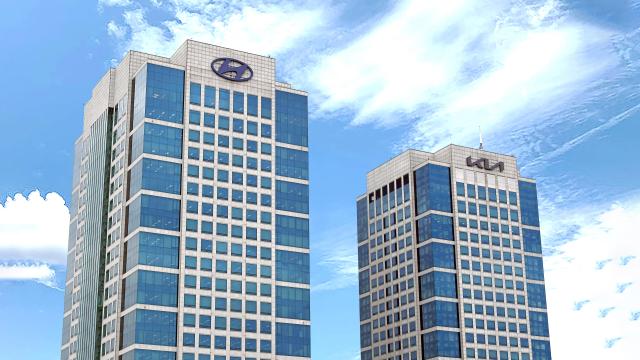
Sung Kim, president of Hyundai Motor Group, urged swift passage of legislation needed to carry out a $350 billion (about 506 trillion won) U.S. investment package.
According to Reuters on Monday, Kim made the remarks at a breakfast meeting at the National Assembly on a proposed ruling People Power Party bill related to U.S. investment. He said that even if reciprocal tariffs are nullified, pressure could intensify to raise tariffs on automobiles.
“As reciprocal tariffs are rendered invalid, pressure could instead grow to raise sector-specific tariffs on certain industries such as autos,” Kim said. “If a 25% tariff becomes reality at a time of sweeping change across the industry — with the shift to electric vehicles and accelerating competition in autonomous driving — the competitiveness of Korean companies will be weakened.”
He added that “the auto industry is already facing a serious crisis due to U.S. tariff measures that began last year,” and said sector-specific tariffs on steel and automobiles are likely to remain in place for a considerable period.
Kim said Hyundai Motor and Kia suffered about 7.2 trillion won ($4.98 billion) in financial damage last year due to U.S. tariffs.
For South Korea, reciprocal tariffs initially set at 25% under an agreement with the United States were lowered to 15% starting in November last year. However, President Donald Trump on Jan. 26 threatened to raise reciprocal tariffs back to 25% — along with item-specific tariffs on products such as automobiles — citing delays in the National Assembly’s handling of the special U.S. investment bill.
If auto tariffs are raised again to 25% as Trump has threatened, the damage to Hyundai and Kia could grow further.
Policy uncertainty over tariffs has also increased again after the U.S. Supreme Court ruled reciprocal tariffs illegal and Trump, in response, raised the possibility of additional tariffs on major industries such as automobiles and semiconductors.
South Korea’s auto industry has repeatedly asked the government and the National Assembly to resolve the tariff issue to secure equal conditions in the U.S. market with Japanese and European competitors.
* This article has been translated by AI.
Copyright ⓒ Aju Press All rights reserved.