
SEOUL, December 16 (AJP) - The Netflix survival entertainment program, "Physical: Asia," recently concluded, became a global hit. Notably, the Mongolian team, competing neck and neck with the Korean team until the final round, demonstrated remarkable strength and resilience truly worthy of the title "Descendants of Genghis Khaan." Their outstanding performance left a deep impression on Korean viewers and strengthened people to people connection between Korea and Mongolia in Northeast Asia, a region characterized by high tensions among major powers.
This year marks the 35th anniversary of diplomatic relations between Mongolia and the Republic of Korea. At the time the ties were established, bilateral trade amounted to just 2.7 million USD today it has increased more than 200 folds, surpassing 600 million USD last year to reaching all-time high. Based on the elevation of diplomatic ties to "Strategic partnership" in 2021, the two countries have expanded cooperation across the various fields, including the Ulaanbaatar Metro project, critical minerals and supply chain collaboration, and rice cultivation pilot projects in Mongolia.
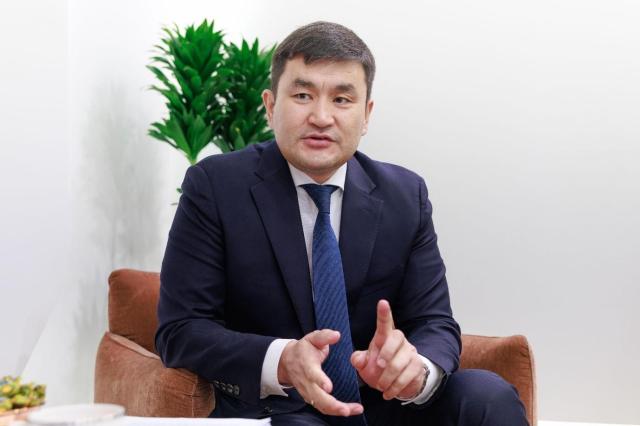
Ambassador Sukhbold Sukhee, who assumed his duties in June last year, reflected on the 35-year history of Korea-Mongolia relations and shared his vision for the future of bilateral ties. "It is a truly significant moment for me to commemorate the 35th anniversary of our relations," he said, noting, "Our two countries have a long history of close cooperation."
Partnership and Success (ODA)
The Ambassador expressed his gratitude for Korea's Official Development Assistance (ODA) to Mongolia, delivered mainly through the Korea International Cooperation Agency (KOICA), noting that "several projects have had a very significant impact on Mongolia's economy and infrastructure."
He highlighted the gender equality initiative, "Promoting Gender Equality in Public Decision-making and Women's Empowerment in Mongolia," as one of KOICA's most successful projects in the country. He noted that it contributed to the election of 32 female candidates in last year's parliamentary election, accounting for about 23% of the total seats, calling it "a truly meaningful achievement"
In the health sector, the Ambassador cited the establishment of the National Diagnostic and Treatment Center, supported by the Economic Development Cooperation Fund (EDCF), as a representative case. He also underscored the "New Water Resource Development" project, which paved a way for new urban development in Yarmag, a rapidly growing district of Ulaanbaatar. "If you visit Mongolia now, once you exit the highway road from the airport, you will enter the Yarmag District and see how much construction has taken place," he explained.
Infrastructure and Economic Cooperation
The Government of Mongolia has designated this year as the "Year of Supporting Capital Infrastructure Development" and is advancing major infrastructure projects in Ulaanbaatar.
Central to this effort is the Ulaanbaatar Subway Line 1 project, whose basic design was completed by a Korean consortium. Leading Korean companies are currently taking part in the bidding for the construction phase, which is scheduled to begin in earnest in 2026. The Ambassador of Mongolia noted this an example of "a sign of further strengthening of bilateral cooperation in infrastructure," adding, "We hope that Korean companies will take part in this open tender, as it is accessible to any qualified international company."
Critical Minerals and Supply Chain Cooperation: Amid the global competition for minerals driven by U.S.-China rivalry and the rapid growth of AI, mineral-rich Mongolia is becoming an increasingly important economic partner for South Korea. Following the 2023 MOU on Rare Metal (Rare Earth) Supply Chain Cooperation between the Ministries of Industry, and Mineral Resources between two countries, the joint efforts have been accelerating. The Ambassador noted "After assuming the duties I proposed the Korea-Mongolia Rare Metals Cooperation Joint Committee Meeting in March this year in Seoul, which led to the "Mongolia-Korea Critical Minerals Mining Investment Forum held this past September. Moreover, he emphasized "We can work together by combining Mongolia's mineral resources with Korea's advanced supply chain, especially given Korea's reliance on a limited number of countries for critical minerals." He also highlighted that Mongolia has advanced in developing certain metals such as copper, but rare earth elements have not yet been developed. If the Korean Government shows a strong interest in this sector, the Government of Mongolia is ready to cooperate."
People-to-People and Cultural Exchange
People-to-people exchange between Mongolia and Korea is also growing rapidly. Nearly 300,000 Mongolians, almost one-tenth of 3.6 million population have spent time in Korea for study, work, tourism and other purposes. The Ambassador noted that he has requested the Government of the Republic of Korea to ease or exempt visa requirements, particularly for Mongolians seeking medical treatment in Korea. He shared that the number of medical visitors "reached about 25,000 last year," adding, "Mongolians are travelling to Korea for medical purposes because they believe the excellence of the Korean medical system, but obtaining a visa still remains difficult."
Korean Visitors to Mongolia: The travel to Mongolia is also becoming increasingly popular among Koreans. The vast landscapes, including Terelj National Park, and the spectacular night skies are attracting Korean travelers seeking the new experience abroad. "Last year, around 180,000 visited Mongolia for tourism, making the largest group of foreign tourists", he said. However, he noted that many travelers see only Terelj National Park before departing. "Please do not think that Terelj is all that Mongolia has to offer. Mongolia has vast territory, and we are the world's 17th largest by territory" he emphasized, encouraging visitors to explore more of the country.
K-Culture Influence: The K-Culture including K-Pop and K-Food is widely popular in Mongolia, contributing to the growth presence of Korean companies in many sectors such as distribution, electronics, and construction. As a result, 'K-Lifestyle' has become increasingly familiar to Mongolian customers, influencing the everyday life. The Ambassador mentioned that Korean has become the third most popular foreign language in Mongolia, after English and Chinese. He also pointed the inclusion of Kimchi into the traditionally meat-heavy Mongolian diet as clear examples of Korean cultural impact. He said, "Kimchi is now one of the main dishes in our cuisine. Ten or fifteen years ago, it wasn't on our tables, but today every family enjoys it."
Security and Diplomacy
My country is situated between China and Russia. Mongolia now maintains deepening relations not only its two neighbors but also with western countries, including the United States, Canada, Germany, France, and Australia allowing it to pursue a broad and balanced diplomatic portfolio. Meantime, Mongolia also maintains friendly relations with both DPRK and the Republic of Korea, operating an embassy in Pyongyang, which positions it as a crucial country capable of contributing to stability on the Korean Peninsula.
The multilateral diplomacy expert and former Ambassador to the United Nations explained the major pillars of Mongolia's foreign policy as 'Two neighbors' prioritizing the neighboring countries and 'Third neighbors' aimed at diversifying its diplomatic, economic, cultural relationships.
The former Ambassador to UN emphasized, "The Republic of Korea is one of Mongolia's most important third neighbors, alongside the U.S., Japan, and the European Union."
On the nuclear issue, he noted, "Mongolia declared its territory as a Nuclear Weapons Free Status in 1992. Since then, Mongolia's position has been very clear: we are a party to the Non-proliferation treaty, and remain firmly committed to the principle of non-proliferation on the Korean Peninsula."
He also highlighted the "Ulaanbaatar Dialogue," a multilateral diplomatic forum initiated by Mongolia, as an important platform for dialogue among all parties. He noted that the U.S., China, Russia, Japan, and even the DPRK participate in this forum, noting, "Some experts believe Mongolia can serve as a bridge between the DPRK and the Republic of Korea because we maintain good relations with both sides." Emphasizing the importance of diplomacy, he remarked, "Open discussion, open mind, and open cooperation are always the path to peace and security," concluding, "Our position is that isolation is not the solution."
In closing the interview, Ambassador Sukhbold reaffirmed that "the Republic of Korea is one of Mongolia's most important third neighbors," emphasizing that the two countries can further deepen cooperation across all areas from the economic fields, including rare earths and infrastructure development to diplomacy, and culture. He expressed his hope that "this relationship will continue for many years and we can work together more closely to implement more significant projects."
* This article, published by Aju Business Daily, was translated by AI.
Copyright ⓒ Aju Press All rights reserved.
