SEOUL, January 26 (AJP) - Reports from Beijing on January 24 regarding the Chinese military indicate more than a routine personnel reshuffle. The announcements signal a profound realignment of the power structure within the Chinese Communist Party.
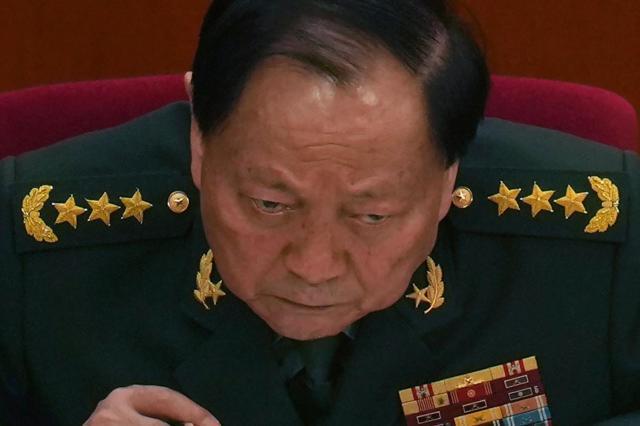
The initiation of investigations into Zhang You-xia, vice chairman of the Central Military Commission (CMC), and Liu Zhen-li, chief of the Joint Staff Department, for "serious violations of discipline and law" targets two pillars at the apex of the People’s Liberation Army (PLA) command chain.
The move has drawn immediate attention from diplomatic and security circles in New York, London, and Tokyo. The PLA serves as the ultimate guarantor of Communist Party rule, making its internal stability a critical factor in global security and Chinese domestic politics.
For decades, the operating principle of Chinese politics has been that "the party commands the gun." However, the military has historically functioned as a complex ecosystem of revolutionary families, regional factions, and patronage networks. Even during the reform and opening-up era following Deng Xiaoping, the military maintained an independent sphere through economic interests and defense procurement.
The anti-corruption campaign led by President Xi Jinping over the past decade has focused on dismantling these independent power centers. The previous downfalls of former CMC vice chairmen Xu Cai-hou and Guo Bo-xiong served as early indicators. Subsequent purges within the Rocket Force and equipment procurement divisions demonstrated that no department was exempt.
The current investigations represent a symbolic peak in this process, sending a clear message that no individual, regardless of rank, is untouchable.
Strategic analysts in Washington and on Wall Street are focusing on the structural consequences of these moves rather than the moral justifications. Reliability and continuity are essential assets in any military organization. When the top command is shaken, decision-making often becomes rigid, and mid-level officers may adopt a passive stance to avoid scrutiny. This "fear of approval" can delay sensitive matters such as defense procurement, the deployment of new power systems, and joint combat training.
The leadership’s decision to proceed despite these risks suggests that long-term control is being prioritized over short-term efficiency. As China faces critical challenges including military modernization goals, the Taiwan issue, and strategic competition with the United States, the leadership appears determined to consolidate the command structure under a single point of authority.
This creates a tension between political loyalty and combat readiness. While external observers question whether prioritizing loyalty weakens professional expertise, the perspective from Beijing is that corruption and factionalism inherently limit actual combat effectiveness, regardless of how modern the weaponry is.
Consequently, anti-corruption efforts are framed not merely as a moral discourse but as a logic for rebuilding military strength. However, the process increases internal uncertainty and raises questions abroad regarding the stability of the Chinese military.
With Chinese military activities in the East China Sea, South China Sea, and Taiwan Strait already serving as primary variables in international tension, these command changes affect the strategic calculations of neighboring countries. It remains unclear whether the military will become more aggressive once internal consolidation is complete or if it will show more restrained movement under centralized control to manage risks.
Analysts suggest these events also reflect a generational shift. The era of the "Red Second Generation" military elite—descendants of revolutionary elders—is fading, replaced by a structure centered on personal loyalty networks. This aligns with broader shifts in Chinese politics toward higher power concentration and the weakening of collective leadership.
The ongoing purge is likely to continue as the leadership aims for a "flawless military" ahead of the PLA’s centenary. However, historical precedent suggests that stability is rarely sustained through increased control alone. The long-term durability of the organization will likely depend on whether these measures are eventually balanced with institutionalized rules and predictable procedures.
Copyright ⓒ Aju Press All rights reserved.