
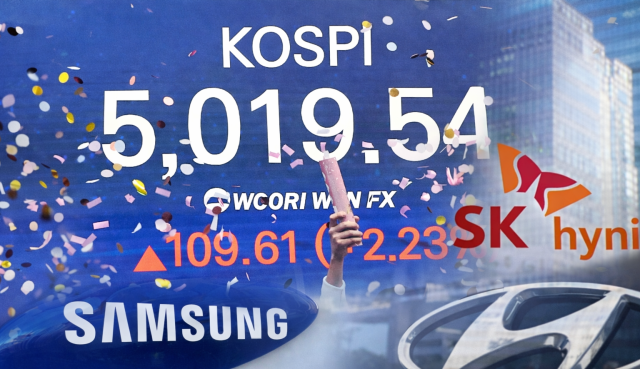
South Korea’s stock market, for now, remains an impressive outlier.
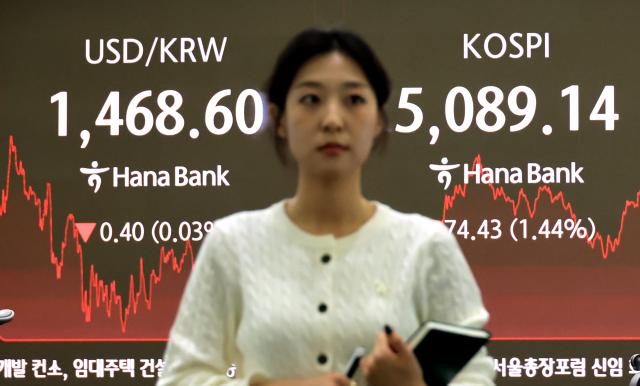
While major U.S. and European indices have struggled to sustain momentum, the KOSPI closed at 5,089.1 on Feb. 6, up more than 20 percent from the end of last year. The technology-heavy KOSDAQ has risen nearly 17 percent over the same period. Few advanced markets can match that performance.
Yet strong numbers can obscure weak structures.
This week, the KOSPI fell to around 4,949, surged to 5,371, and retreated again toward the low 5,000s within days. A swing of more than 420 points — roughly 8.5 percent — in such a short period is not the hallmark of a confident, institutionally anchored bull market. It is the signature of a market increasingly driven by sentiment, momentum, and leverage.
Foreign investors appear to have drawn similar conclusions.
Since the start of the year, overseas investors have sold a net 17.6 trillion won of Korean equities while continuing to accumulate bonds. This is not capital flight. It is portfolio triage — a calculated reduction in equity risk in favor of safer instruments.
Hedging activity reinforces the message. Stock lending balances have climbed to a record 140.8 trillion won, reflecting rising demand for protection against a downturn. In effect, investors are buying into the rally with one hand and insuring against its collapse with the other.
More revealing, however, is what Korean investors themselves are doing.
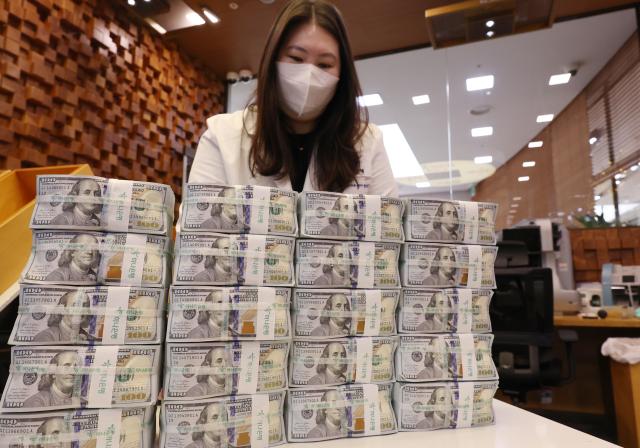
In 2025, residents invested roughly $140 billion in overseas securities. Foreign investment in Korean securities amounted to barely $53 billion. Outflows were nearly three times larger than inflows. In equities alone, Korean investors sent about $118 billion abroad, while foreigners invested just over $40 billion at home.
This is not a cyclical fluctuation. It is a structural reallocation of capital.
Korean investors, from pension funds to private individuals, are steadily diversifying away from domestic assets. They are voting, with their money, for deeper and more liquid foreign markets. Global investors, meanwhile, are becoming more selective about Korea.
The consequence is that the burden of sustaining domestic share prices has shifted decisively toward retail investors — and toward leverage.
Margin debt remains near 25 trillion won, with unsettled credit balances around 1 trillion won. Borrowed money has become a central driver of trading activity. Much of the market’s recent strength rests on “debt-financed optimism,” a notoriously unstable foundation.
History suggests that such structures tend to magnify both euphoria and panic. They perform well in rising markets and unravel quickly when confidence falters.
Pressure is also building in the currency market.
Despite posting a record current account surplus in 2025, Korea’s foreign exchange reserves fell by more than $4 billion over the year and declined further in December and January as authorities intervened to support the won. The exchange rate approached 1,470 per dollar in early February.
The government’s $3 billion issuance of foreign exchange stabilization bonds — its largest since the global financial crisis — was a reminder that currency management has become a permanent policy concern rather than an occasional emergency.
In plain terms, Korea is earning dollars but failing to retain them.
Rising interest rates compound the problem. Three-year government bond yields have moved above 3.2 percent, while AA-rated corporate bonds approach 3.8 percent. Higher funding costs are squeezing companies already coping with weak currency and rising import prices. Without sustained earnings growth, current valuations will become increasingly difficult to defend.
Taken together, these trends paint a sobering picture.
Foreign investors are reducing equity exposure. Domestic capital is flowing abroad. Retail participation is heavily leveraged. Public authorities are devoting growing resources to currency stabilization. Volatility is rising.
None of this implies imminent collapse. Korea remains a technologically advanced, export-competitive economy with strong industrial foundations. Semiconductors are recovering. Investment in artificial intelligence is expanding. Corporate governance has improved.
But financial markets do not thrive on growth alone. They require confidence, capital retention, and institutional depth.
Those conditions are eroding.
When overseas investment outflows consistently exceed inflows by wide margins, and when equity gains depend heavily on borrowed money, sustainability becomes questionable. Markets can ignore such imbalances for long periods — until they cannot.
The recent 8.5 percent weekly swing should therefore be interpreted less as a routine correction than as an early warning.
Korea’s rally continues. For now. But it rests on increasingly narrow and fragile foundations.
*The author is the managing editor of AJP
Copyright ⓒ Aju Press All rights reserved.
