
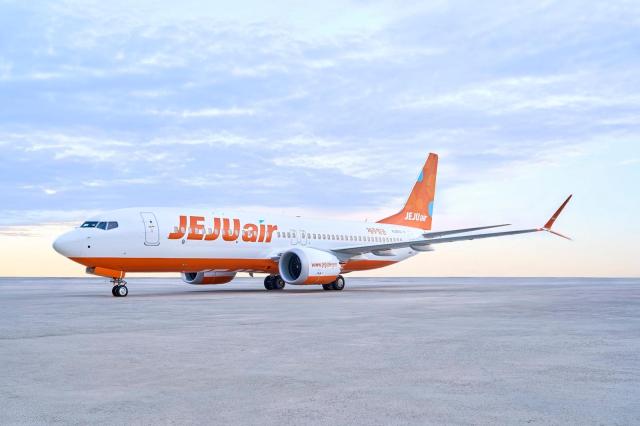
According to the airline industry on Monday, Jeju Air posted operating profit of 18.6 billion won in the fourth quarter of last year, swinging to a profit. The carrier said it has moved past the lingering risk tied to the Muan disaster and returned to profitability after five quarters, helped by fleet modernization and demand recovery.
Jeju Air has focused on upgrading its fleet over the past three years by adding newer passenger jets. It began introducing the Boeing 737-8 in 2023 with two aircraft, added six last year and one more early this year, bringing the total to nine. About 21% of its 43 passenger aircraft are newer models less than three years old.
A higher share of new aircraft has translated into lower fuel costs. Jeju Air said its cumulative fuel expenses for the first through third quarters of 2025 fell about 19% from the same period in 2024. The airline plans to increase the number of new aircraft to 40 by 2030. It is also seeking liquidity by selling 43.3 billion won worth of shares in its subsidiary AK I&S to AK Holdings.
“When we bring in new aircraft, operators benefit from better fuel efficiency, and passengers find them more convenient because they have phone charging ports,” a Jeju Air official said, adding the company is “gradually moving away from the past downturn.”
The profit swing is effectively the only performance improvement among the low-cost carrier “big three.” Jin Air, which has already reported results, posted an operating loss of 9.7 billion won in the fourth quarter of last year. T’way Air, which has yet to report, is also expected to post a loss; the securities-industry consensus estimates its fourth-quarter operating loss at 45 billion won.
Expectations for first-quarter results are also rising as the industry enters its peak season. Passenger demand has strengthened amid eased restrictions on group tourism from China and continued preference for travel to Japan. Jeju Air carried 1.176 million passengers in January, up 33.5% from a year earlier.
Jeju Air has expanded the share of its Japan routes to 42%. Securities firms forecast the airline will post a first-quarter profit of 80.7 billion won this year.
Oh Jeong Ha, an analyst at Daol Investment & Securities, said, “Jeju Air is the only short-haul low-cost carrier without restrictions,” adding that the first-quarter peak-season effect, including the overlap of Lunar New Year and Independence Movement Day, could support an annual profit as well.
* This article has been translated by AI.
Copyright ⓒ Aju Press All rights reserved.