
SEOUL, Mar 13 (AJP) —South Korea’s M2 money supply grew at a faster pace in January than previous months on strong stock market and U.S.-dollar-denominated savings on expectations of continued greenback strength.
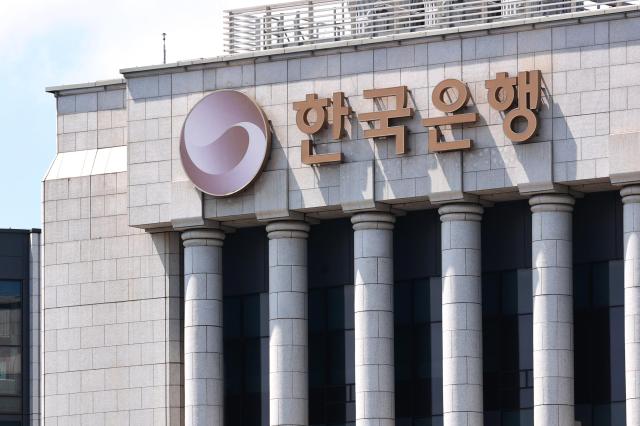
According to a Bank of Korea (BOK) release on Friday, the M2 money supply grew 0.7 percent month-on-month in January to reach 4,108.9 trillion won ($2.83 trillion). Under the previous M2 standard (used prior to November statistics), the figure rose 1.2 percent to 4,521.1 trillion won, indicating an even sharper upward trend.
The M2 money supply grew by 4.5 percent throughout 2025 (under the new standard) and 7.4 percent (under the previous standard), a marked acceleration from the 3.3 percent and 5.6 percent growth rates recorded in 2024.
Compared to January of last year, M2 increased by 4.6 percent (new) and 8.4 percent (previous). While the growth rate under the new standard—which excludes ETFs and long-term deposits—narrowed by 0.1 percentage points, the previous standard showed an expansion of 0.4 percentage points.
The expansion was largely fueled by a stellar performance in the South Korean stock market in January. The benchmark KOSPI surged more than 21 percent in a single month, rising from 4,309.63 on Jan. 2 to close at 5,224.36 on Jan. 30. The tech-heavy KOSDAQ followed suit, jumping over 20 percent to finish the month at 1,149.21.
KOSPI was trading down 1.3 percent at 5,510 Friday. After hitting an all-time high of 6,307.27 on Feb. 26, the index suffered a 20 percent plunge in early March, triggered by the Middle East crisis and the blockade of the Strait of Hormuz.
Liquidity in other financial institutions, including asset management firms, increased by 15.2 trillion won, reflecting the January market boom. Demand deposits, which typically serve as a cash pool for equity investment, grew by 15.5 trillion won, more than doubling the 7 trillion won increase seen the previous month.
The period was also marked by a significant buildup in foreign currency liquidity. Other monetary products, primarily foreign currency deposits with maturities of less than two years, surged by 21 trillion won—double the 10 trillion won increase in the prior month.
The won, which stood at 1,445 per dollar on Jan. 2, weakened to 1,453 by Jan. 30, a depreciation of approximately 0.6 percent. Amid the ongoing Hormuz crisis, the currency has since plummeted to the 1,490 level as of 11:15 a.m. Friday.
Bond prices also retreated. The yield on the 10-year government bond rose from 3.386 percent on Jan. 2 to close at 3.607 percent on Jan. 30, an increase of 22.1 basis points. While yields briefly dipped in February on safe-haven demand, the Hormuz shock pushed them back up, with the 10-year yield closing at 3.649 percent on Thursday, up 4.1 basis points.

Copyright ⓒ Aju Press All rights reserved.
