
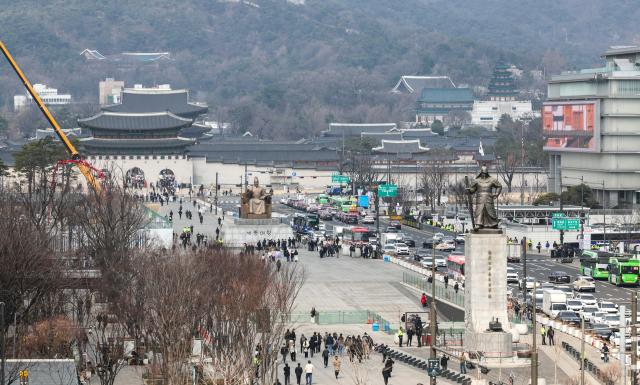
SEOUL, March 12 (AJP) - At the heart of Seoul stands Gwanghwamun Square, often called the symbolic center of South Korea. The broad boulevard stretching from the ancient gates of Gyeongbokgung Palace has witnessed centuries of history — from the royal administration of the Joseon Dynasty to modern civic gatherings. Next Saturday, the historic square will host another moment in that long timeline: a comeback performance by global K-pop group BTS.
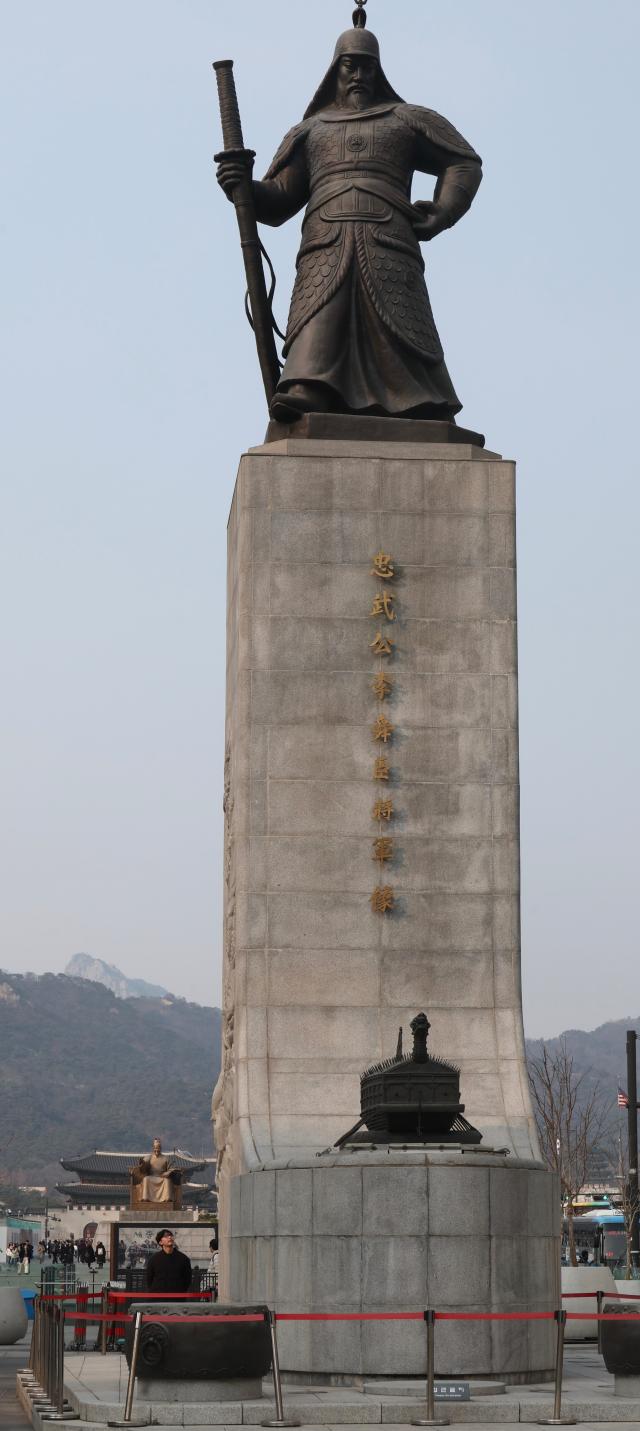
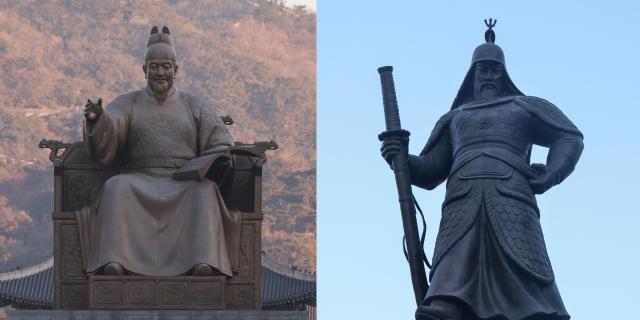
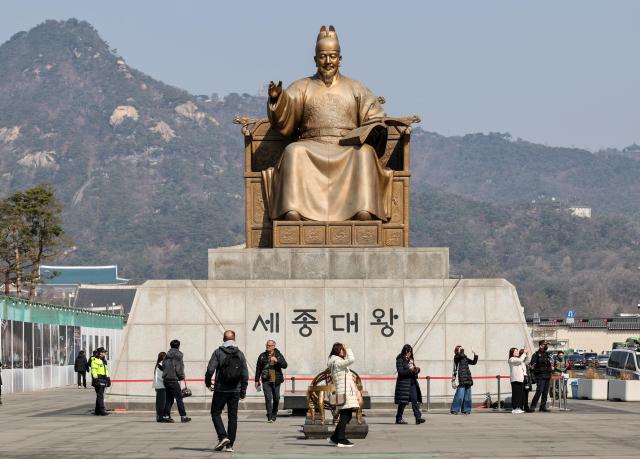
About 250 meters north of Yi’s monument sits another defining symbol of Korean history: the statue of King Sejong the Great, the fourth ruler of the Joseon Dynasty. The seated statue measures 6.2 meters in height and 4.3 meters in width. Unlike the commanding posture of the admiral, Sejong appears calm and contemplative. One hand holds a book while the other gestures gently forward, reflecting his reputation as a ruler devoted to the welfare of his people.
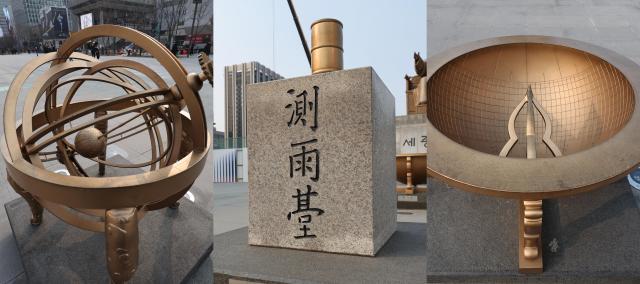 Models of King Sejong’s inventions — the honcheonsi, cheugugi and angbuilgu — are displayed at Gwanghwamun Square in Seoul. AJP Han Jun-gu
Displayed before the statue are scientific instruments from the 15th century that flourished under Sejong’s reign — the honcheonsui armillary sphere, the cheugugi rain gauge, and the angbuilgu sundial. Along the flowing water channel surrounding the plaza, a timeline carved in stone traces the history of the Joseon Dynasty. The stories of the two figures continue beneath the plaza.
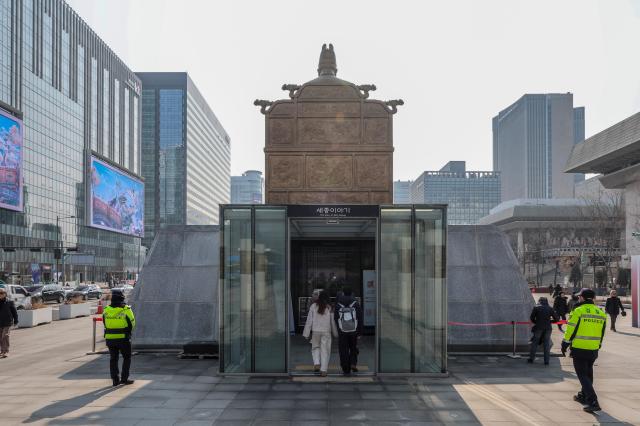
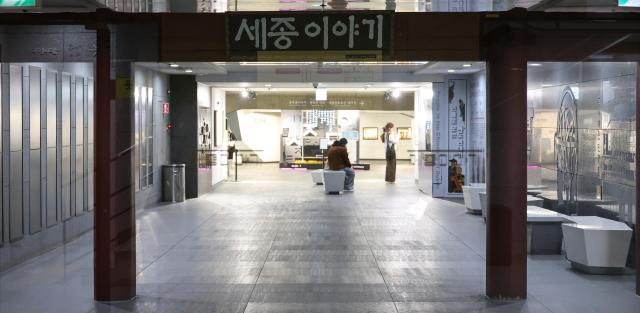
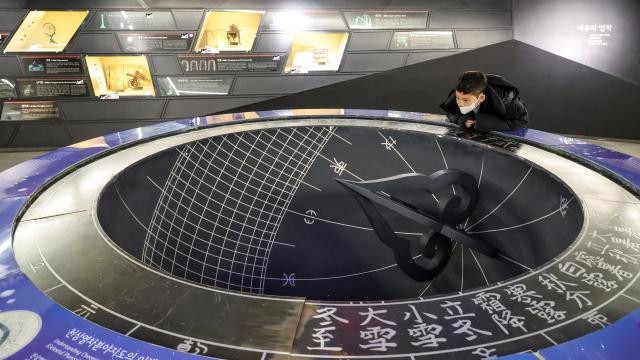
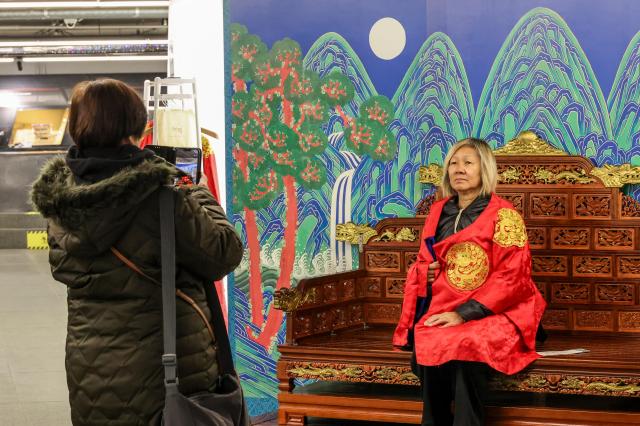
Underground exhibition halls known as “Story of Sejong” and “Story of Admiral Yi Sun-sin” allow visitors to explore the lives and achievements of the two historical icons. The Sejong exhibition introduces the king’s philosophy of governance, his scientific innovations and his most enduring legacy — the creation of Hangul, the Korean alphabet.
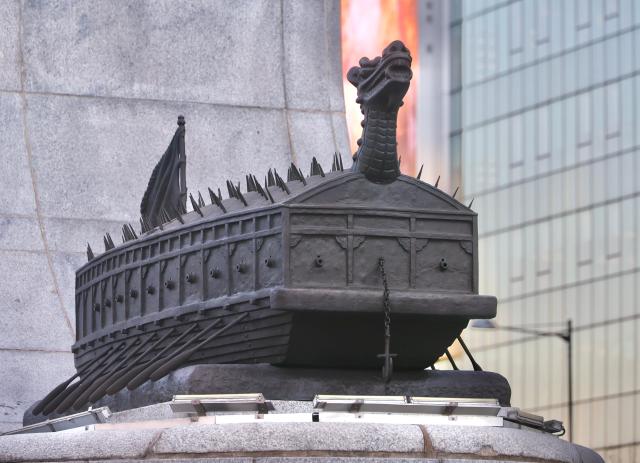
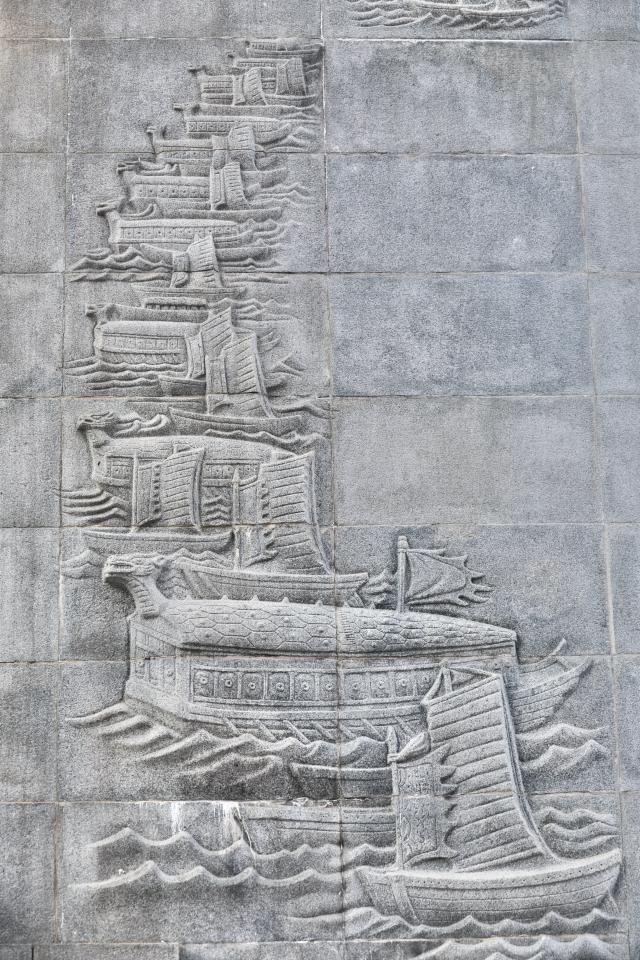
Displays include replicas of astronomical charts, traditional musical instruments used in the royal court and interactive exhibits explaining Sejong’s technological achievements. The Yi Sun-sin gallery focuses on the admiral’s leadership during the Imjin War. Artifacts and multimedia displays recreate the naval battles of the seven-year conflict, including models of Joseon warships and immersive visual installations illustrating the admiral’s strategies.
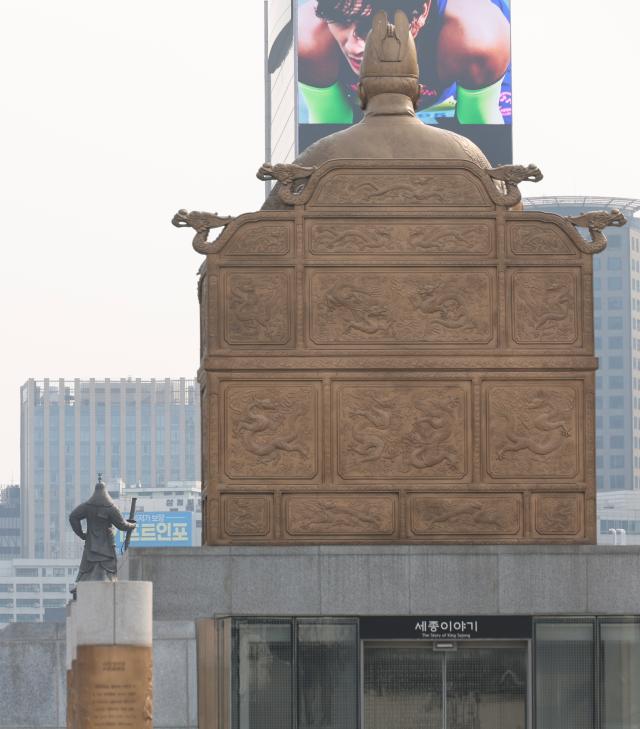
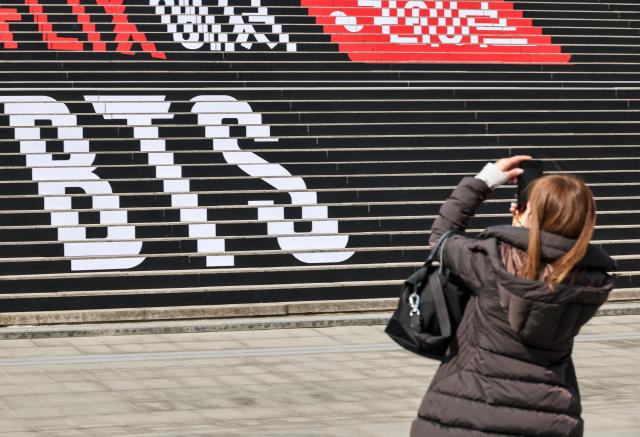
Above ground, Gwanghwamun Square remains a living civic space where history continues to unfold. The statues of Yi Sun-sin and King Sejong overlook the plaza while their stories live on below — a reminder of the country’s past layered into the fabric of modern Seoul. Soon another chapter will be added.On March 21, the square will transform into a stage for BTS, the global music phenomenon whose influence now carries Korean culture across the world.
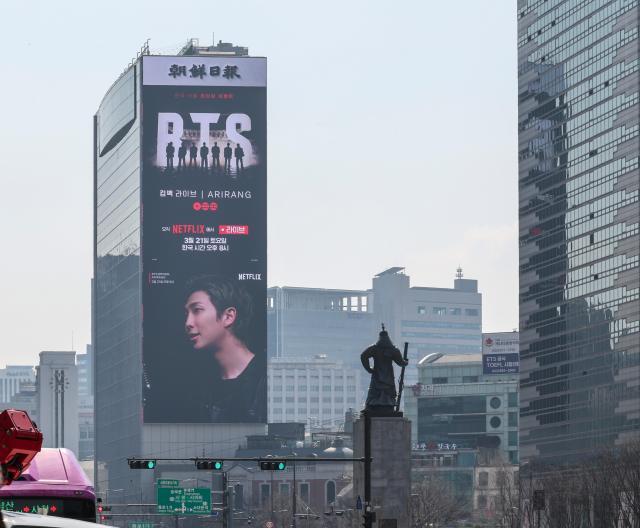
In one place stand the legendary king who gave Korea its alphabet, the admiral who defended the nation’s shores, and a modern group whose music has carried Korean culture to global audiences.
At Gwanghwamun, centuries of Korean history — and the future of its culture — meet on the same stage.

Copyright ⓒ Aju Press All rights reserved.
