
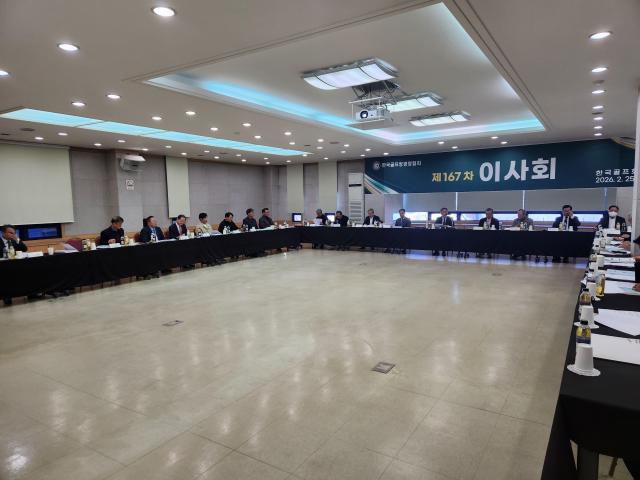
The meeting was convened as golf course operators face a rapidly shifting business environment, including fewer visitors, a weakening economy, the implementation of the so-called Yellow Envelope Act, and a push for a worker presumption system. The association said the board discussed the industry’s direction and steps to build a response framework.
The board reviewed plans to approve operating proposals for two dedicated bodies aimed at easing what it called excessive tax burdens on membership-based golf courses: a consultative group to push for lower punitive property tax rates and another to seek abolition of the individual consumption tax.
It also voted to set up a separate consultative group made up of representatives from member companies to improve decades-old standards for classifying golf courses as “luxury property” and to pursue legislative efforts more systematically and quickly to reduce user costs.
To limit risks tied to revisions to labor laws, the association said it will strengthen on-site support by holding briefings in eight regions, distributing guidance for reviewing collective bargaining agreements and employment rules, and preparing a standard contract template for caddie operating agreements.
Chairman Choi Dong-ho said the association will provide broad support, including briefings and an advisory system, to prevent confusion among member companies as labor conditions change. He said fixing institutional shortcomings will be a top priority so the golf industry can firmly establish itself as a core part of the sports and leisure sector.
* This article has been translated by AI.
Copyright ⓒ Aju Press All rights reserved.