
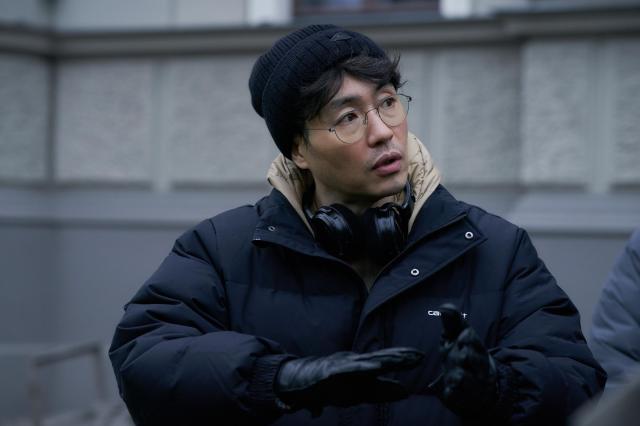
The film opened Feb. 11 and has drawn a cumulative 1.82 million viewers, according to the Korean Film Council’s integrated box office system as of March 1. Ryoo first expressed gratitude for the renewed energy in theaters over the Lunar New Year holiday period and for fellow directors’ strong showings.
"What I’m feeling is that theaters have come alive again after a long time. Compared with last year’s Lunar New Year holiday, it feels completely different. I’m grateful for that," he said. "I’m really happy director Jang Hang-jun is doing well. The cinematographer for 'The Man Who Lives With the King' is someone I’ve worked with my whole life, and I’m close with Yoo Hae-jin, too. Anyway, it feels good that two films with different sensibilities are out and audiences are coming to theaters. We’re also continuing stage greetings and meeting audiences."
Ryoo said the project began with anger he felt after encountering a real-life tragedy while reporting in the past.
"The basic incidents I gathered while preparing 'The Berlin File' — things that happened on the Chinese border and what I learned while covering a North Korean mission — became the foundation," he said. "The human trafficking case set in Vladivostok in the film is something that actually happened. What I heard was a crime so severe it’s hard to describe. When you ask why I chose this material, if I look back purely, I was furious after hearing it. You hear a lot about smuggling cigarettes, but buying and selling people … that’s something that must not exist. That anger was the starting point."
Because the subject is tragic, he said he repeatedly weighed how to keep the camera from exploiting its victims.
"The moment I chose this material, there was no longer any question of comfort or discomfort. It’s something that makes you angry, so it’s inevitably uncomfortable," he said. "The filmmaker’s task is that our gaze must not exploit the subject. Setting the distance between the camera and the subject required real care. The priority was not to emphasize it or treat it as something to gawk at. Even in postproduction, if the women stood out in the later images of the factory basement, I blocked all of that. I didn’t want the audience’s gaze to drift there and create an exploitative look inside the screen. We struggled with how to handle the material. On set, it was difficult and delicate."
To capture the mood of the setting, he said he stripped away noise and focused on the landscape his characters move through.
"Rather than emphasizing action spectacle, I wanted to preserve the characters’ emotional lines," he said. "So we removed the loud background extras walking around in the streets. I wanted the focus only on the characters. For every scene of someone walking, we searched the city thoroughly — the buildings, the streets — and checked everything in detail. We built a set for the North Korean restaurant, but everything else was shot in Vladivostok. There was only one method: the staff’s legwork."
Ryoo pointed to what he called the film’s central image: a person who is ultimately alone even within relationships.
"The title is 'Humint,'" he said. "The people placed inside this world. In the opening and ending, you see someone waking up and falling asleep somewhere that isn’t their home — that’s the image. They form tight relationships, and yet they’re ultimately alone within them. The keyword is 'parting,' a 'person who leaves.' That was important to me. This is an action film, but when it reaches action, the emotion isn’t the pleasure of beating a bad guy like I’ve handled before. It’s action that explodes after being compressed within a calm emotional line. So the approach was less about action itself and more about refining the characters."
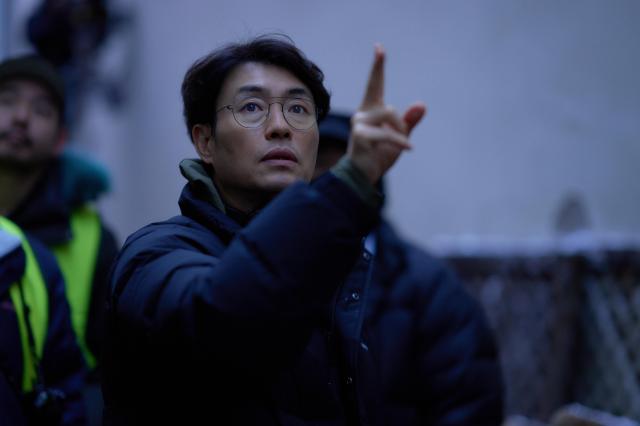
He said he aimed for traditional suspense that makes a theater go quiet, balancing familiarity and novelty.
"When more than 100 people watch a film in a theater, I wanted suspense that makes them hold their breath," he said. "You can feel that silence when people are focused. I’ve used humor a lot, but I thought: Let’s go for real, traditional suspense in a theater. I wanted the appeal of seeing actors on a big screen again. Action matters, but I wanted something that lingers. Because this isn’t made from scientific data, if it feels too familiar people get bored, and if it’s too new they reject it. How do you create harmony between the familiar and the new? I thought it might feel new to build emotional density step by step, then pull the climax forward and drive hard in the final stretch."
Ryoo also cited the film’s mirrored opening and ending, saying it was possible because of actor Zo In-sung. He said it was his most explicit use of that structure and that he wanted the afterimage left with viewers to be the character himself.
"This is the first time I’ve placed such an obvious mirrored structure in a film, and it was possible because of Jo, because of Zo In-sung," he said. "In a way, I think this story may be in the form of Jo’s recollection. After watching, people may remember many things, but I hoped the afterimage would be purely a 'person.'"
In shaping what he called realistic, self-directed female characters, he said feedback from his family and his own approach as a director played a major role.
"When I handle female characters, I have very strong censors: my wife and daughter," he said, laughing. "In real life, we don’t find someone appealing if they only lean on others. We’re attracted to independence. Chae Seon-hwa is already the person who causes the incident in 'Humint' and drives it to its outcome. If you treat her as a character consumed by an action film, you lose the engine itself. There were different ways to portray rescuing female colleagues, but I thought it had to be Seon-hwa who does it. Even the character who gets shot and collapses should be saved and protected by their own group. I’m attracted to that kind of person. I think that’s cool."
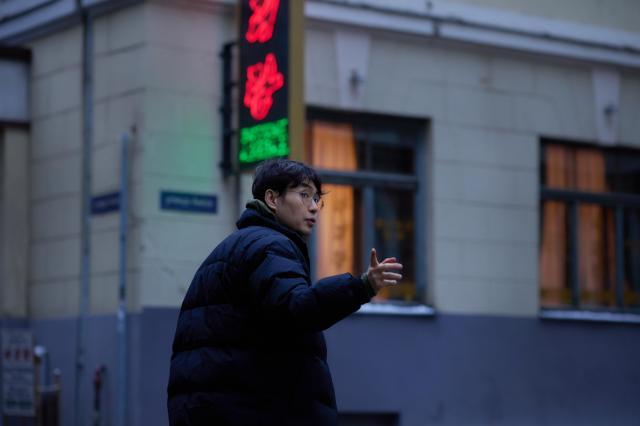
Ryoo said he accepted audience criticism with humility and treated it as a chance to learn.
"One of the most shocking things I heard was that in reality, people were placed together in glass cases like merchandise," he said. "Their condition, too. We couldn’t portray it close to reality, so after a lot of 고민, we created our own setting to condemn the act. When you shoot action, you also think about what makes an interesting setup. But with the audience’s points of dislike, I realized, 'I didn’t think that far.' I considered it something worth taking to heart. I’m grateful to receive it and I think I need to keep checking those things as I make films. Even for me, the starting point wasn’t, 'Let’s squeeze it all out.' I should have looked more carefully and in more detail, but I fell short. I’m learning a lot from the feedback."
Looking back on two decades in film, Ryoo said 'Humint' left him feeling unburdened — and could mark a turning point toward something different next.
"After finishing the film, releasing it, and reaching this moment, I feel lighter and I have no regrets. It feels like, 'I’ve done everything I wanted to do,'" he said, laughing. "I even think, 'If I died tomorrow, it would be a good death.' Of course, I still have homework. With reactions I didn’t anticipate, I think, 'Ah, I need to think more about this.' What I’m grateful for with this film is that it may become a turning point for me. Over 20 years, I tried everything I liked and wanted to do, and I’m thinking the next film could be very different."
* This article has been translated by AI.
Copyright ⓒ Aju Press All rights reserved.