With Iran declaring restrictions in the strategic waterway following U.S.-Israeli strikes and retaliatory drone and missile attacks across the Gulf, Seoul said it is maintaining an emergency posture across energy, finance and security — but stressed there is “no need for excessive concern.”
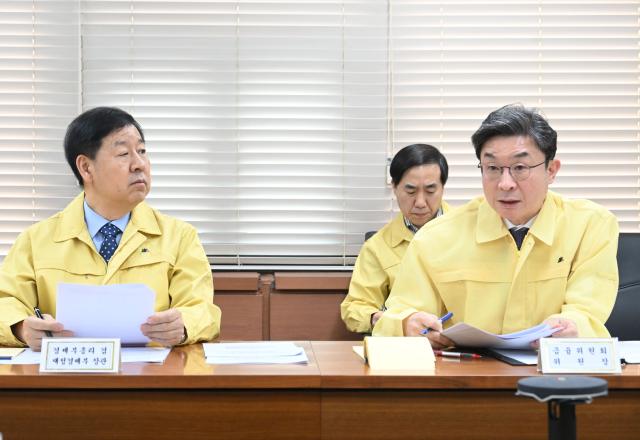
The government said crude oil and petroleum product reserves stand at levels sufficient for more than six months, even if supply disruptions are prolonged.
“Oil and petroleum products are stockpiled for 208 days. We are fully prepared even for a long-term disruption,” Vice Industry Minister Moon Shin-hak told reporters after a ministerial meeting on Middle East developments on Sunday.
Liquefied natural gas (LNG) exposure is also seen as manageable. Qatar accounts for a portion of Korea’s LNG imports, but the Middle East share in Korea’s total LNG mix has fallen to around 20 percent. With spring approaching and seasonal gas demand easing, authorities said supply risks remain contained even if the situation drags on.
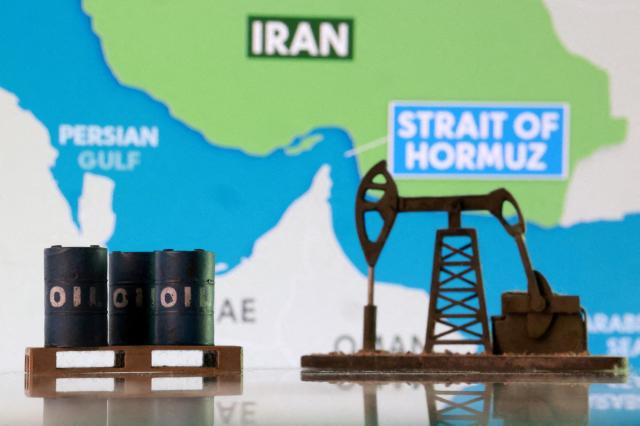
The reassurance comes as shipping through the Strait of Hormuz — a chokepoint that handles roughly a fifth of global oil consumption and about 70 percent of Korea’s crude imports — has slowed sharply amid Iranian warnings to commercial vessels. Data providers reported hundreds of tankers anchored outside the strait, unable to transit.
Brent crude surged more than 6 percent in Monday trading, briefly approaching $80 a barrel, while European gas prices spiked nearly 40 percent after Qatar halted LNG output at a major facility following intercepted drone threats. Analysts warn that a sustained disruption to Hormuz traffic could push oil above $100 a barrel, reigniting global inflation pressures.
Wi Sung-rak, head of the presidential National Security Office, said the government remains in full emergency-response mode following the reported death of Iran’s Supreme Leader Ayatollah Seyyed Ali Khamenei and the widening regional strikes.
“As the president has said, there is no need for excessive concern,” Wi told reporters in Singapore, where the president stopped for a state visit. “We are thoroughly prepared in the real economy, financial markets and military security.”
The presidential office said it is operating an emergency system, with daily reviews chaired by the prime minister and cross-ministerial monitoring of energy supply, logistics and financial markets. All senior staff reported to work during the alternative holiday to assess developments, prioritizing the safety of South Korean nationals in the region.
Officials declined to predict oil-price trajectories or the conflict’s duration, saying contingency measures would be adjusted after “sufficient observation.”
Vice Finance Minister Lee Hyeong-il said Asian currencies weakened amid a broader flight to safety, while stock markets showed mixed performance.
Safe-haven currencies such as the U.S. dollar and Swiss franc strengthened. Japan’s Nikkei index fell, Australia’s market was little changed and China’s Shanghai Composite edged higher, reflecting uneven investor sentiment.
In the United States, equities initially fell but later pared losses, while Treasury yields rose on concerns that higher oil prices could rekindle inflation. The 10-year yield climbed above 4 percent.
Lee said a joint emergency task force will monitor domestic financial markets and the real economy around the clock.
“If abnormal signs emerge, we will respond swiftly in close coordination with relevant agencies,” he said, adding that the scale of impact will hinge on how long the conflict persists.
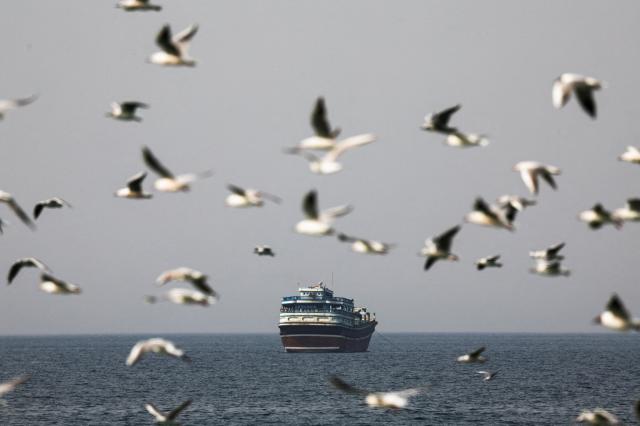
The government has advised domestic carriers to avoid Middle Eastern waters and urged vessels entering the Strait of Hormuz to wait and take enhanced safety measures.
As of Monday, no South Korean-flagged vessels were transiting the strait, officials said. One tanker that had been inside the waterway exited safely a day earlier.
HMM, South Korea’s largest container carrier, said its 16,000-TEU vessel HMM Daon is currently docked at Jebel Ali Port in Dubai — the Middle East’s largest port and a key logistics hub linking Asia, Africa and Europe.
The company said the vessel is not in a designated high-risk zone and is conducting routine port operations. It is monitoring the situation and will decide whether to relocate to a safer area depending on further developments.
Of roughly 20 HMM container ships and tankers operating on Middle East routes, industry officials expect possible rerouting or schedule adjustments if instability persists.
The conflict’s expansion to energy infrastructure — including reported drone strikes near Saudi Arabia’s Ras Tanura oil complex and threats to Qatari LNG facilities — has raised the stakes for global supply chains.
Saudi Arabia, which exports more than 6 million barrels a day from Ras Tanura alone, is central to global market stability. Any sustained damage to its export capacity would weaken a critical buffer against price spikes.
For South Korea, which recently saw the KOSPI break above the 6,000 milestone on strong semiconductor-driven gains, a prolonged oil shock could cloud the outlook.
Economists warn that every sustained $10 rise in oil prices can shave 0.1 to 0.2 percentage point off global growth over 12 months. A move toward $100 oil could complicate monetary easing plans worldwide and strengthen the dollar further, adding pressure to emerging-market currencies.
Copyright ⓒ Aju Press All rights reserved.