
As fuel prices surge following the Middle East crisis, the global automotive market is experiencing a renewed shift towards electric vehicles (EVs). While the oil shocks of the 1970s favored fuel-efficient Japanese cars, the current energy crisis may benefit Chinese manufacturers offering low-cost EVs.
The Nihon Keizai Shimbun reported on June 2, citing data from S&P Global Mobility, that EV sales reached record monthly highs in March and April across 37 countries. The number of countries where EVs accounted for more than 10% of new car sales has risen to 38, with 28 countries surpassing the critical threshold of 16%, often seen as a turning point for EV adoption.
Historically, EV sales have been heavily influenced by government policies, such as subsidies and tax incentives. Outside of regions like China, EVs have generally been more expensive than gasoline vehicles, and charging infrastructure has been lacking. However, following attacks by the U.S. and Israel on Iran, oil prices have skyrocketed, leading more consumers to consider the lower operating costs of EVs.
In March, 28 countries, including Australia and the UK, set new records for monthly EV sales, while in April, Brazil and the Philippines also saw significant increases. In both months, 91% of the surveyed countries reported year-over-year growth in EV sales, marking the first time since April 2023 that over 90% of countries experienced an increase.
In South Korea, which heavily relies on Middle Eastern oil, EV sales surged to 80,000 units in March and April, a 2.4-fold increase compared to the previous year. The share of EVs in new car sales rose by 14 percentage points to 26%. Southeast Asia recorded a 40% increase in EV sales, reaching 90,000 units, with a market share of 16%. The European Union also saw a 40% rise in EV sales after a period of stagnation.
However, the overall global growth remains limited. In China, EV sales fell by 8% year-over-year to 1.33 million units in March and April, impacted by reduced tax incentives that began in January. The U.S. also experienced a 20% decline in EV sales following the end of subsidies in September 2022. Consequently, the global increase in EV sales was only 8% due to the sluggish performance in these two major markets.
Excluding the U.S. and China, the trend is different. According to the Nihon Keizai Shimbun, EV sales in 148 countries outside these markets increased by 50%, with the share of EVs in new car sales reaching a record high of 12%. The EV market, previously driven by subsidies and regulations, is now shifting towards consumer choices based on operating costs due to the Middle East crisis.
In Japan, despite gasoline prices being kept in check by subsidies, EV sales increased by 50% in March and April. However, the share of EVs in new car sales remains low at just 2%, indicating a slower adoption rate compared to major markets.
This shift poses challenges for Japanese automakers. During the 1970s oil crisis, Japanese manufacturers quickly gained market share with fuel-efficient compact cars, but now, Chinese companies with low-cost EVs are likely to benefit from rising oil prices.
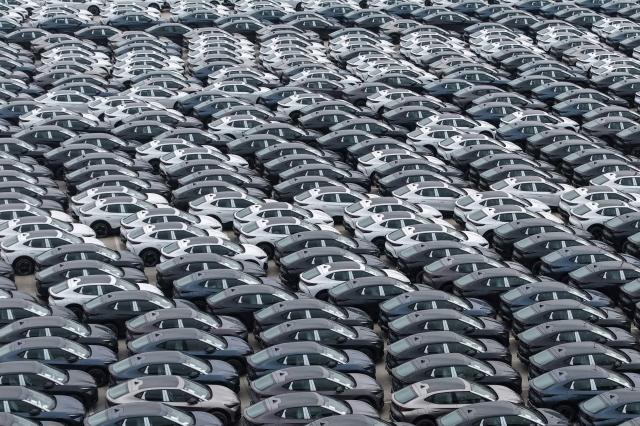
According to a Chinese automotive industry association, exports of vehicles from China in April reached 900,000 units, a 70% increase from the previous year. Among these, exports of new energy vehicles, including EVs and plug-in hybrids, surged 2.1 times to 430,000 units, nearly half of total exports. The International Energy Agency (IEA) reported that 55% of EVs and plug-in hybrids sold outside the U.S., Europe, and China last year were imported from China.
In Southeast Asia, where dependence on Middle Eastern oil is high, low-cost Chinese EVs are beginning to encroach on markets traditionally held by Japanese cars. Japanese manufacturers have been cautious in their transition to EVs, focusing on hybrids, but rising oil prices are shifting consumer preferences, increasing pressure to adjust strategies as Chinese vehicles gain traction in emerging markets.
With demand for EVs slowing in the U.S., companies like Honda are reflecting related losses, highlighting the ongoing uncertainties in the electric vehicle sector. Nevertheless, as the global EV market enters a new phase, Japanese manufacturers will need to adapt their strategies to align with regional demand changes.
* This article has been translated by AI.
Copyright ⓒ Aju Press All rights reserved.