
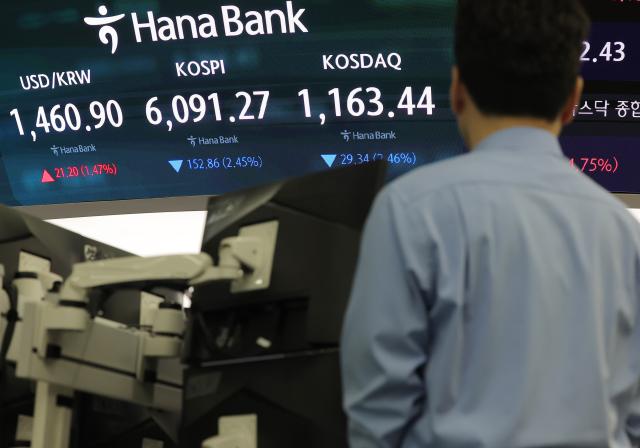
Authorities moved swiftly as geopolitical tensions following U.S.-Israeli strikes on Iran rippled across global energy and financial markets, raising concerns over oil supply stability and capital-market volatility.
Vice Finance Minister Lee Hyoung-il chaired an inter-agency emergency response meeting, reviewing developments in the Middle East and assessing spillover risks to domestic and overseas financial markets, energy logistics and the real economy.
“Given the high uncertainty surrounding developments in the Middle East, all agencies must keep every possibility open and closely monitor changes,” Lee said, adding that the joint emergency response team will convene daily until tensions stabilize.
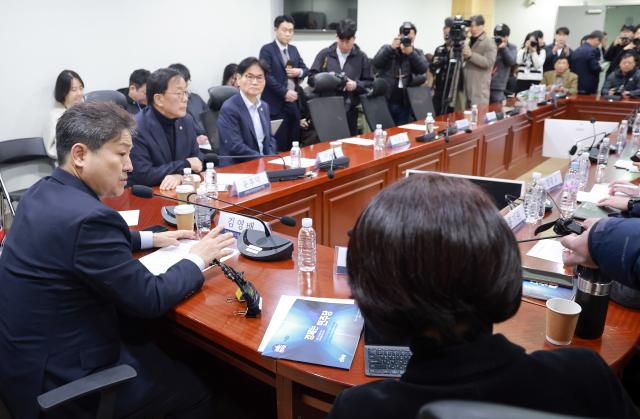
The Bank of Korea (BOK) installed “Middle East Situation Monitoring Task Force” under Governor Rhee Chang-yong to assess the impact on financial and foreign-exchange markets as domestic trading resumed for the first time since the escalation.
The central bank said it will maintain the task force and operate a 24-hour monitoring system in coordination with its overseas offices.
“We will closely monitor market developments and respond in a timely manner if necessary,” a BOK official said.
The BOK had already held an emergency videoconference on Feb. 28 — the day the strikes began — followed by additional briefings on March 2 based on reports from its overseas branches covering Asian and European markets.
Global markets reflected heightened geopolitical stress. West Texas Intermediate crude rose 6.3 percent, gold gained 1.2 percent and the dollar index climbed 0.9 percent. The offshore non-deliverable forward (NDF) won rate jumped 26 won to 1,466 per dollar.
Authorities warned that volatility in stock and currency markets could intensify depending on how tensions unfold.
If abnormal signals emerge, officials stand ready to deploy the government’s “100 trillion won plus alpha” market stabilization program to support corporate bond and commercial paper markets and ensure a soft landing for real estate project financing (PF).
Regulators also pledged a strict zero-tolerance policy against fake news, market manipulation and other unfair trading practices. The Financial Supervisory Service and the Korea Exchange will jointly monitor suspicious transactions.
To cushion potential spillovers to the real economy, authorities will provide up to 20.3 trillion won in financial support for companies exposed to Middle Eastern trade. Earlier outlined as a 13.3 trillion won package, the framework was expanded to reflect growing uncertainty. Measures include liquidity support, interest rate reductions and dedicated consultation channels for affected firms.
While South Korea’s overall export exposure to the Middle East is limited, officials acknowledged that certain small and mid-sized enterprises remain heavily dependent on the region.
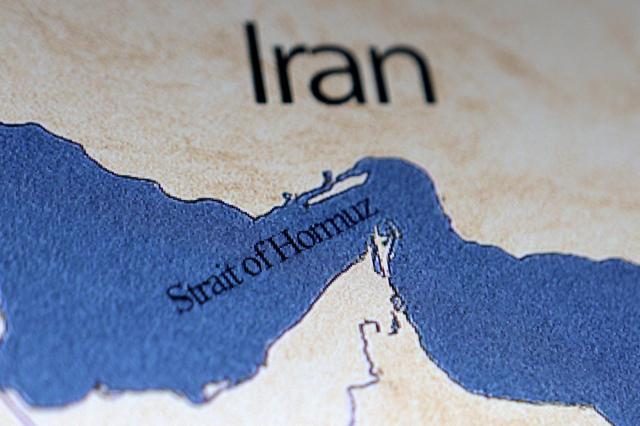
Rising tensions around the Strait of Hormuz — a critical global oil chokepoint — have prompted intensified monitoring of maritime logistics. Authorities said no abnormal safety developments involving Korean vessels in the region have been identified.
Seoul on Tuesday claimed it held oil and natural gas reverses that could last at least 208 days of consumption. Including private-sector stockpiles, total reserves amount to roughly seven months — well above the International Energy Agency’s 90-day recommendation.
For now, officials assess the near-term economic impact as manageable unless oil prices surge above $100 per barrel on a sustained basis.
Brent crude has risen to around $77–80 per barrel in offshore trading. According to a National Assembly Budget Office estimate, oil at $100 per barrel would widen Korea’s trade deficit by $40.8 billion and lift consumer inflation by 1.3 percentage points. A 5 percent supply disruption could shave 0.6 percentage point off real GDP growth.
The government and the BOK currently project 2026 growth at around 2.0 percent, while the Korea Development Institute forecasts 1.9 percent. Sustained oil above $100 could push growth into the low-1 percent range.
Copyright ⓒ Aju Press All rights reserved.
