GYEONGGI, March 03 (AJP)-On the fifteenth night of the first lunar month, Korea steps outside.
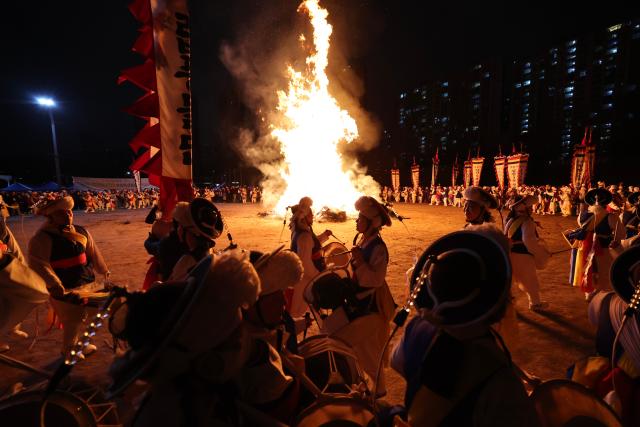
The holiday is Jeongwol Daeboreum, the first full moon of the year — a night when neighborhoods, not just families, gather under the open sky. If Lunar New Year belongs to the dining table, Jeongwol Daeboreum belongs to the fields, the hills, the riverbanks. People tilt their heads upward and wait for the moon to rise, round and bright in the brittle winter air.
The full moon has long stood for abundance and well-being. In agrarian times, it was more than a celestial body; it was a calendar, a compass, a quiet oracle. Its fullness promised ripening crops and steady fortunes. To greet the year’s first full moon was to ask — gently, collectively — for balance.

This year, the sky offers a rare spectacle. A total lunar eclipse coincides with Jeongwol Daeboreum. As Earth’s shadow slowly swallows the moon, its silver glow dims, then deepens into a muted red. Science explains the color: sunlight bending through Earth’s atmosphere, scattering blue and leaving crimson behind. Yet knowing the physics does not dispel the awe. Suspended in darkness, the red moon feels ancient, almost sentient — a reminder of how small and how connected we are.

Below that darkened moon, another light ignites.
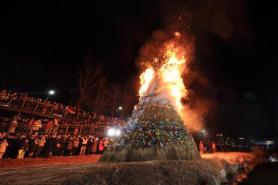
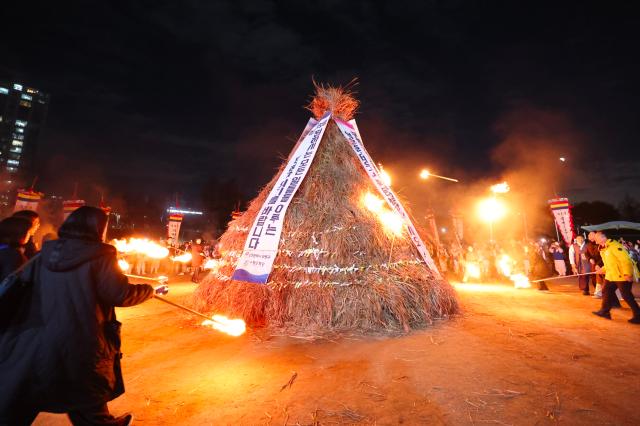
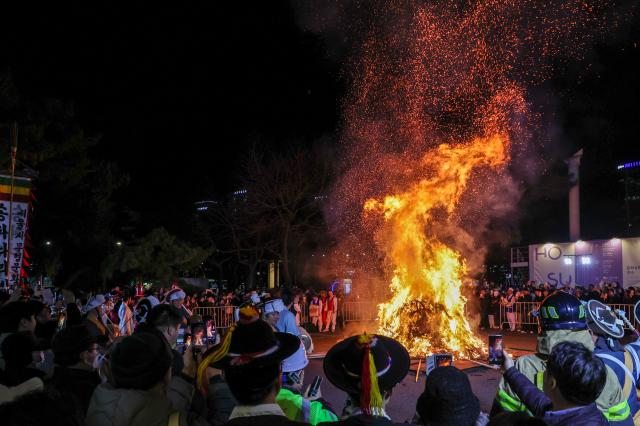
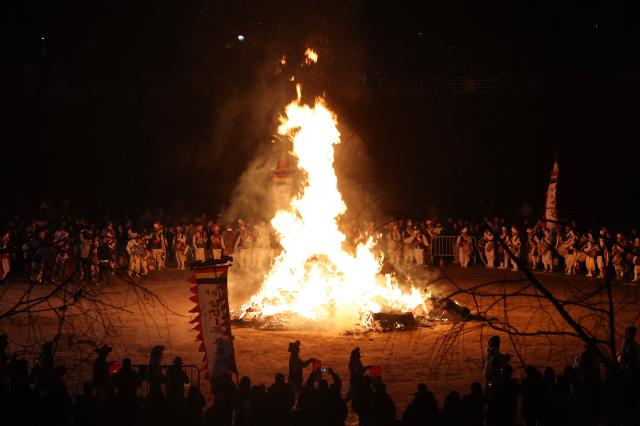
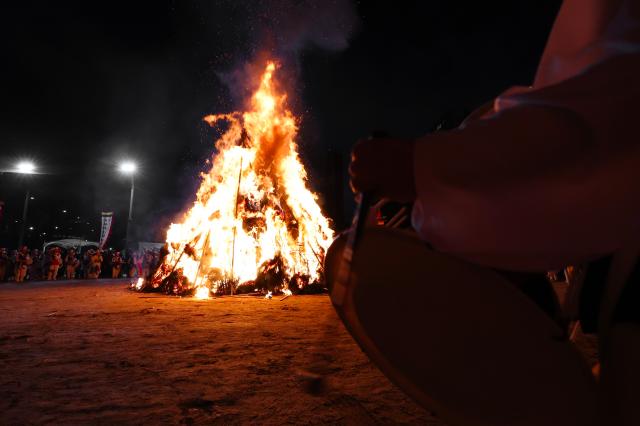
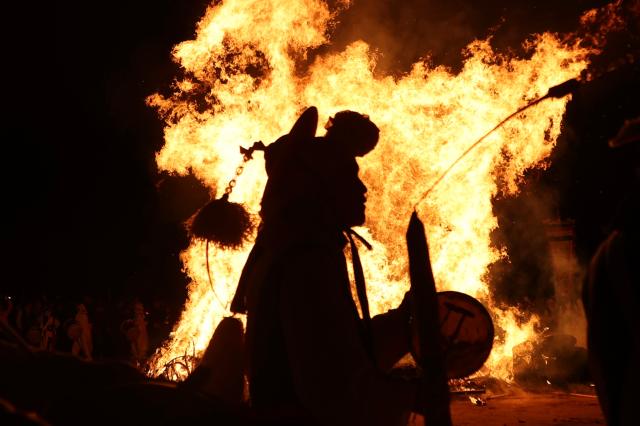
The heart of the festival is daljip taeugi, the burning of the “moon house.” Villagers stack pine branches and straw into a towering cone, sometimes taller than a house. At dusk, the structure is set alight. Flames surge upward in an instant, sparks spiraling into the night. The fire roars, crackles, breathes.
It is not spectacle for spectacle’s sake. The blaze carries away misfortune, illness and ill luck. The higher the flames climb, the more auspicious the year ahead is believed to be. Smoke becomes a messenger, rising toward the moon with whispered wishes for health and harvest.
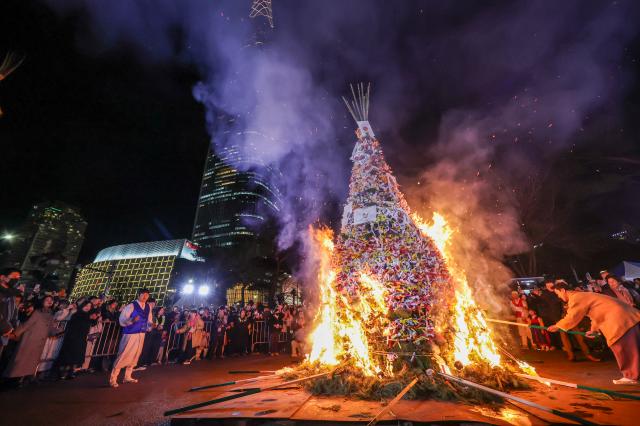
Even in a society wired to satellites and screens, people still pause for this moon. Children clutch roasted peanuts and crack them with laughter. Elders murmur old sayings about the year’s fortune. Cameras flash, but so do quiet prayers.

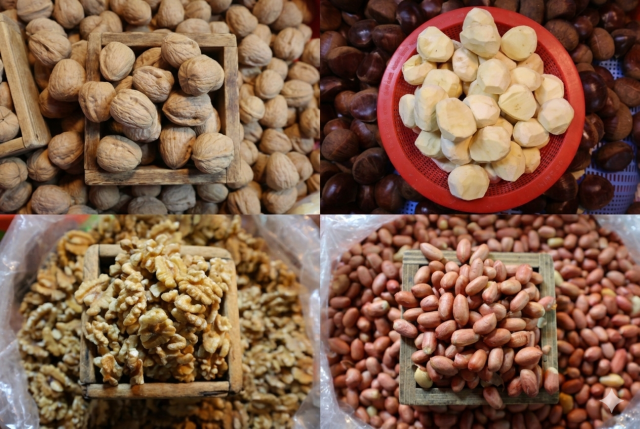
On Jeongwol Daeboreum, people bite hard nuts to prevent boils and share five-grain rice to wish for abundance. These customs have continued despite changing times.

Jeongwol Daeboreum endures because it binds sky to earth, science to story, past to present. Under the red-stained moon and beside the leaping flames, time seems to fold in on itself. The first full moon does what it has always done: gathers strangers into a shared circle of light.
And as the shadow slips away and the fire dies down, what remains is simple — a sky restored, warm ashes underfoot, and the steady, human hope that the year ahead will burn bright.

Copyright ⓒ Aju Press All rights reserved.