
With the economy slowing and business conditions already weak, higher energy costs are expected to make it harder for transport-heavy sectors such as logistics, shipping, rail and aviation to protect earnings.
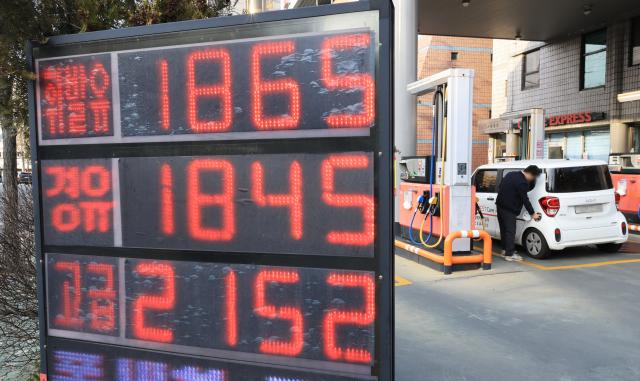
According to Opinet, the Korea National Oil Corp.’s price information system, the nationwide average gasoline price at gas stations stood at 1,900.7 won per liter as of 1:30 p.m. Monday, up 5.3 won from the previous day. Diesel rose 6.1 won to 1,923.8 won per liter, overtaking gasoline.
Since March 4, when the Middle East war intensified, gasoline has climbed 160.83 won per liter while diesel has jumped 264.45 won. It was the first time diesel exceeded gasoline since February 2023, about three years ago.
Diesel typically trades below gasoline because taxes are lower due to heavy industrial use and its pricing tends to be more stable. But the war has increased uncertainty over diesel supply. When geopolitical risks rise, supply can tighten while demand is slow to fall.
Diesel is widely used across the economy, including in freight trucks and buses, ships, construction equipment and generators. It is also used to power combat equipment such as tanks, armored vehicles and military trucks, keeping demand elevated.
Rising diesel prices can ripple through industry, with logistics firms among the most exposed because fuel accounts for a large share of costs.
In aviation, companies are said to be reviewing measures including raising fuel surcharges. Korean Air carries out oil-price hedging for up to 50% of its expected annual fuel consumption and plans to adjust its response as it monitors global oil trends.
Low-cost carriers, which rely more heavily on passenger revenue than large airlines that can offset losses with air cargo, could see already weak results deteriorate further. Rail operators also face pressure because fares are directly managed by the government, making it difficult to quickly pass higher fuel costs on to customers.
Shipping companies are also on alert, focusing on whether higher oil prices will reduce cargo volumes. They can reflect some fuel costs in freight rates through bunker adjustment factors, but if high oil prices weaken global consumption, export and import volumes could fall.
Even industries not directly tied to oil face broader cost pressure. Export-heavy sectors such as semiconductors, automobiles and PCs are concerned about higher logistics costs and transport disruptions. If a prolonged war pushes up shipping and airfreight rates enough to be reflected in product prices, demand could weaken.
Automakers also expect high oil prices could slightly dampen consumer sentiment for internal combustion vehicles. While hybrids and electric vehicles are taking a larger share, internal combustion models still account for about half of new-car sales in South Korea, making the sector vulnerable.
“Rising fuel costs can affect not only corporate expenses across industry but also consumer prices,” an industry official said. “Policy responses are needed to cushion the shock from a sharp rise in energy prices.”
* This article has been translated by AI.
Copyright ⓒ Aju Press All rights reserved.