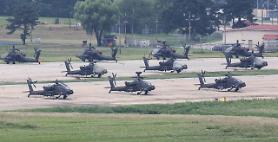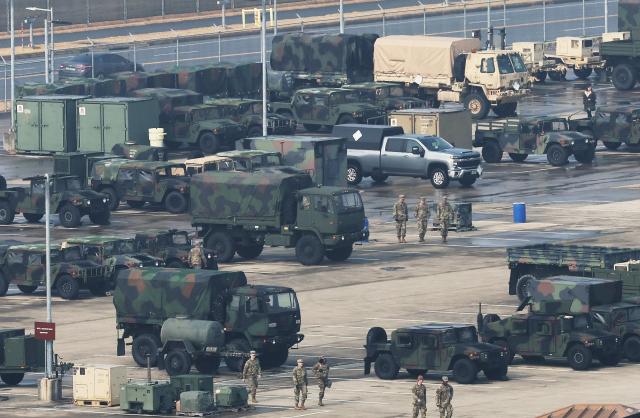
According to reports from the Washington Post and real-time flight tracking data, the Pentagon has shifted elements of the Terminal High Altitude Area Defense (THAAD) system out of South Korea while also drawing Patriot interceptor units from the Indo-Pacific theater to counter rising threats of Iranian drone and ballistic missile attacks.
Between late February and March 10, 11 C-17 Globemaster III transport aircraft and two C-5 Galaxy heavy airlifters were tracked departing Osan Air Base, a key U.S. Air Force logistics hub south of Seoul. The C-5 — the largest transport aircraft in the U.S. inventory — is capable of carrying an entire Patriot PAC-3 missile battery in a single lift, suggesting that air-defense equipment may have been among the cargo moved out of the peninsula.
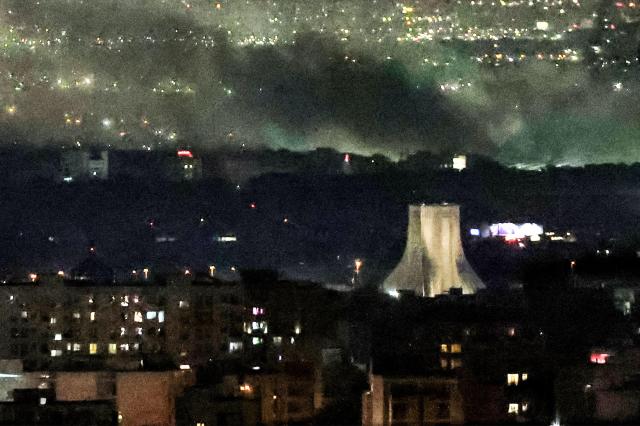
U.S. officials have described the redeployments as precautionary steps designed to reinforce defenses in the Gulf region should Iran retaliate against U.S. and allied forces following recent strikes.
South Korean officials have effectively acknowledged the movement of assets while stressing that such decisions ultimately rest with Washington.
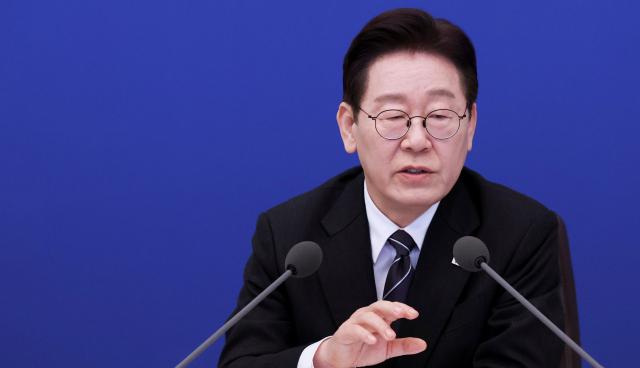
“Given that USFK contributes to peace and stability on the Korean Peninsula, we naturally hope its capabilities remain focused here,” Lee said. “However, it is also a reality that we cannot completely prevent the United States from relocating certain defensive systems according to its military needs.”
Lee sought to ease concerns about potential gaps in air defense at a time when North Korea continues to advance its missile and nuclear programs.
“Considering our defense spending, the development of our defense industry and our international military standing, there is no reason for concern about national security,” he said.
The redeployment coincides with the launch of Freedom Shield 2026, the annual combined command-post and field exercise between the U.S. and South Korea, which runs through March 19 and involves roughly 18,000 personnel.
This year’s drills place particular emphasis on verifying conditions required for the transfer of wartime operational control (OPCON) from Washington to Seoul — a process the allies are expected to target for completion by 2028, potentially aligning with the current terms of Presidents Lee and Donald Trump.
The allies are currently conducting the Full Operational Capability (FOC) assessment, the second stage of a three-step transition process. If the FOC evaluation is approved, the alliance will move to the final Full Mission Capability (FMC) phase in 2027 before the formal transfer of operational control.
At the same time, the Lee administration has shifted the structure of Freedom Shield exercises. Rather than concentrating on large-scale Field Training Exercises (FTX), the military has moved toward a more dispersed, year-round training model.
This year’s FTX component has been reduced to 22 drills, down sharply from 51 last year, a change that analysts say could help ease tensions on the peninsula ahead of renewed diplomatic engagement between Washington and Pyongyang. President Trump is scheduled to visit China from March 31 to April 2, a trip that could reopen discussions on North Korea.
Jung Kyeong-woon, a research fellow at the Korea Association of Military Studies, said the assets moved out of the peninsula likely involve reserve equipment and munitions rather than operational frontline units.
Similarly, Koh Yu-hwan, former president of the Korea Institute for National Unification, said Pyongyang currently appears focused on signaling rather than escalation.
“The fact that Kim Yo-jong issued a statement protesting the exercises suggests the North is reacting to U.S. military pressure rather than preparing offensive action,” Koh said. “Even if minor logistical gaps arise, the core deterrent remains the ROK-U.S. alliance.”
North Korea has nonetheless responded sharply to the drills.
Kim Yo-jong, the powerful sister of leader Kim Jong-un, warned that the “provocative and aggressive war simulations” conducted by the allies could lead to “unimaginably terrible consequences.”
Both USFK and the South Korean military declined to confirm specific details of asset movements, citing operational security. They stressed that the alliance maintains what they described as an “ironclad combined defense posture” to ensure there are no security gaps on the peninsula.

Copyright ⓒ Aju Press All rights reserved.