
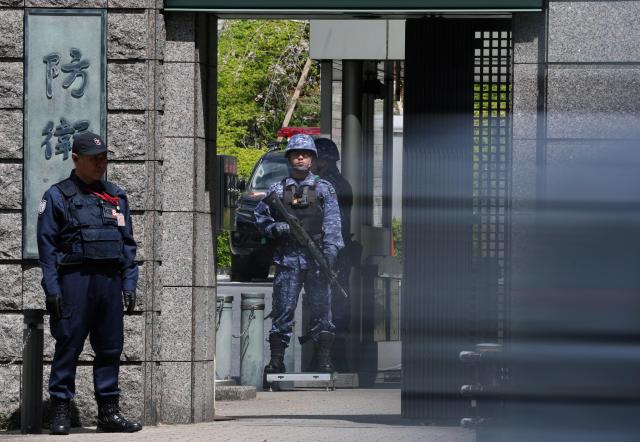
The government of Prime Minister Sanae Takaichi this week revised its “Three Principles on Transfer of Defense Equipment and Technology,” expanding exports beyond non-lethal categories to include fully developed weapons systems.
The move builds on Tokyo’s accelerated military expansion, including bringing forward its target to raise defense spending to 2 percent of GDP to fiscal year 2025.
Analysts say the policy signals a gradual but unmistakable shift toward a more conventional military posture.
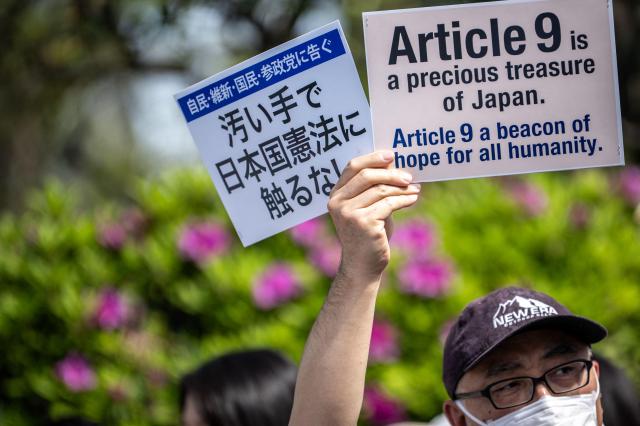
While Japan’s Self-Defense Forces (SDF) have long operated as a functional military, the current debate centers on formalizing that reality — a move critics argue would mark a symbolic departure from postwar pacifism.
Recent public opinion suggests growing acceptance. A joint poll by Sankei Shimbun and Fuji News Network found that 59.3 percent of respondents support explicitly recognizing the SDF in the Constitution.
From a strategic standpoint, Japan’s expanded role could bolster deterrence across the Indo-Pacific. By supplying maritime patrol aircraft, missiles and naval assets to Southeast Asian and Pacific nations, Tokyo may help counter China’s growing naval presence and secure critical sea lanes.
The country remains heavily dependent on Middle Eastern energy shipments that pass through chokepoints such as the Strait of Hormuz, the Malacca Strait, and the South China Sea — meaning any regional conflict would likely have immediate spillover effects on the Korean Peninsula.
“If a war with China were to break out under such conditions, it would be extremely difficult for South Korea to accept being drawn into a conflict that could literally turn the Korean Peninsula into a sea of fire,” Hosaka said.
This highlights a central paradox: while Japan’s growing military role may help stabilize sea lanes and strengthen deterrence, it could also shift the front line closer to Korea, increasing the risk of entanglement in a broader conflict.
Historical memory adds another layer of sensitivity. For many South Koreans, Japan’s rearmament evokes the legacy of its 1910–45 colonial rule and wartime aggression, reinforcing persistent distrust of a “war-capable Japan.”
Prime Minister Takaichi has sought to reassure neighbors, emphasizing that Japan will continue to uphold its identity as a peace-oriented nation even as it adapts to a harsher security environment.
Experts note that Japan’s actual posture remains cautious, particularly regarding high-risk overseas deployments.
“Japan intends to remain cautious. There are legal constraints, and as long as active combat continues, it is extremely difficult to imagine the SDF being deployed before hostilities have ended,” said Ryo Sahashi, a professor at the University of Tokyo.
Domestic opinion in South Korea reflects similar ambivalence. While 56.4 percent of respondents expressed a favorable view of Japan in a late-2025 survey, perceptions diverge sharply in the security domain, with a significant share still viewing Japan as a potential threat.
At the same time, the policy shift is reshaping trilateral cooperation among South Korea, the United States and Japan.
Experts say deeper coordination in missile defense, anti-submarine warfare and advanced weapons production could enhance interoperability and strengthen deterrence against North Korea and China.
Yet the strategic balance remains delicate.
How far Japan moves toward becoming a “war-capable” nation — and how closely South Korea aligns with an expanded trilateral security framework — will determine whether this shift ultimately strengthens regional stability or adds a new layer of strategic risk for Seoul.

Copyright ⓒ Aju Press All rights reserved.
