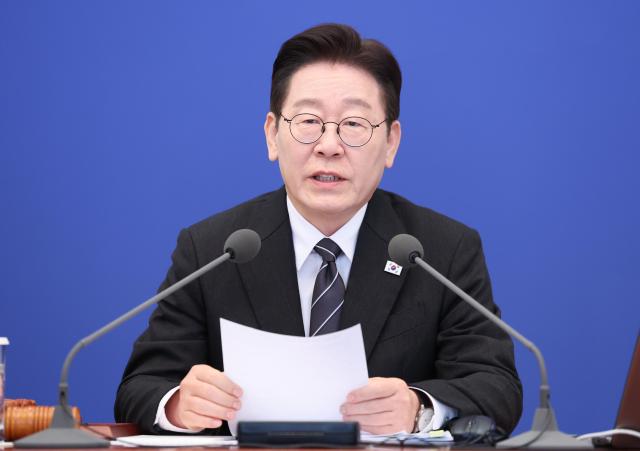
President Lee Jae Myung on Tuesday instructed his cabinet to explore emergency measures to curb surging fuel costs, urging officials to move beyond “normal procedures and manuals” during crisis conditions and quickly prepare a workable price ceiling system.
Finance Minister Koo Yun-cheol said the government aims to introduce a framework for a cap within the week.
The authority for such a measure comes from the Petroleum and Petroleum Substitute Fuel Business Act, introduced during the oil shocks of the 1970s. The law allows the finance minister to impose price ceilings or floors on petroleum products if prices fluctuate severely and threaten economic stability or daily life.
The provision, however, has not been used for nearly three decades since South Korea liberalized its fuel pricing system to enable market forces to determine retail prices.
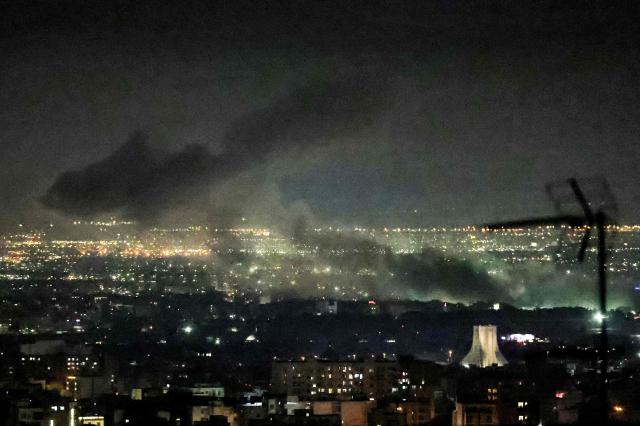
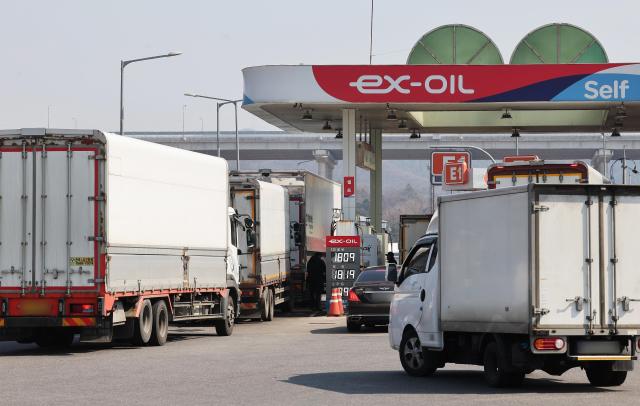
The debate over reviving the mechanism comes as oil prices swing sharply amid the Middle East conflict. Domestic gasoline prices briefly rose above 2,000 won per liter over the weekend, reflecting the volatility in global crude markets.

Some economists say introducing a price cap too early could create unintended consequences.
Kim Jin-young, a professor of economics at Korea University, argued it is premature to adopt strong interventionist policies while the trajectory of the conflict remains uncertain.
“I believe there is a fairly high possibility that the war in Iran will not end soon,” Kim said.
“If the conflict becomes prolonged, oil prices could rise even further. But since the war has only just begun, we should focus on conserving supply and managing demand rather than immediately introducing this system.”
“A price ceiling introduces a different kind of price — not a monetary one,” he said.
“During the oil crisis in the United States, government price controls led to long lines at gas stations. In effect, the system imposes a higher cost on those who value their time.”
Others say a cap for temporary purpose could help prevent excessive price spikes and protect consumers during periods of extreme volatility.
Im Tobin, a professor at Seoul National University’s Graduate School of Public Administration, said the policy could serve as a corrective tool if market prices overshoot.
“When crude oil has already been imported and stored, raising retail prices immediately simply because war breaks out allows oil companies to earn excessive profits,” Im said.
“In that sense, the policy can help correct market distortions.”
He stressed that any price cap should be strictly temporary.
“The key is to shorten the duration of this system,” he said.
“During periods of rapidly rising energy prices, a price ceiling can help protect the real purchasing power of low- and middle-income households and stabilize transportation costs,” Chang said.
However, Chang emphasized that price regulation alone cannot address structural energy challenges.
“It is essential to clearly define the temporary and conditional nature of the price ceiling,” he said. “Relying solely on price controls is not a fundamental solution to energy problems.”
Instead, he suggested improving fuel distribution systems and expanding fiscal support for vulnerable households as potentially more effective tools to manage the inflationary ripple effects of higher energy prices.

Copyright ⓒ Aju Press All rights reserved.