
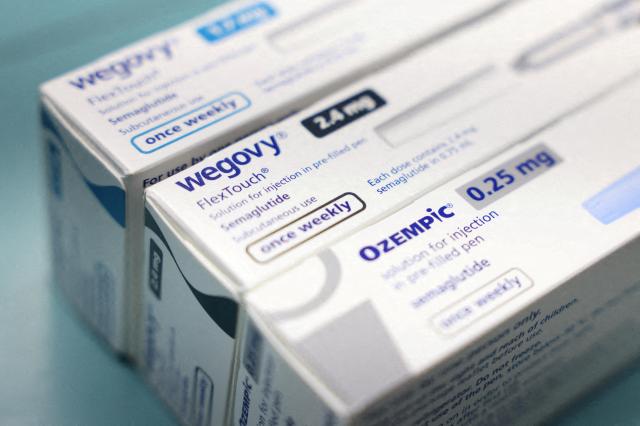
Novo Nordisk’s obesity drug Wegovy will see its U.S. wholesale acquisition cost cut to about half starting next year, a move that industry watchers say signals a shift toward price competition in the fast-growing glucagon-like peptide-1 (GLP-1) market.
According to the industry on Tuesday, the Danish drugmaker will reduce the WAC for Wegovy injections, oral Wegovy and the oral diabetes drug Rybelsus by 35% to 50% starting Jan. 1. The monthly list price for GLP-1 treatments will be adjusted to $675, about 1.01 million won, roughly half of Wegovy’s previous level.
WAC is the wholesale list price before discounts and rebates. Because the U.S. government does not directly control drug prices, WAC serves as a benchmark for negotiations with insurers and wholesalers. A lower WAC can also pull down reference prices in other markets.
The price cut is being read as a response to patent expirations and intensifying competition. Patents on semaglutide, Wegovy’s key ingredient, are set to expire starting this month in countries including China, India and Brazil. With China-developed drugs and low-cost generics coming into view, the company appears to be moving early to defend market share.
The GLP-1 obesity-drug market is expanding rapidly. It is estimated at about $72 billion, about 107 trillion won, and is projected to reach $139 billion, about 206 trillion won, by 2030. Still, some in the industry caution that a larger market does not necessarily translate into higher profits. “For example, the toxin market grew, but cutthroat competition among companies only intensified,” one industry official said.
Competition is also becoming more complex as GLP-1 treatments, long dominated by injections, expand into oral formulations. Some analysts describe the shift as a transition from high-priced breakthrough therapies to more widely used treatments.
The price pressure is expected to weigh on South Korean companies as well. Among domestic GLP-1 obesity candidates, Hanmi Pharmaceutical’s efpeglenatide is considered the most advanced, with the company aiming for a launch in the second half of this year. Other obesity drugs under development in South Korea are largely in Phase 1 or Phase 2 trials.
If global benchmark prices fall, domestic new drugs are likely to face added pressure in pricing. Recovering clinical costs that can run into the trillions of won would require sharply higher sales volumes, but late entrants may struggle to win market share quickly.
“Even if latecomers enter, profitability could drop sharply in an already lower global pricing environment,” another industry official said, adding that differentiation such as improved formulations or fewer side effects will be needed.
* This article has been translated by AI.
Copyright ⓒ Aju Press All rights reserved.