
LS Cable & System said it is reviewing plans to build a rare-earth permanent magnet plant in the United States and is moving the project forward in stages.
The company said Thursday it has selected Chesapeake, Virginia, as a candidate site for new investment and is conducting a feasibility review while holding cooperation talks with the state of Virginia.
The site is expected to be near LS Cable & System’s undersea cable plant now under construction, according to the company.
Rare-earth permanent magnets are a key material used across advanced industries, including electric vehicles, wind turbines, robots, fighter jets and urban air mobility.
About 85% of global output is concentrated in China, and only a handful of companies produce them in the United States, keeping calls alive to diversify supply chains.
LS Cable & System said it is also seeking to build a value chain for the business, from securing raw materials to metalmaking and magnet production.
Its affiliate LS Eco Energy decided on Dec. 17 to pursue a rare-earth metal business in Vietnam and finalized an investment plan worth about 28.5 billion won.
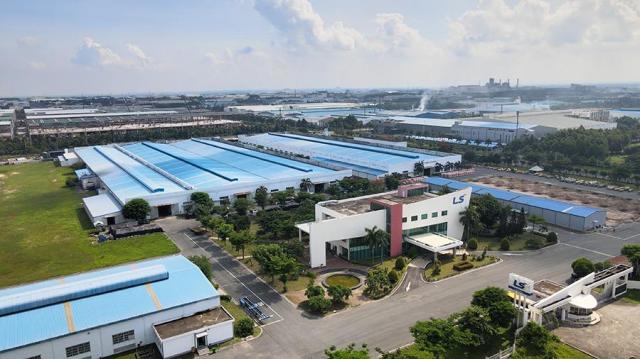
LS Eco Energy plans to install rare-earth metalmaking equipment at its Ho Chi Minh City production unit, LSCV, and refine rare-earth oxides supplied by global mining companies to produce rare-earth metals.
Rare-earth metals are a core input for permanent magnets used in drive motors for robots, wind turbines and electric vehicles. The metalmaking process is technically demanding, and commercial production outside China is limited to a few countries, including Japan and the United States.
If carried out, the companies expect to form a value chain linking rare-earth oxide procurement from global miners, rare-earth metal production in Vietnam by LS Eco Energy, and permanent magnet production in the United States by LS Cable & System. LS Cable & System said it is also discussing cooperation with global mining companies on rare-earth supply.
An LS Cable & System official said that if the rare-earth magnet business becomes a reality, it would create a new growth engine by expanding beyond cables into strategic materials and help strengthen competitiveness in the global mobility supply chain.
* This article has been translated by AI.
Copyright ⓒ Aju Press All rights reserved.