
Samsung Biologics and Celltrion, after posting record results last year, are pressing ahead this year with multitrillion-won investments centered on contract development and manufacturing (CDMO) to expand capacity, industry officials said. Even with strong growth, both companies face rising internal and external risks, including labor friction, a factory safety incident and geopolitical uncertainty.
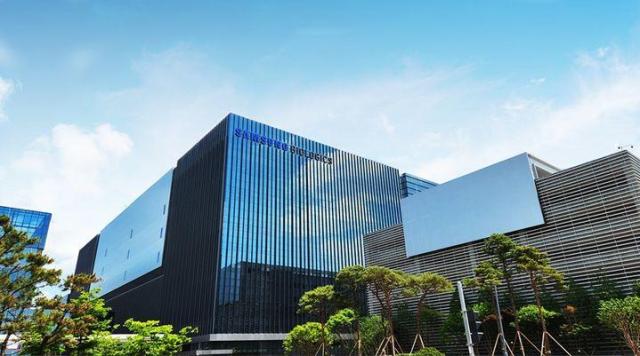
Samsung Biologics reported 4.55 trillion won ($4.55 trillion won) in revenue and 2.06 trillion won in operating profit last year, reinforcing its No. 1 position in the CDMO sector, according to the industry. The company is reinvesting earnings to build Plants 5 and 6 in Songdo, Incheon, and plans to spend about 7 trillion won to develop a third bio campus. It is also moving to expand overseas production, including a $280 million investment to acquire a plant in Rockville, Maryland, as part of its strategy to widen its lead.
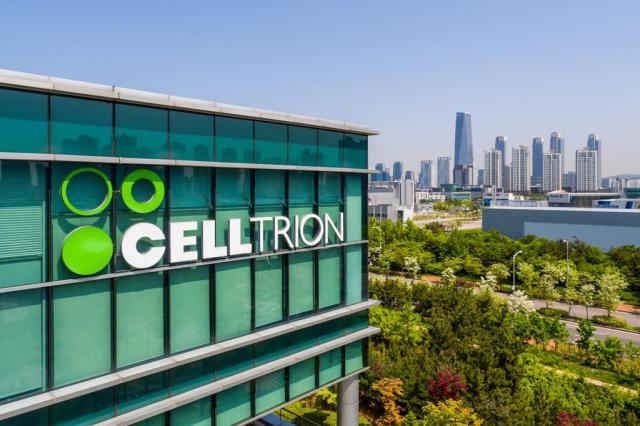
Celltrion posted 4.16 trillion won in revenue and 1.16 trillion won in operating profit last year, and has been assessed as a global player spanning biosimilars and new drugs. It plans to invest 1.2265 trillion won to complete Plants 4 and 5 in Songdo. In the United States, it plans to invest $330 million to expand its Branchburg, New Jersey, facility to 75,000 liters. Once domestic and overseas expansions are completed, Celltrion expects to secure total production capacity of 570,000 liters, building infrastructure not only for new drugs and biosimilars but also for its contract manufacturing business.
Risks have also intensified. At Samsung Biologics, labor-management tensions have deepened in recent years over disputes tied to revisions of internal rules on information security and discipline, including the introduction of a “three strikes” policy. A document was disclosed showing the human resources department separately classified and managed participants in a lawsuit over ordinary wages and union members, prompting allegations of discrimination in promotions and personnel decisions. Distrust has also lingered after negotiations over wages and working hours reductions.
In this year’s wage talks, the union has demanded a 4.5-day workweek, higher starting pay and a new hazard allowance for ADC work, with talk of a possible strike. If a strike occurs, production stoppages could delay deliveries to clients and damage global confidence, given the industry’s reliance on continuous operations. It could also disrupt completion of Plants 5 and 6 and the Rockville plant, the report said.
Celltrion is also under scrutiny after a subcontractor worker fell to his death at its Songdo plant, drawing criticism over industrial safety and health management. The Ministry of Employment and Labor issued a work stoppage order and launched a full investigation, including whether the case violated the Serious Accidents Punishment Act. At Celltrion’s shareholders meeting on March 24, Chairman Seo Jung-jin appeared in person for the first time in 11 years to address concerns and emphasize “responsible management,” the report said.
Geopolitical uncertainty is another factor. As the war in the Middle East drags on, volatility in raw materials and fuel prices and broader supply-chain risks have increased, and there are signs global drugmakers are adjusting clinical and production budgets, the report said.
“Companies are facing a new test in which they must design growth and responsibility at the same time, with good news and bad news coexisting,” an industry official said. How well they manage labor issues, major safety risks and geopolitical uncertainty “appears to be a key variable that will determine sustainable growth going forward,” the official said.
Samsung Biologics reported 4.55 trillion won ($4.55 trillion won) in revenue and 2.06 trillion won in operating profit last year, reinforcing its No. 1 position in the CDMO sector, according to the industry. The company is reinvesting earnings to build Plants 5 and 6 in Songdo, Incheon, and plans to spend about 7 trillion won to develop a third bio campus. It is also moving to expand overseas production, including a $280 million investment to acquire a plant in Rockville, Maryland, as part of its strategy to widen its lead.
Celltrion posted 4.16 trillion won in revenue and 1.16 trillion won in operating profit last year, and has been assessed as a global player spanning biosimilars and new drugs. It plans to invest 1.2265 trillion won to complete Plants 4 and 5 in Songdo. In the United States, it plans to invest $330 million to expand its Branchburg, New Jersey, facility to 75,000 liters. Once domestic and overseas expansions are completed, Celltrion expects to secure total production capacity of 570,000 liters, building infrastructure not only for new drugs and biosimilars but also for its contract manufacturing business.
Risks have also intensified. At Samsung Biologics, labor-management tensions have deepened in recent years over disputes tied to revisions of internal rules on information security and discipline, including the introduction of a “three strikes” policy. A document was disclosed showing the human resources department separately classified and managed participants in a lawsuit over ordinary wages and union members, prompting allegations of discrimination in promotions and personnel decisions. Distrust has also lingered after negotiations over wages and working hours reductions.
In this year’s wage talks, the union has demanded a 4.5-day workweek, higher starting pay and a new hazard allowance for ADC work, with talk of a possible strike. If a strike occurs, production stoppages could delay deliveries to clients and damage global confidence, given the industry’s reliance on continuous operations. It could also disrupt completion of Plants 5 and 6 and the Rockville plant, the report said.
Celltrion is also under scrutiny after a subcontractor worker fell to his death at its Songdo plant, drawing criticism over industrial safety and health management. The Ministry of Employment and Labor issued a work stoppage order and launched a full investigation, including whether the case violated the Serious Accidents Punishment Act. At Celltrion’s shareholders meeting on March 24, Chairman Seo Jung-jin appeared in person for the first time in 11 years to address concerns and emphasize “responsible management,” the report said.
Geopolitical uncertainty is another factor. As the war in the Middle East drags on, volatility in raw materials and fuel prices and broader supply-chain risks have increased, and there are signs global drugmakers are adjusting clinical and production budgets, the report said.
“Companies are facing a new test in which they must design growth and responsibility at the same time, with good news and bad news coexisting,” an industry official said. How well they manage labor issues, major safety risks and geopolitical uncertainty “appears to be a key variable that will determine sustainable growth going forward,” the official said.
* This article has been translated by AI.
Copyright ⓒ Aju Press All rights reserved.