
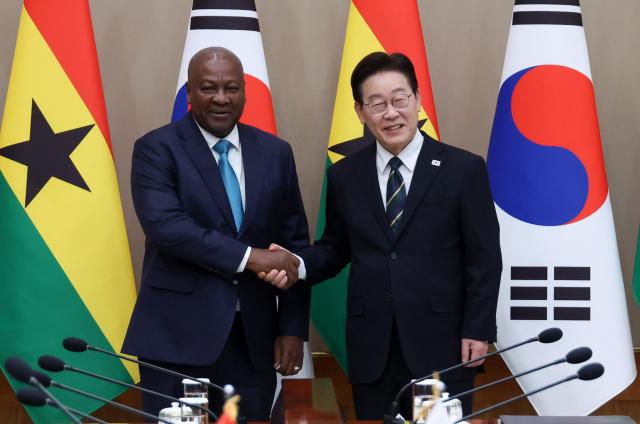
According to the International Monetary Fund, the region’s real GDP is expected to grow 4.5 percent in 2026, compared with Asia’s 4.1 percent. Some economies are expanding rapidly: Guinea is forecast to grow 10.5 percent, Uganda 7.6 percent and Ethiopia 7.1 percent.
Capital is also taking notice. Flows jumped 75 percent in 2024 to a record $97 billion, with North African economies drawing particularly strong inflows. By contrast, foreign direct investment into Asia has stagnated, falling from $662 billion in 2022 to $605 billion in 2024.
The overall picture points to a continent on the rise — increasingly central to the global economy amid shifting geopolitics and supply chains.
Yet beneath the headline growth lies a more complex and uncertain reality.
Africa’s recent momentum cannot be explained by a single factor. It reflects a mix of demographic change, policy experimentation, commodity cycles and technological adaptation.
“Current fast growth in several African economies reflects a combination of structural and cyclical factors rather than a single model,” said Anthony Butler, a professor at the University of Cape Town.

Urbanization is also playing a key role. Rapidly expanding cities are driving demand for housing, transport, finance and retail, with growth increasingly supported by domestic consumption rather than exports alone.
At the same time, technological “leapfrogging” is reshaping development. Mobile money, digital platforms and off-grid solar systems have expanded access to finance and electricity, often more efficiently than traditional infrastructure.
These gains, however, are uneven. While some countries have diversified their growth engines, others remain heavily dependent on natural resources.
In Guinea, bauxite exports are driving expansion. In Uganda, oil development is attracting investment. In Ethiopia, a state-led, infrastructure-focused model has delivered strong short- to medium-term growth.
Historically, Butler noted, African growth has been tied to “oil, gas and mineral resources, together with agricultural commodities” — a pattern that remains volatile.
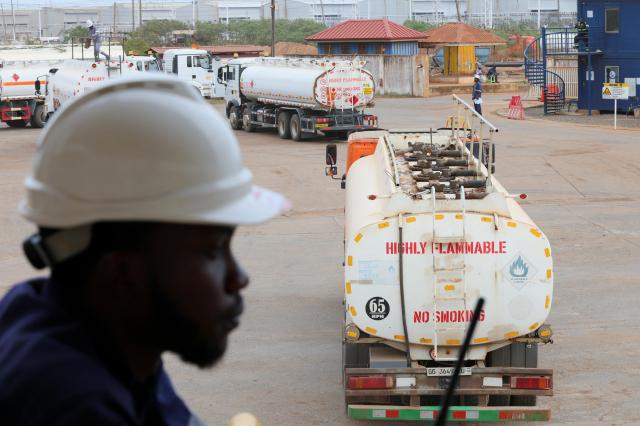
One of the most notable recent changes is in the composition of external finance.
Foreign aid to sub-Saharan Africa has declined sharply, following sharp cuts by the United States.
According to the OECD, assistance from advanced economies fell by as much as a quarter last year. China — once a major lender — has shifted from issuing new loans to recovering existing ones.
Private investment has stepped into the gap. The surge in foreign direct investment reflects growing confidence in Africa’s long-term prospects, particularly in energy, infrastructure and manufacturing.
North African economies such as Morocco and Tunisia have attracted significant inflows tied to industrial development and export-oriented production.
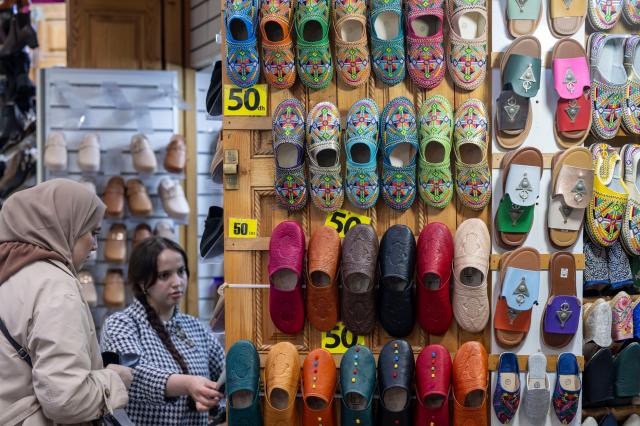
But that advantage is already under pressure. Recent U.S. tariff policies, including a broad 10 percent baseline tariff, are eroding the competitiveness of such arrangements.
The result is a shifting external environment where opportunities are expanding — but so are uncertainties.
Structural constraints persist
Despite visible dynamism, the underlying structure of many African economies has changed less than growth figures suggest.
More than 90 percent of exports from sub-Saharan Africa remain unprocessed raw materials, according to Howard Stein, a professor at the University of Michigan. This reflects a deeply entrenched position at the lower end of the global value chain.
“The continent…has found itself as the exporter of raw materials at the bottom of the international value chain,” Stein said.

These cycles are compounded by Africa’s position in the global financial system.
African economies typically operate with “weak” or “junk” currencies, in Stein’s words, and must rely on hard currencies such as the U.S. dollar to finance imports and stabilize their economies. This creates structural dependence on external capital and limits policy autonomy.
“The key characteristic of the global financial architecture is the hierarchy of currencies,” Stein said, noting that the dollar’s dominance confers advantages on the United States while constraining others.
When external shocks hit, countries often face balance-of-payments crises, forcing them to seek IMF support — often tied to austerity measures that can undermine long-term growth.
The result is a “vicious cycle” in which commodity dependence reinforces itself.
Growth amid global uncertainty
Even current growth projections come with caveats.
Stein noted that IMF forecasts were made before escalating geopolitical tensions in the Middle East, including conflict involving Iran — developments that could disrupt oil markets and global stability.
“Forecasts are even more problematic when you are in the middle of a war…with unknown implications,” he said.
At the same time, shifting U.S. trade policy and broader geopolitical fragmentation are introducing new uncertainties that disproportionately affect regions like Africa, which remain closely tied to external markets and financial systems.
In this context, short-term growth figures may obscure deeper vulnerabilities.
Demographics: opportunity and risk
If Africa’s present is shaped by structural constraints, its future may be defined by demographics.
The continent’s population — currently about 20 percent of the global total — is expected to reach nearly 28 percent by 2050.
“A young and rapidly growing population is expanding both the labor force and consumer markets,” said Edwin Muchapondwa, an economics professor at the University of Cape Town.
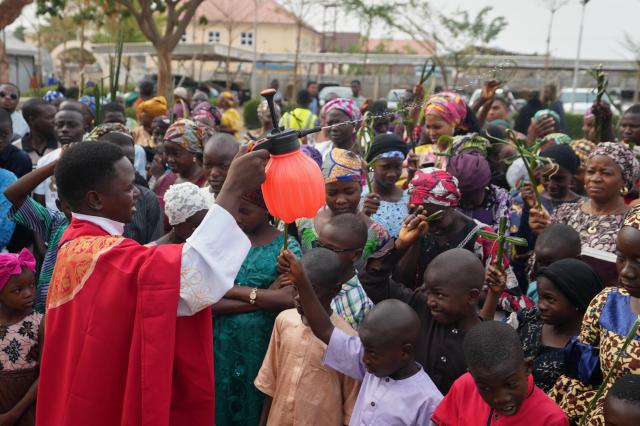
Urbanization is already transforming economies, fueling demand for services such as retail, transport and telecommunications. But without sufficient industrialization and employment, rapid population growth risks deepening inequality and social tension.
Africa is set to become the world’s fastest-urbanizing region. According to the Economist Intelligence Unit, six cities — Cairo, Kinshasa, Lagos, Greater Johannesburg, Luanda and Dar es Salaam — are projected to exceed 10 million people by 2035.
These urban centers are hubs of innovation, but also flashpoints for protests linked to corruption, taxation, unemployment and dissatisfaction with political leadership.
By 2035, more than half of Africa’s population will live in cities, with the urban population approaching 1 billion, up from around 650 million in 2023.
The continent is also expected to have 17 cities with populations above 5 million and around 100 exceeding 1 million. Addis Ababa is projected to grow fastest, followed by Kampala, Dar es Salaam and Abidjan.

At the core of Africa’s economic debate is a central question: how to move from extraction to value creation.
Governments are increasingly seeking to develop downstream industries — processing raw materials domestically rather than exporting them unrefined, and this is where Korea can define its role in the continent, according to experts.
Africa holds significant reserves of minerals essential for electric vehicles, renewable energy and digital technologies – all crucial to power Korean Inc.
Tanzania’s Kabanga nickel deposit, for example, is among the world’s largest undeveloped reserves.
Experts advise South Korea to capitalize on this momentum, leveraging its experience in industrial transformation.
The challenge is not simply extraction, but capturing value.
“A major drive on the continent is to move beyond extraction,” Butler said, warning that without such efforts, Africa risks repeating patterns where external actors capture disproportionate gains.
Achieving this shift will require improvements in infrastructure, governance and institutional capacity — areas where progress remains uneven.
Unlike China, South Korea is often seen as a more adaptable model. Its rapid development was driven by export-led industrialization, strong state capacity, investment in education and close government-industry coordination.
“The key lessons may be to build capable institutions, focus on exports, invest in skills, and pursue gradual industrial upgrading,” Butler said.
However, he cautioned that African countries often lack the political cohesion and institutional depth that underpinned Korea’s experience. Simply replicating its model without adaptation could be counterproductive.
“The most effective approach would be one that supports local capacity-building…[and] engages African states as strategic partners,” said Bulelani Jili of Georgetown University.
Geopolitical tensions are also opening space for new alliances.

Africa’s growth story has long been cyclical — marked by optimism followed by setbacks driven by external shocks or internal constraints.
Whether this time is different depends on whether growth can translate into structural transformation: moving up the value chain, building resilient institutions and creating inclusive systems.
As Jili put it, the key question is not whether Africa will grow — but “what kind of growth is being produced, and who benefits from it.”
Copyright ⓒ Aju Press All rights reserved.
